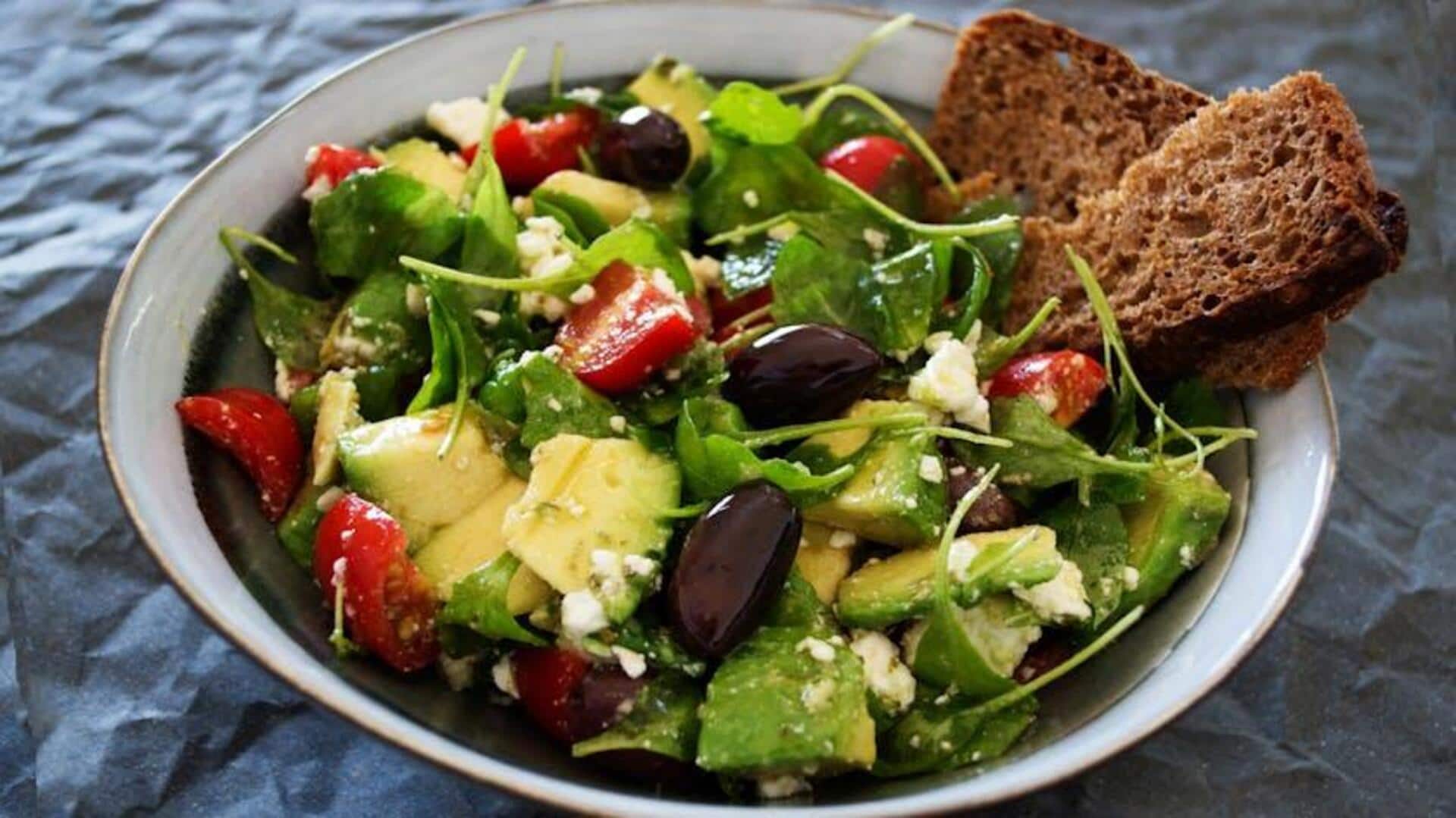
Are salads actually healthy?
What's the story
Salads are often touted as the healthiest option, but there are a number of misconceptions about their nutritional value. Many believe that all salads are inherently healthy, but that's not always the case. Knowing the truth behind these myths can help you make better dietary choices. Here are five common salad myths, and what you should know about them.
#1
Myth: All salads are low-calorie
Many assume that salads are always low-calorie, but that's not always the case.
The calorie count of a salad can vary drastically depending on its ingredients and dressings.
For example, adding cheese, nuts, or creamy dressings can increase the calorie count significantly.
It's important to be mindful of what goes into your salad to keep it healthy.
#2
Myth: More greens means more nutrients
While greens are nutrient-rich, more greens don't always mean more nutrients in your salad.
Mixing different vegetables can actually boost the nutrient diversity in your meal.
For example, adding tomatoes or carrots can give you more vitamins and minerals than just greens.
A mix of vegetables makes your salad more balanced and nutritious.
#3
Myth: Dressing is always bad for you
The common misconception is that all salad dressings are bad for health, which is not true.
Dressings can be a great source of healthy fats, which help absorb fat-soluble vitamins present in salads.
Opting for dressings made with olive oil or vinegar can be beneficial. They not only add flavor but also contribute positively to your health when consumed in moderation.
#4
Myth: Raw vegetables are always healthier
The idea that raw vegetables are always healthier than cooked ones is misleading.
Cooking some vegetables makes certain nutrients more accessible by breaking down cell walls.
For example, lightly steaming broccoli increases its availability of certain antioxidants compared to eating it raw.
Cooking methods like steaming or roasting can enhance nutrient absorption without losing much nutritional value.
#5
Myth: All toppings are nutritious
Toppings like crouton bits are often added to salads for flavor but don't add much nutrition.
Instead, healthier options like seeds or avocados should be considered. They add healthy fats and nutrients without the extra calories of traditional toppings.
These alternatives make salads tastier and healthier, improving their overall nutritional value.