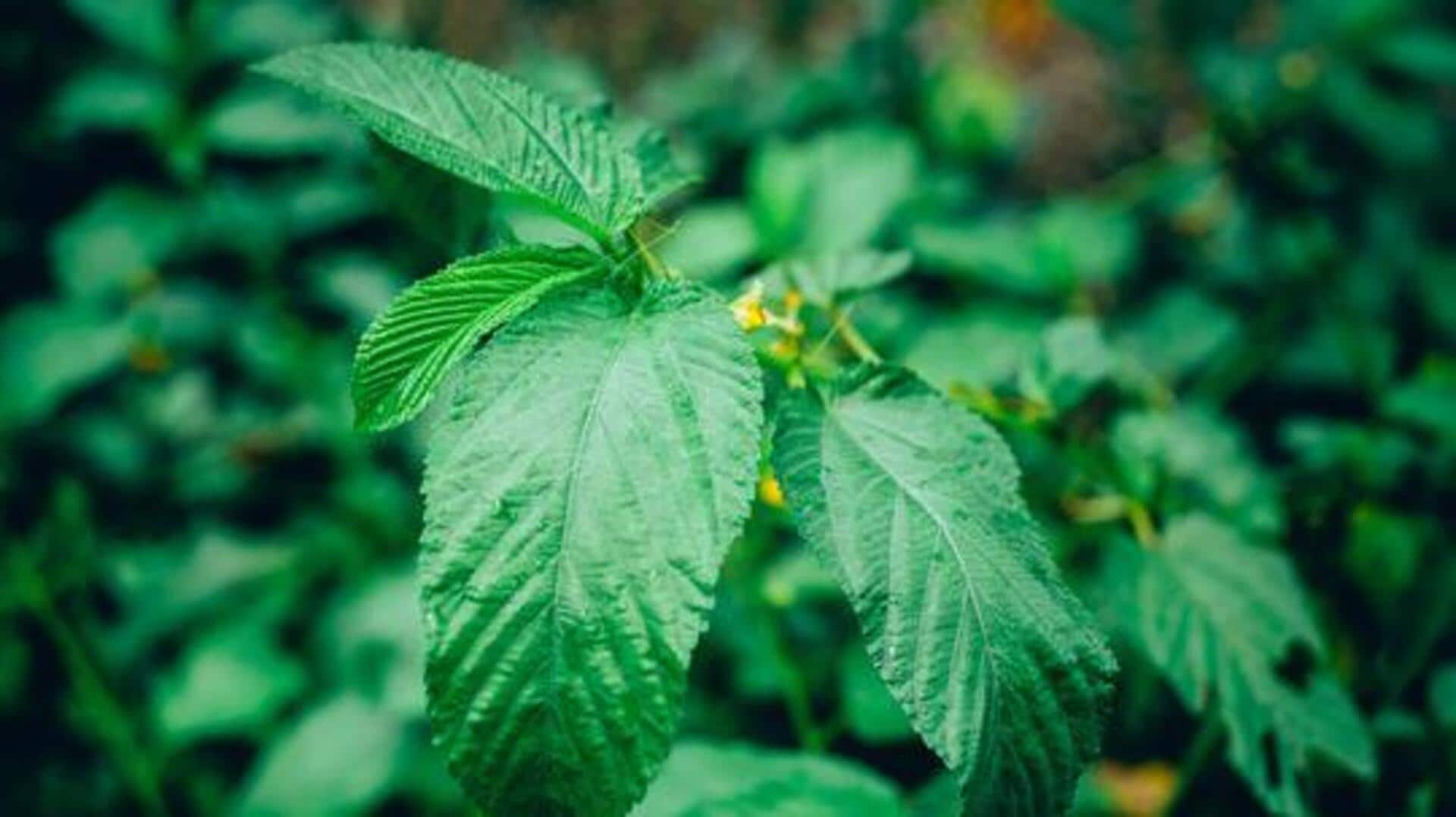
5 surprising uses of jute leaves
What's the story
African saluyot, also known as jute leaves, is a versatile plant with a plethora of uses beyond the kitchen. While it is commonly known for its nutritional benefits, this leafy green can do a lot more than just adding flavor to your meals. From natural remedies to eco-friendly products, African saluyot's potential is vast and often overlooked. Here are five surprising ways this plant can be used in daily life.
Tip 1
Natural remedy for skin care
African saluyot can be used as a natural remedy for skin care.
The leaves are rich in vitamins A and C, which promote healthy skin by reducing inflammation and boosting collagen production.
A paste made from the leaves can be applied directly to the skin to soothe irritations, or as a face mask for rejuvenation.
Its antioxidant properties help protect the skin from environmental damage.
Tip 2
Eco-friendly dye alternative
The vibrant green color of African saluyot also makes it a great eco-friendly dye alternative.
The leaves can be boiled to extract their natural pigments, which can then be used to dye fabrics or even hair.
This sustainable option is perfect for those looking to reduce their carbon footprint while still enjoying creative projects, like tie-dyeing clothes or coloring hair naturally.
Tip 3
Boosting hair health
African saluyot is also great for promoting hair health.
The nutrients present in the leaves nourish the scalp and strengthen hair follicles, resulting in healthier, shinier hair.
A rinse made from boiled saluyot leaves can reduce dandruff and promote hair growth over time.
Its natural properties make it a great addition to your hair care routine, without the use of harsh chemicals.
Tip 4
Fertilizer for gardening enthusiasts
For gardening enthusiasts, African saluyot can be used as an organic fertilizer.
The nutrient-rich leaves decompose quickly and enrich soil fertility with essential minerals like nitrogen and potassium.
Adding decomposed saluyot to compost piles, or directly into garden beds, enhances plant growth sustainably without chemical fertilizers' adverse effects on the environment.
Tip 5
Crafting biodegradable packaging solutions
The fibrous nature of African saluyot makes it perfect for crafting biodegradable packaging solutions.
By processing the fibers from the plant, one can create sturdy, eco-friendly materials.
These materials serve as a sustainable alternative to plastic, reducing waste and environmental impact.
This innovative use of saluyot fiber contributes significantly to the global effort of minimizing plastic pollution, making it a valuable resource in the quest for sustainable packaging.