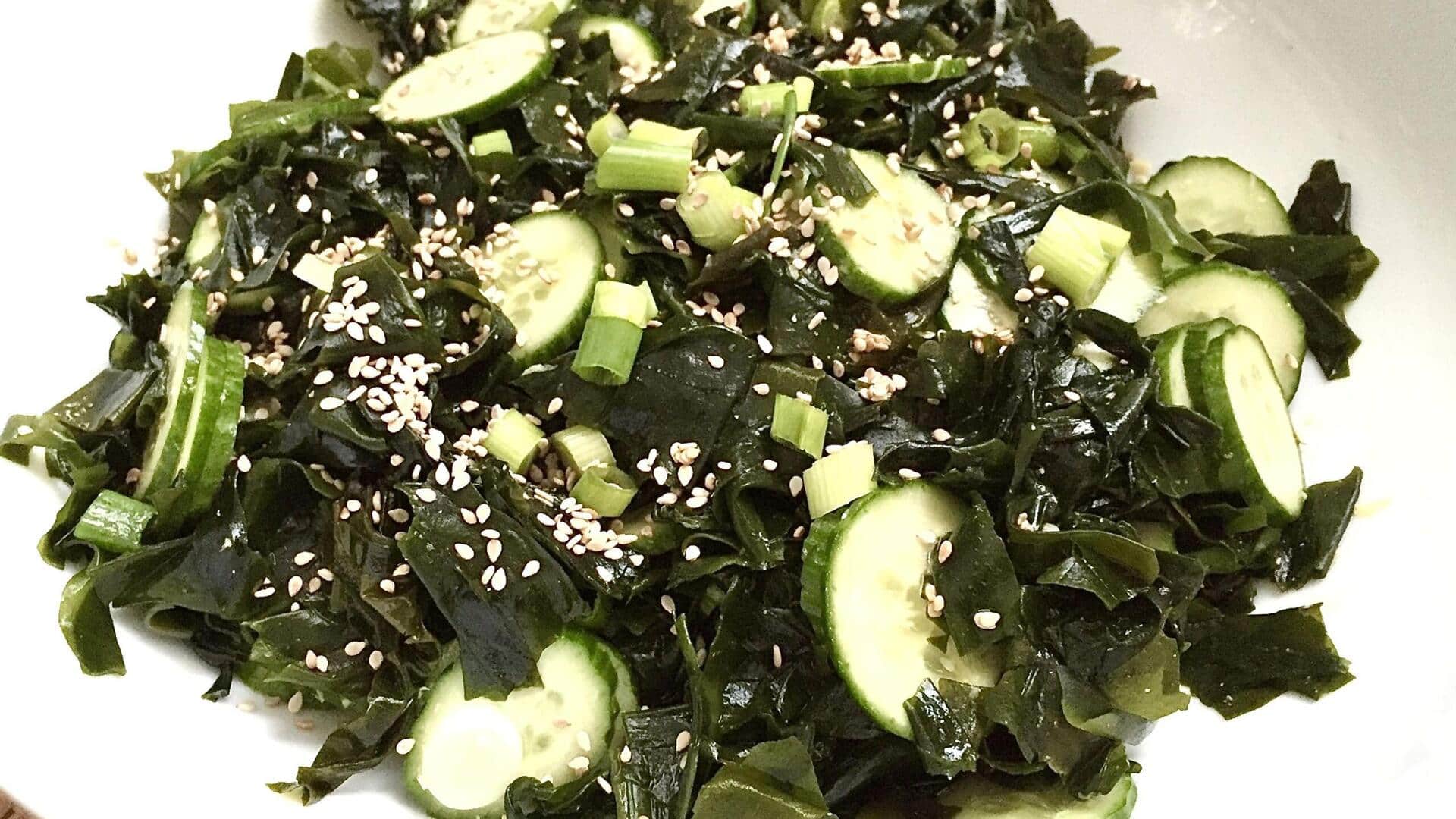
For a healthy start to the day, try seaweed salads
What's the story
Seaweed salads are becoming increasingly popular as a healthy option, thanks to their nutritional benefits and unique flavors. These salads are prepared using different kinds of seaweed, which are rich in vitamins, minerals, and antioxidants. They make for a healthy addition to your diet, providing essential nutrients that promote overall health. Here are five seaweed salad varieties that can boost your health.
Wakame
Wakame salad: A nutrient powerhouse
Wakame is a popular seaweed used in Japanese cuisine. It is rich in iodine, calcium, magnesium, and vitamins A, C, and K.
The slightly sweet flavor of wakame makes it the perfect base for salads.
It also contains fucoxanthin, a compound known to promote fat metabolism.
Adding wakame salad to your meals can improve your bone health and support thyroid function.
Nori
Nori salad: Rich in antioxidants
Nori is another widely used seaweed variety that is famous for its high antioxidant content.
It is packed with vitamins B12 and C, along with iron and protein.
Nori has a mild flavor that goes well with other salad ingredients, such as cucumbers or avocados.
Eating nori salad regularly can help boost your immune system and protect your cells from oxidative stress.
Dulse
Dulse salad: High protein content
Dulse is a red seaweed variety that is famous for its high protein content (up to 25% by dry weight).
It also has essential minerals, such as potassium and iodine.
With a slightly salty taste, dulse goes well with a variety of salad dressings, or it can be eaten on its own as a snack.
Including dulse in your diet can help you meet your daily protein requirements while providing other health benefits.
Kombu
Kombu salad: Rich in fiber
Kombu is a thick kelp variety used in Asian cuisines for its umami flavor-enhancing properties.
It is also rich in dietary fiber, which promotes digestion by supporting regular bowel movements and gut health.
Kombu also contains alginate fibers that may help reduce cholesterol levels by binding bile acids in the intestines. This prevents their reabsorption into the bloodstream.
Hijiki
Hijiki salad: Supports heart health
Hijiki is another type of brown seaweed rich in dietary fiber and essential nutrients, such as calcium, iron, and magnesium.
Its dark color indicates its high antioxidant content, which helps protect heart cells from damage caused by free radicals.
Hijiki also contains omega-3 fatty acids, known to improve cardiovascular health by reducing inflammation and lowering blood pressure levels.