
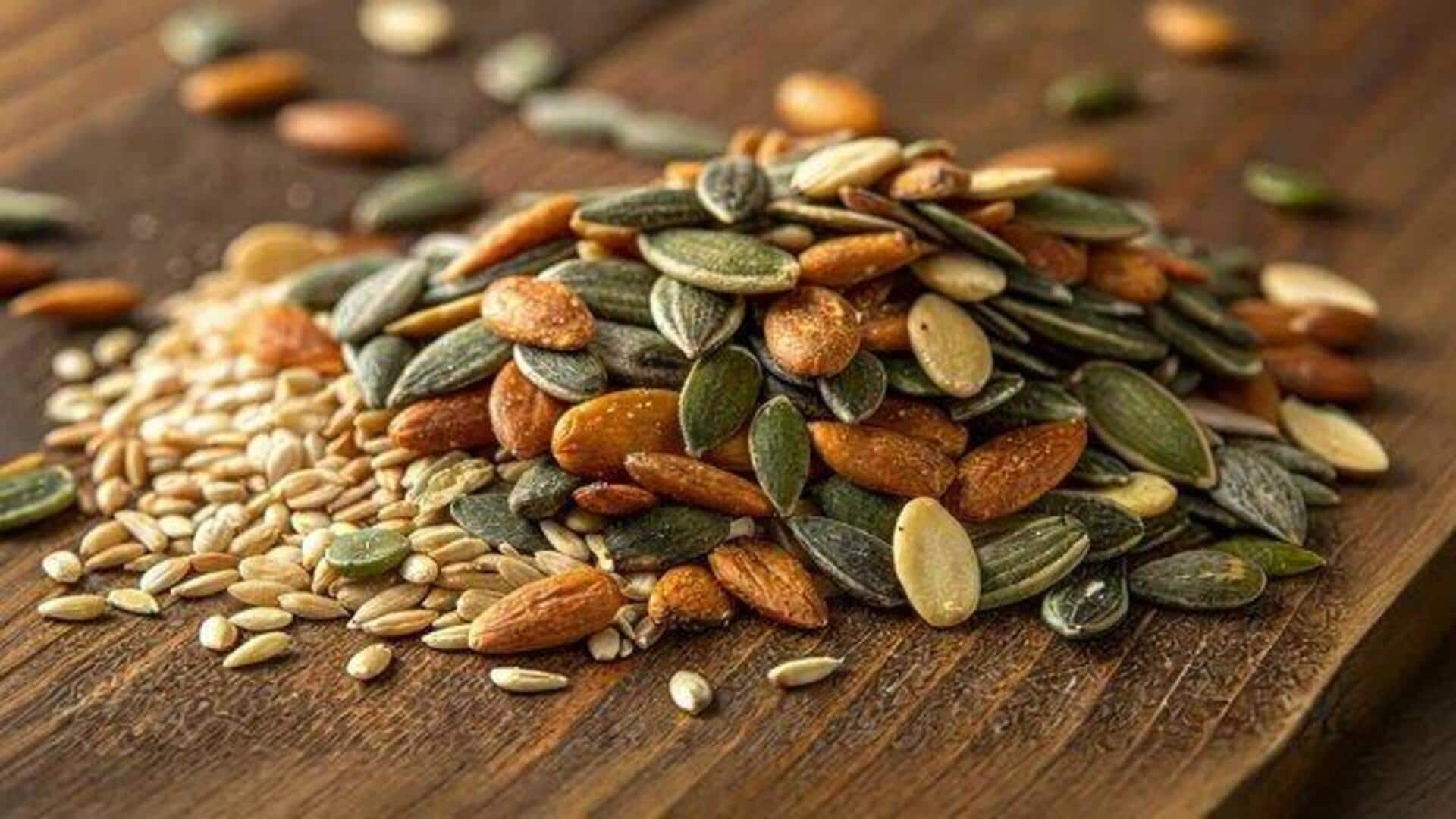
Are seeds actually superfoods?
What's the story
Seeds are often touted as superfoods, promising a range of health benefits. However, with these claims come several misconceptions that can mislead consumers. This article aims to debunk common myths surrounding seeds in our diets, providing clarity on their actual benefits and limitations. By understanding the facts, individuals can make informed choices about incorporating seeds into their nutrition without falling prey to exaggerated claims.
#1
Myth: All seeds are high in protein
While some seeds do offer a decent amount of protein, they aren't all protein powerhouses. For instance, chia and flaxseeds have a lower protein content than what many assume. They are more well-known for their omega-3 fatty acids and fiber content. Knowing the exact nutritional profile of each seed can help you include them in your diet according to your dietary needs.
#2
Myth: Seeds can replace whole grains
Some people think that eating seeds can replace whole grains in their diet. While seeds are nutritious, they don't have the same benefits as whole grains, such as being rich in B vitamins and iron. Whole grains also provide more carbohydrates, which are essential for energy. So, to ensure a balanced diet, it's important to eat both whole grains and seeds.
#3
Myth: All seeds provide the same health benefits
Not all seeds provide the same health benefits, as they differ in nutrient content and bioactive compounds. For example, pumpkin seeds are rich in magnesium and zinc, while sunflower seeds are rich in vitamin E. Knowing these differences can help you choose the right seed according to your health goals.
#4
Myth: Eating more seeds guarantees better health
Eating more seeds doesn't guarantee better health; moderation is the key. Overconsumption can result in excessive calorie intake and potential digestive issues due to high fiber content. It's important to balance seed consumption with other food groups for optimal nutrition rather than relying solely on them for health improvements.
#5
Myth: Seed oils are as beneficial as whole seeds
Seed oils may not be as beneficial as whole seeds since they miss out on some nutrients like fiber and antioxidants present in whole forms. Though seed oils can be a part of a healthy diet when used in moderation, they shouldn't be relied upon solely for nutritional benefits that whole seeds offer.