Feeling stiff? Try these simple self-massage techniques
What's the story
Self-massage is an easy way to relieve tension and improve well-being. By using simple techniques, you can relieve muscle stiffness, improve circulation, and promote relaxation. The best part? You do not need fancy equipment or professional help to do it. With a few minutes of your time each day, you can incorporate self-massage into your routine to feel more relaxed and rejuvenated.
Tension release
Neck and shoulder relief
The neck and shoulders are common areas where tension builds up.
To relieve this, use your fingers to gently knead the muscles at the base of your skull.
Move downwards towards your shoulders in circular motions.
This technique can help reduce stiffness and improve blood flow in these areas.
Dexterity boost
Hand and wrist care
Hands and wrists are often neglected but are essential for daily tasks.
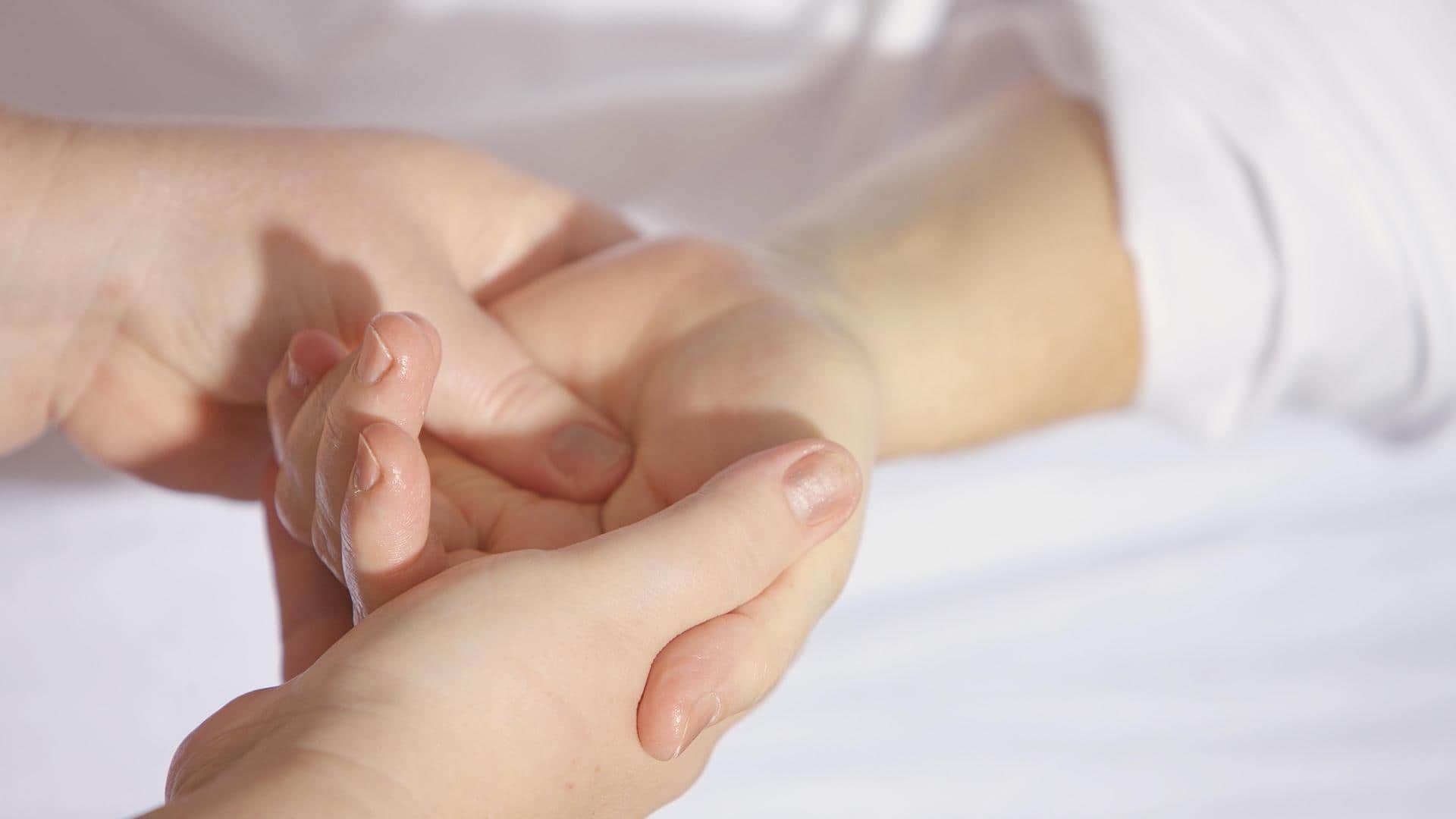
To give them some care, start by stretching your fingers wide before closing them into a fist a few times.
Then, use your thumb to press into the palm of each hand, working from the base of the thumb down to the wrist.
This can improve flexibility and reduce discomfort from repetitive movements.
Sole soothing
Foot relaxation techniques
Feet bear the brunt of our weight all day long, so they deserve some TLC.
Sit comfortably with one foot resting on the opposite knee.
Use both thumbs to apply pressure along the arch of your foot, moving toward your heel and toes in long strokes.
This technique can alleviate fatigue and promote better circulation.
Lumbar ease
Lower back comfort
The lower back often bears the brunt of stress and poor posture.
For relief, sit on a chair with good back support, or lie flat on your back if possible.
Place tennis balls under each side of your lower spine while gently rolling them back and forth for several minutes at a time until you feel relaxed.
Leg rejuvenation
Calf muscle relief
Calves play an important role in mobility but often get neglected during workouts or stretches.
To relieve them, sit down comfortably, cross one leg over the other, and use both hands to apply firm pressure along the length of each calf muscle, starting from the ankle up towards the knee.
Repeat a couple of times per session, depending on the level of discomfort experienced.