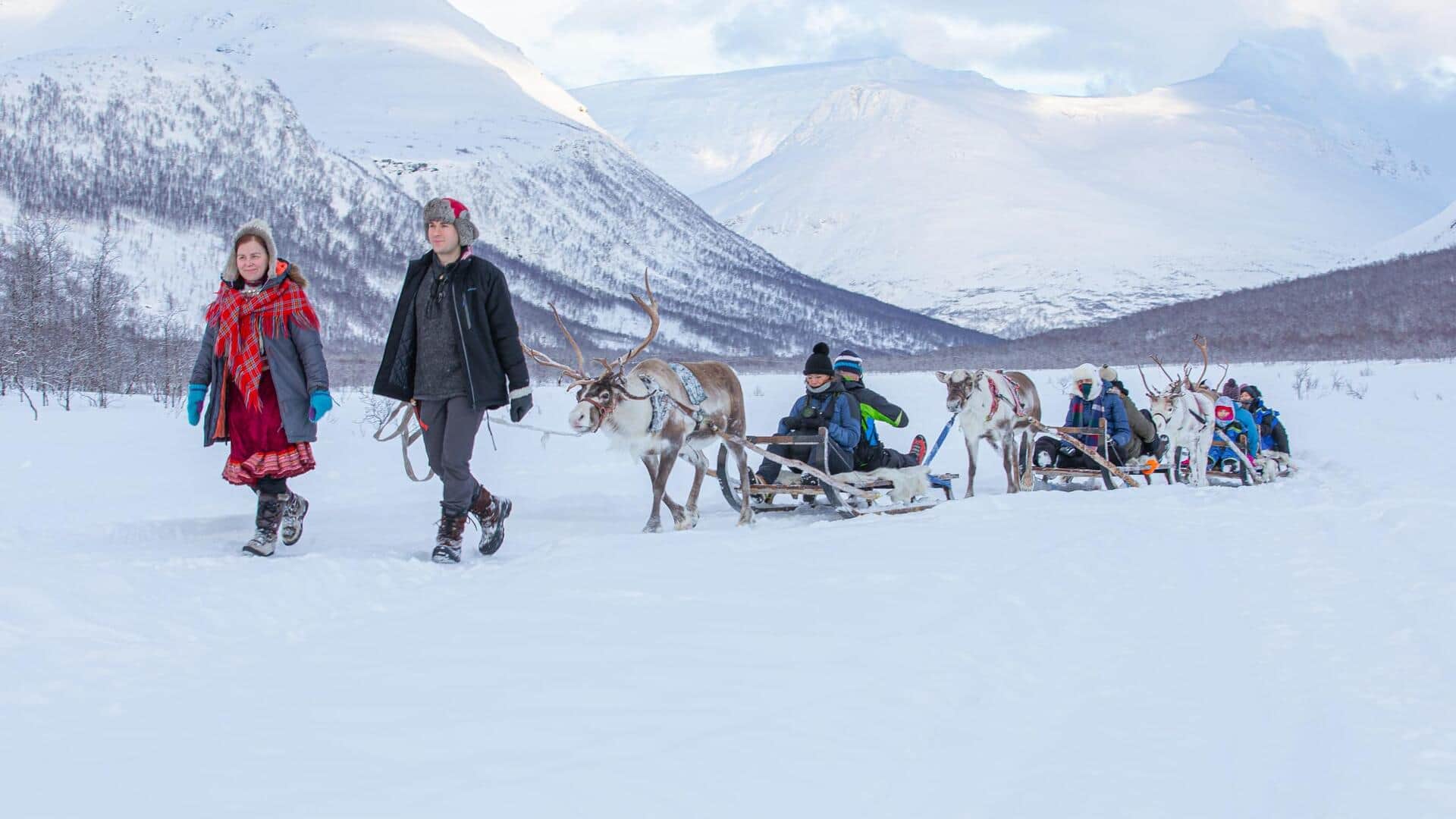
You cannot leave Norway without sledding through Arctic landscapes!
What's the story
Exploring Norway's Arctic landscapes on a sledding adventure is a unique way to experience the region's natural beauty. From the majestic fjords to the serene snow-covered plains, these landscapes offer an unforgettable backdrop for outdoor enthusiasts. Sledding allows you to traverse these terrains in an exhilarating manner, giving you a chance to witness Norway's stunning vistas up close. Here are some insights into making the most of your sledding journey across Norway's Arctic landscapes.
Location selection
Choosing the right sledding location
Selecting the right location is key to an amazing sledding experience.
Popular spots include Tromso and Svalbard, where you can find well-maintained trails and experienced guides.
These areas are known for their breathtaking views and varied terrain, making them ideal for both beginners and seasoned adventurers.
Researching local conditions and trail availability can help you pick the best spot for your trip.
Weather readiness
Preparing for weather conditions
Arctic weather can be unpredictable, so prepare accordingly.
Dress in layers to stay comfortable as temperatures can vary throughout the day.
Waterproof gear is essential to protect against snow and moisture.
It's also wise to check weather forecasts regularly to ensure safe sledding conditions.
Being well-prepared will enhance your enjoyment and safety during your adventure.
Technique tips
Understanding sledding techniques
Mastering basic sledding techniques is crucial for a smooth ride through Norway's Arctic landscapes.
Start by learning how to balance on the sled properly, maintaining a low center of gravity for stability.
Steering involves leaning in the direction you want to go, while using your hands or feet for additional control over the sled's direction.
Safety precautions
Safety measures on Arctic trails
Safety should always be a priority when exploring Arctic trails by sled.
Always wear helmets and other protective gear provided by tour operators or rental services.
Stay within marked trails to avoid hazards like crevasses or unstable ice formations that may not be visible from afar.
Inform someone about your plans before heading out into remote areas without cell service coverage.