
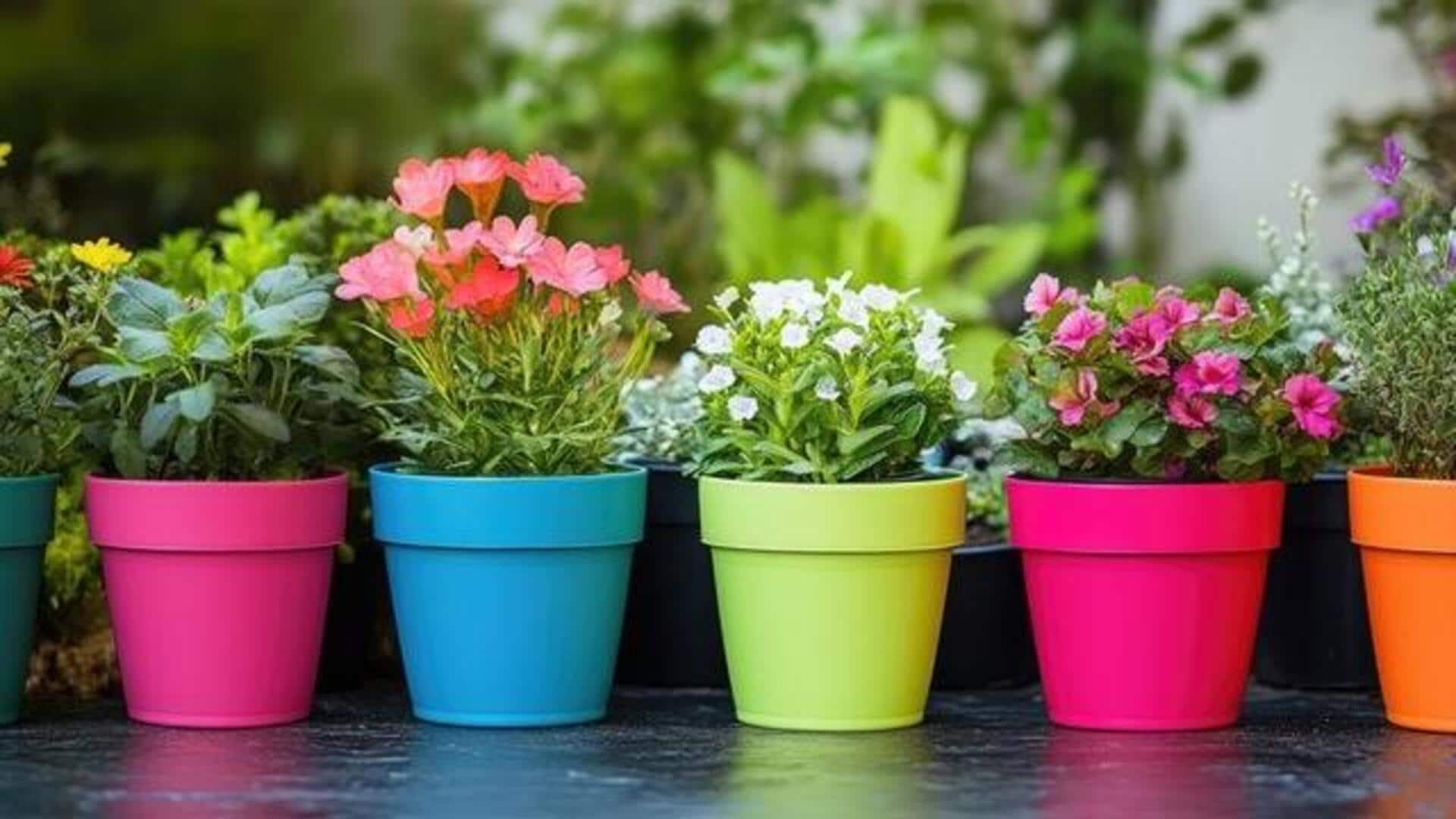
How to create lightweight plant pots for your garden
What's the story
Creating lightweight plant pots can be a game-changer for gardeners looking to reduce strain while moving plants around. These pots are ideal for balconies, rooftops, and small gardens where weight is a concern. By using innovative materials and techniques, you can craft durable yet lightweight pots that suit your gardening needs. Here are some practical insights into making your own lightweight plant pots.
Tip 1
Use recycled materials
Recycling materials like plastic bottles or containers can make for lightweight plant pots. These items are easily available and require little effort to convert into functional planters. Simply cut the bottle to the desired height, make drainage holes at the bottom, and you have a cost-effective solution for your gardening needs.
Tip 2
Incorporate foam beads
Foam beads are an excellent addition to potting mix to make it lighter. Mixing foam beads with soil reduces the weight of the pot while retaining moisture and nutrients. This combination is ideal for plants that require good drainage but also need a stable environment to grow.
Tip 3
Utilize fabric pots
Fabric pots are becoming increasingly popular because they are breathable and lightweight. Made from recycled textiles or non-woven materials, these pots allow air circulation to the roots of plants, preventing root rot and promoting healthy growth. They are also easy to move around due to their light weight.
Tip 4
Explore clay alternatives
While traditional clay pots are heavy, alternatives like terracotta mixed with lighter materials can reduce weight significantly. These mixtures maintain the aesthetic appeal of clay while offering better portability. Experimenting with different ratios of clay and lighter substances can yield customized solutions tailored to specific gardening needs.
Tip 5
Experiment with biodegradable options
Biodegradable plant pots made from materials like paper pulp or cornstarch provide an eco-friendly option without compromising on sturdiness or functionality. These options decompose naturally over time, leaving no waste behind and offering a sustainable alternative for gardeners looking to minimize their environmental impact.