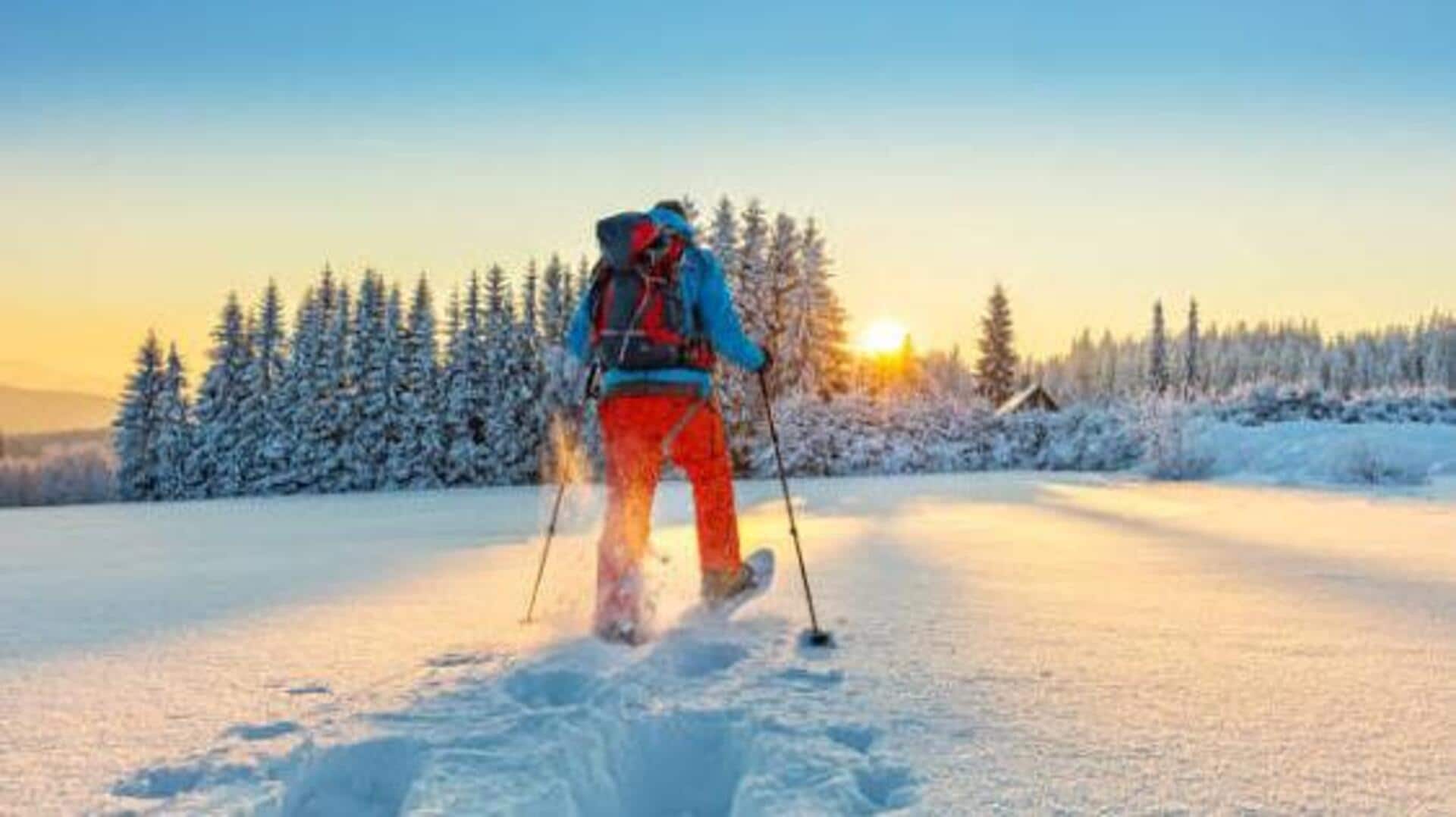
Adventure lovers, you must try snowshoeing in Greenland
What's the story
Greenland's ice cap offers a unique snowshoeing experience that is both thrilling and serene. This vast expanse of ice, covering most of the island, provides adventurers with an opportunity to explore one of the world's last frontiers. Snowshoeing here allows you to traverse the frozen landscape at your own pace, soaking in the breathtaking views and understanding the natural wonders of this remote region.
Preparation
Preparing for your adventure
Before you head out on a snowshoeing expedition in Greenland, make sure you're well-prepared.
Dress in layers to stay comfortable in the changing weather conditions.
Waterproof boots and gloves are a must to keep your hands and feet warm.
Also, carry a map or GPS device, since the terrain can be difficult to navigate.
Staying hydrated and carrying snacks will keep your energy levels up during long treks.
Geography
Understanding the ice cap's geography
Greenland's ice cap is the second largest in the world, after Antarctica. It covers about 80% of the island, offering a diverse range of terrains, from smooth ice fields to rugged crevasses.
Understanding this geography is crucial for planning your route and ensuring safety while snowshoeing.
The ice cap's thickness varies greatly, with some areas reaching over three kilometers deep.
Wildlife
Wildlife encounters on the ice cap
While snowshoeing on Greenland's ice cap, you may encounter some of its unique wildlife.
Arctic foxes, reindeer, and various bird species are commonly found in this region.
These animals have adapted to survive in extreme conditions, providing fascinating insights into their behavior and habitat preferences.
Observing them from a distance ensures minimal disturbance to their natural routines.
Safety
Safety tips for snowshoeing expeditions
Safety should always be your priority when snowshoeing on Greenland's ice cap.
Always travel with a buddy or in groups for help in case of emergencies.
Be aware of weather forecasts, as conditions can change quickly in polar regions.
Carrying emergency supplies like first aid kits, extra clothing layers, and communication devices can be life-saving if something goes wrong during your adventure.