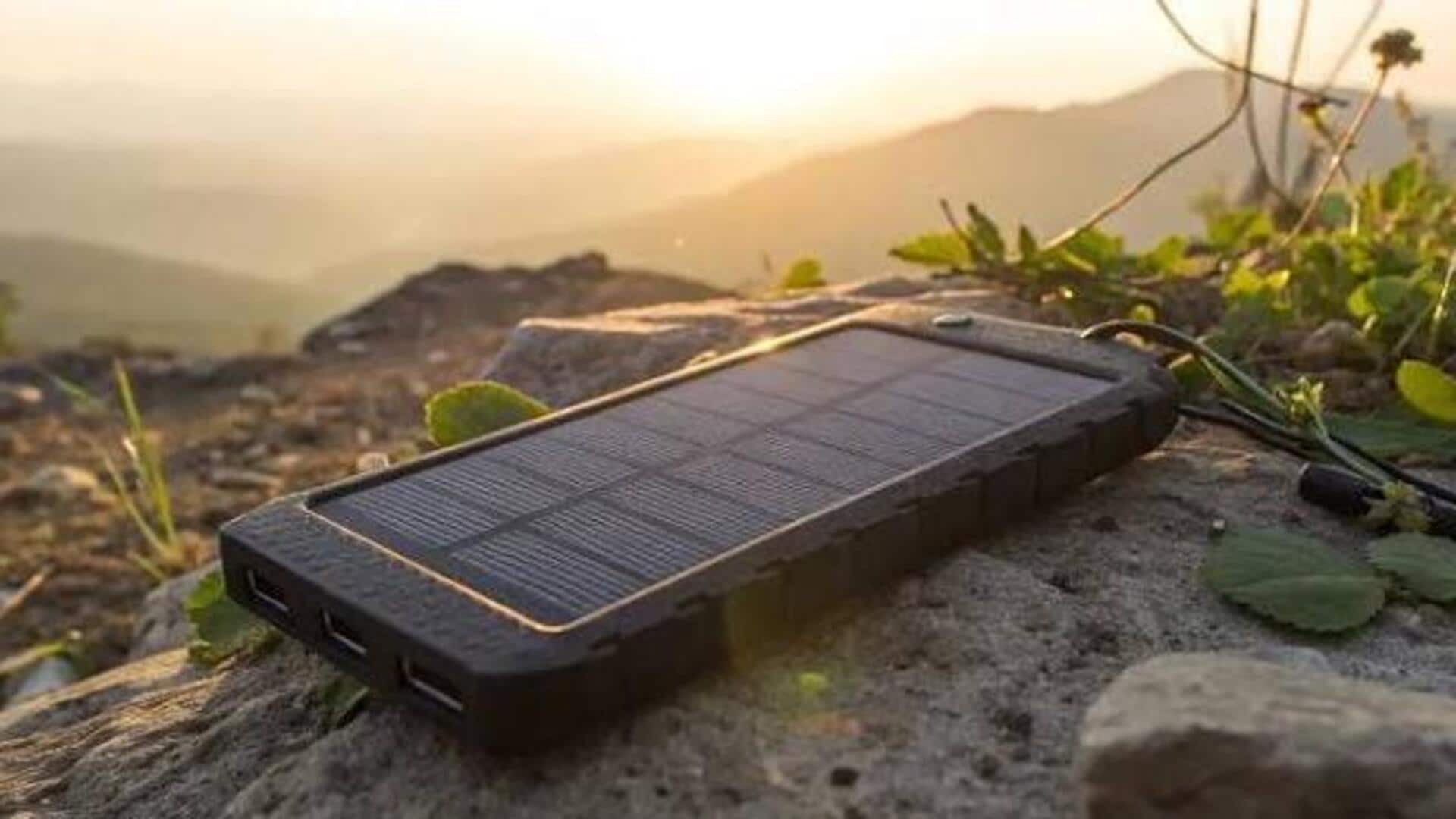
Solar-powered chargers: Your outdoor power solution
What's the story
Exploring the breathtaking landscapes of Lesotho's mountains is an adventure like no other. However, the remote terrain can pose challenges, especially when it comes to keeping your devices charged. That's where solar-powered waterproof chargers come in. These nifty gadgets ensure that you stay connected and capture the beauty of nature without worrying about battery life. Here's how they can make your trip to Lesotho's mountains even better.
Tip 1
Choosing the right solar charger
Choosing the right solar charger is essential for an uninterrupted power supply.
Look for chargers with a minimum output of five watts to ensure efficient charging of small devices like smartphones and cameras.
Also, consider the size and weight of the charger, as you will have to carry it on your hike.
A foldable design can be a space-saver while offering portability.
Tip 2
Ensuring waterproof capabilities
Since weather conditions in Lesotho's mountains can be unpredictable, it is important to choose a waterproof charger.
Look for products with an IP rating of at least IP65, which guarantees protection against dust and low-pressure water jets from any direction.
This way, you can keep your charger safe from rain or accidental splashes while hiking or camping.
Tip 3
Maximizing sunlight exposure
To maximize solar charging efficiency, position your charger directly under sunlight as much as possible.
Avoid placing it under trees or other obstructions that could block sunlight.
Some chargers even come with adjustable stands or hooks that let you position them optimally, wherever you are.
Tip 4
Maintenance tips for longevity
Proper maintenance ensures your solar-powered charger lasts longer and works efficiently.
Clean the surface regularly with a soft cloth to get rid of dust and dirt that may affect its performance.
Also, store it in a cool, dry place when not in use to avoid damage from extreme temperatures or humidity levels commonly found in mountainous regions.