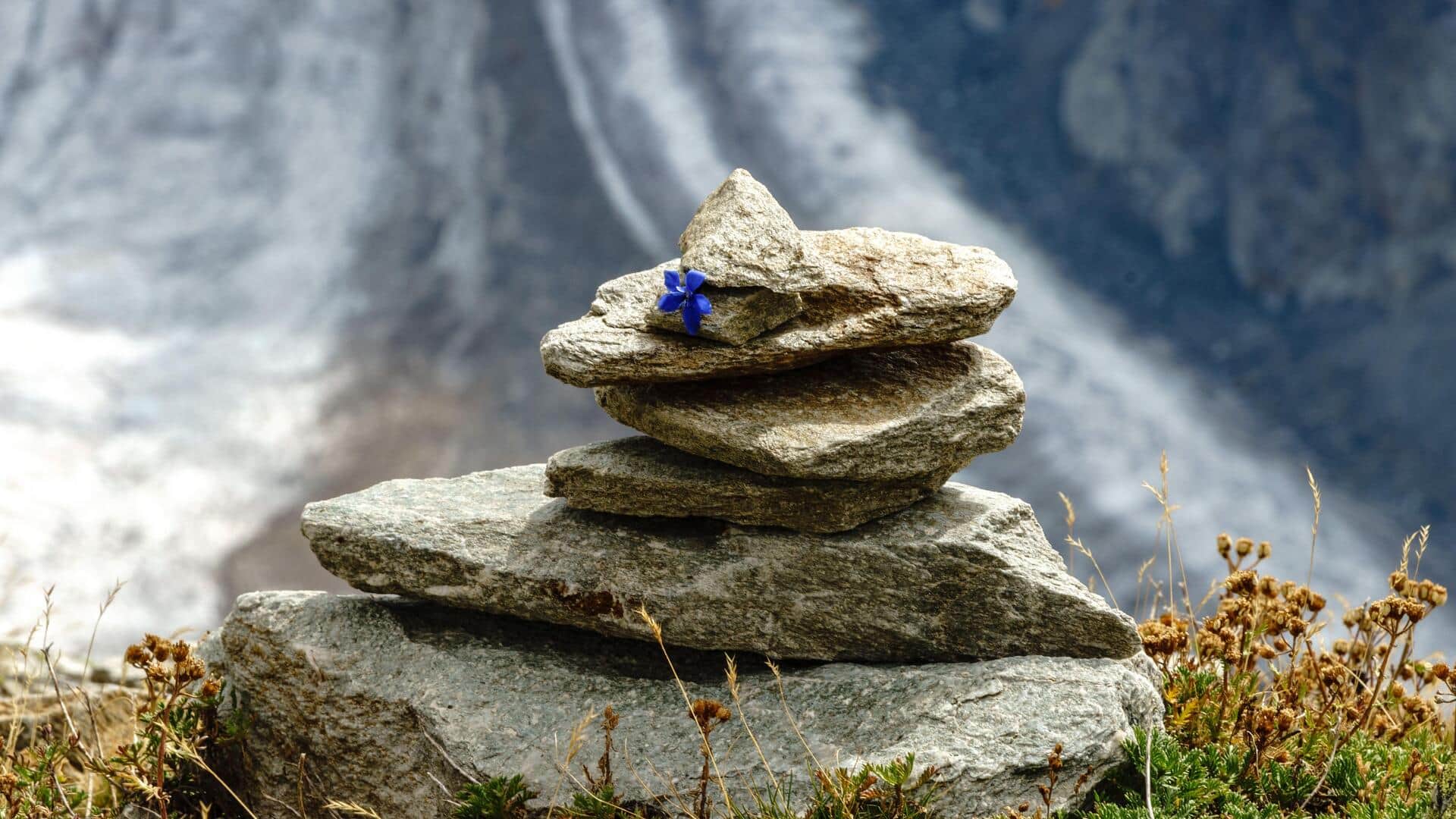
A beginner's guide to stone balancing
What's the story
Stone balancing is a fascinating art that combines patience, focus, and creativity. It involves stacking stones in a way that defies gravity, creating visually stunning formations. The practice is not just about aesthetics; it also requires understanding the balance and weight distribution of each stone. For beginners, mastering the basics can be both challenging and rewarding. Here are some essential tips to help you get started with stone balancing.
Tip 1
Choosing the right stones
Selecting the right stones is crucial for successful balancing.
Look for flat surfaces and irregular shapes that can interlock well.
Smaller stones are easier to handle and allow for more intricate designs.
Make sure the stones you choose have a good weight-to-size ratio to maintain stability.
Tip 2
Understanding weight distribution
Weight distribution is key in stone balancing.
Place heavier stones at the bottom to create a solid foundation, while lighter ones can be used on top for detail work.
Experiment with different placements to see how weight affects stability.
Knowing how each stone interacts with others will improve your balancing skills.
Tip 3
Practicing patience and focus
Patience is a virtue in stone balancing. It often takes several attempts before achieving a stable structure.
Stay focused on each placement, as distractions can lead to mistakes or collapse of your creation.
Take breaks if needed, but remain persistent in your practice.
Tip 4
Experimenting with techniques
Once you've mastered basic balancing techniques, try experimenting with new methods or styles.
Incorporate different angles or use negative space creatively within your designs.
Trying out new techniques will not only enhance your skills but also keep the practice enjoyable by introducing variety into each session.