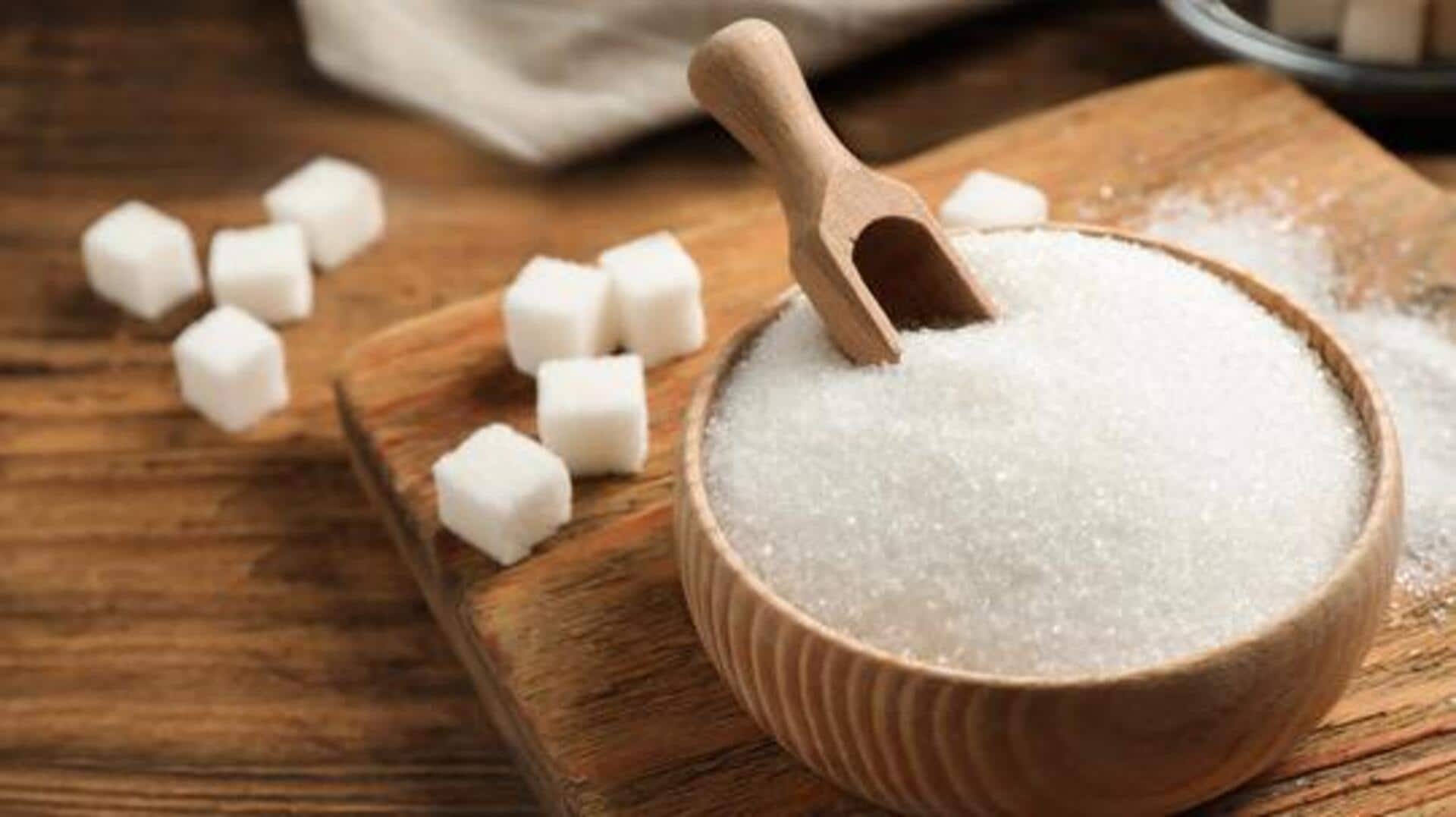
5 myths about sugar you should stop believing
What's the story
Sugar is often the subject of many myths and misconceptions, which can confuse people about its effects on health. While sugar is a part of our daily diet, knowing what is fact and what is fiction is important for making informed dietary choices. Here, we debunk some common myths about sugar, and give you a clearer picture of its role in our diet.
Myth 1
Sugar causes hyperactivity in children
One of the most common beliefs is that sugar makes kids hyperactive.
However, studies have shown no direct link between sugar intake and increased hyperactivity.
The myth probably stems from the excitement of sugary treats at parties or events.
Understanding this can help parents make better choices without fearing sugar's impact on behavior.
Myth 2
All sugars are the same
Not all sugars are created equal.
While some sugars are naturally found in fruits and vegetables, others are added during processing.
Natural sugars come with nutrients and fiber, which help in digestion and overall health.
Added sugars, on the other hand, provide empty calories, with no nutritional benefits.
Knowing the difference can help you make healthier dietary choices.
Myth 3
Cutting out sugar completely is necessary for health
Some believe that cutting out all sugar is the only way to stay healthy. However, moderation is key, rather than complete elimination.
Our body needs some carbohydrates for energy and to function properly.
Instead of cutting out all sugars, focus on reducing added sugars while enjoying natural sources like fruits.
Myth 4
Sugar addiction is real
The term sugar addiction is often thrown around, but scientifically, it is not recognized as an actual addiction like drugs or alcohol.
While some may crave sugary foods due to their pleasurable effects on the brain's reward system, this does not mean they are addicted in the clinical sense.
Myth 5
Brown sugar is healthier than white sugar
Many think brown sugar is healthier than white because of its color and mineral content from molasses during processing.
However, the difference in mineral content between the two is negligible when consumed in typical amounts used in cooking, baking, and hence, it doesn't make a significant health difference overall.