The evolution of India's rangoli designs
What's the story
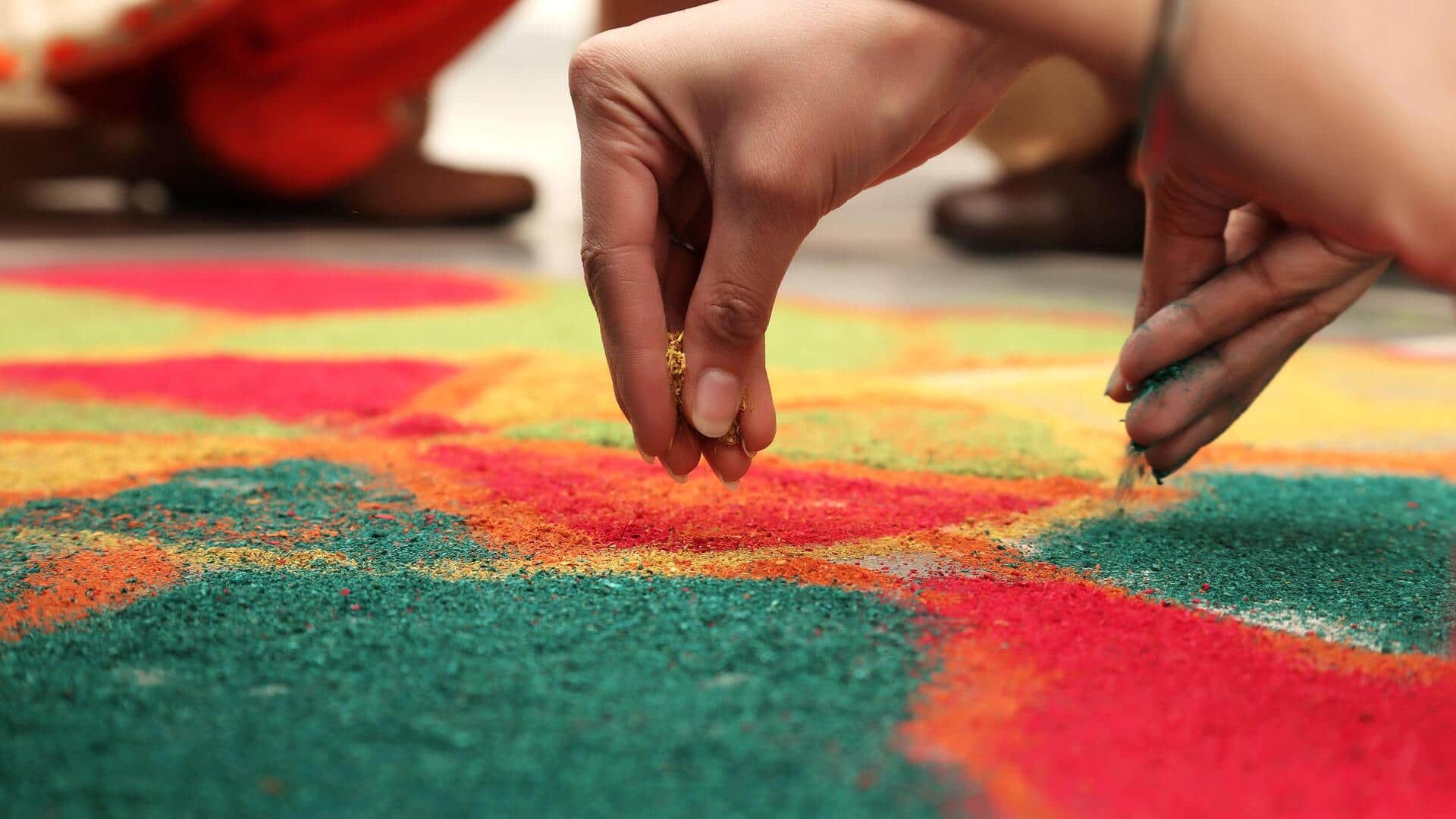
Rangoli, a traditional Indian art form, is a colorful expression of creativity and culture. It involves creating intricate patterns on the ground using materials like rice, flour, and flower petals. While it is widely practiced during festivals, rangoli has a rich history that dates back centuries. This article delves into the evolution of rangoli designs in India, exploring its origins, cultural significance, regional variations, and modern adaptations.
#1
Ancient origins of Rangoli
The roots of rangoli can be traced back to ancient India, where it was used as a welcoming gesture for guests.
Historical texts indicate that early forms of rangoli were simple geometric patterns drawn with natural colors.
These designs were not just decorative but also symbolized prosperity and good fortune.
Over time, the art evolved, with regional influences shaping its patterns and techniques.
#2
Cultural significance across regions
In different parts of India, rangoli takes on different meanings and styles.
In South India, it is known as kolam and is usually drawn early in the morning at the entrance of homes to invite prosperity.
In Maharashtra, it is called chawal and is characterized by intricate designs made during festivals like Diwali.
Each region's unique take on rangoli highlights its cultural heritage.
#3
Regional variations in designs
Rangoli designs vary widely across India's diverse regions.
While some areas prefer simple geometric shapes, others opt for elaborate floral motifs or mythological scenes.
The choice of colors also varies by region; bright hues are common in some states, while others prefer muted tones that reflect local aesthetics.
#4
Modern adaptations and innovations
Today, rangoli has also found its way into contemporary art forms like digital design and textile patterns.
Artists are experimenting with new materials like glitter or beads to create three-dimensional effects in traditional designs.
However, these modern adaptations retain the essence of rangoli while catering to changing tastes and technologies.