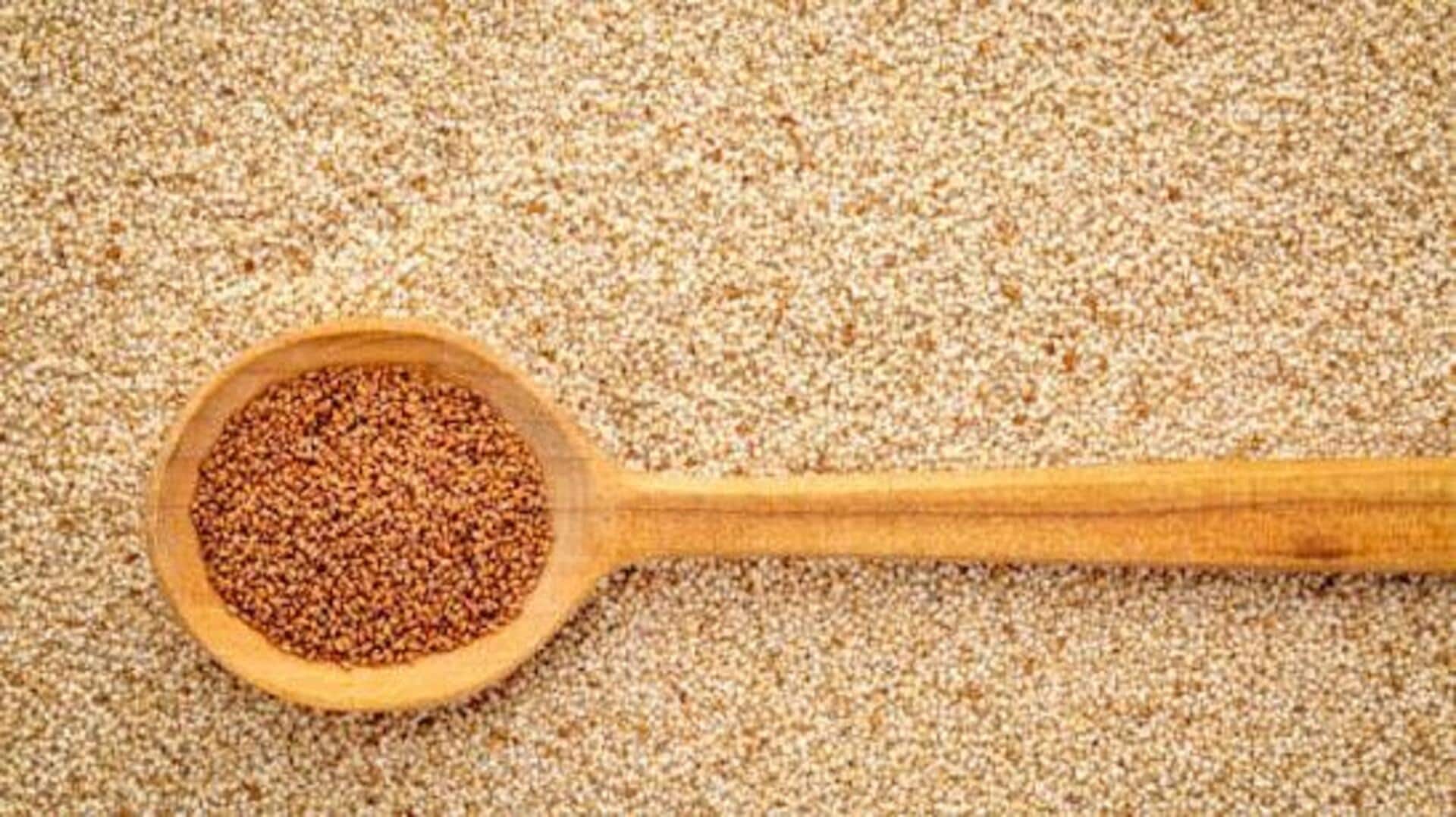
Teff grain: Nutrition, benefits, and uses
What's the story
Teff, a tiny grain native to Ethiopia, is gaining attention for its nutritional benefits. This ancient grain, which has been a staple in Ethiopian cuisine for centuries, is packed with nutrients that can contribute to a healthy diet. With its high fiber content, and rich array of vitamins and minerals, teff offers several health benefits. Here's a look at the nutritional profile of teff and how it can be incorporated into your diet.
#1
Rich in essential nutrients
Teff is loaded with essential nutrients, such as iron, calcium, and magnesium.
These minerals are important for keeping bones healthy and ensuring that oxygen is transported through the body.
The iron content in teff is especially important for preventing anemia.
Teff also provides vitamin C, which improves iron absorption and supports the immune system.
#2
High fiber content
One of the most striking features of teff is its high fiber content.
Fiber is essential for digestive health, as it helps keep bowel movements regular and prevents constipation.
A fiber-rich diet can also help keep cholesterol levels in check and reduce the risk of heart disease.
Including teff in your meals can help you meet your daily fiber requirements.
#3
Gluten-free grain option
For those with gluten intolerance or celiac disease, teff makes an excellent gluten-free alternative to wheat-based products.
Its versatility makes it suitable for baking bread or making porridge without compromising on taste or texture.
By substituting traditional grains with teff, individuals on a gluten-free diet can still enjoy nutritious meals without sacrificing variety.
Tip 1
Versatile culinary uses
Teff's mild flavor makes it versatile for various culinary applications.
It can be used as a base for porridge or added to soups and stews as a thickening agent.
Ground into flour, teff can be used in baking bread or pancakes, providing a nutritious twist to traditional recipes.
Its adaptability ensures that it can easily fit into different dietary preferences while enhancing nutritional intake.