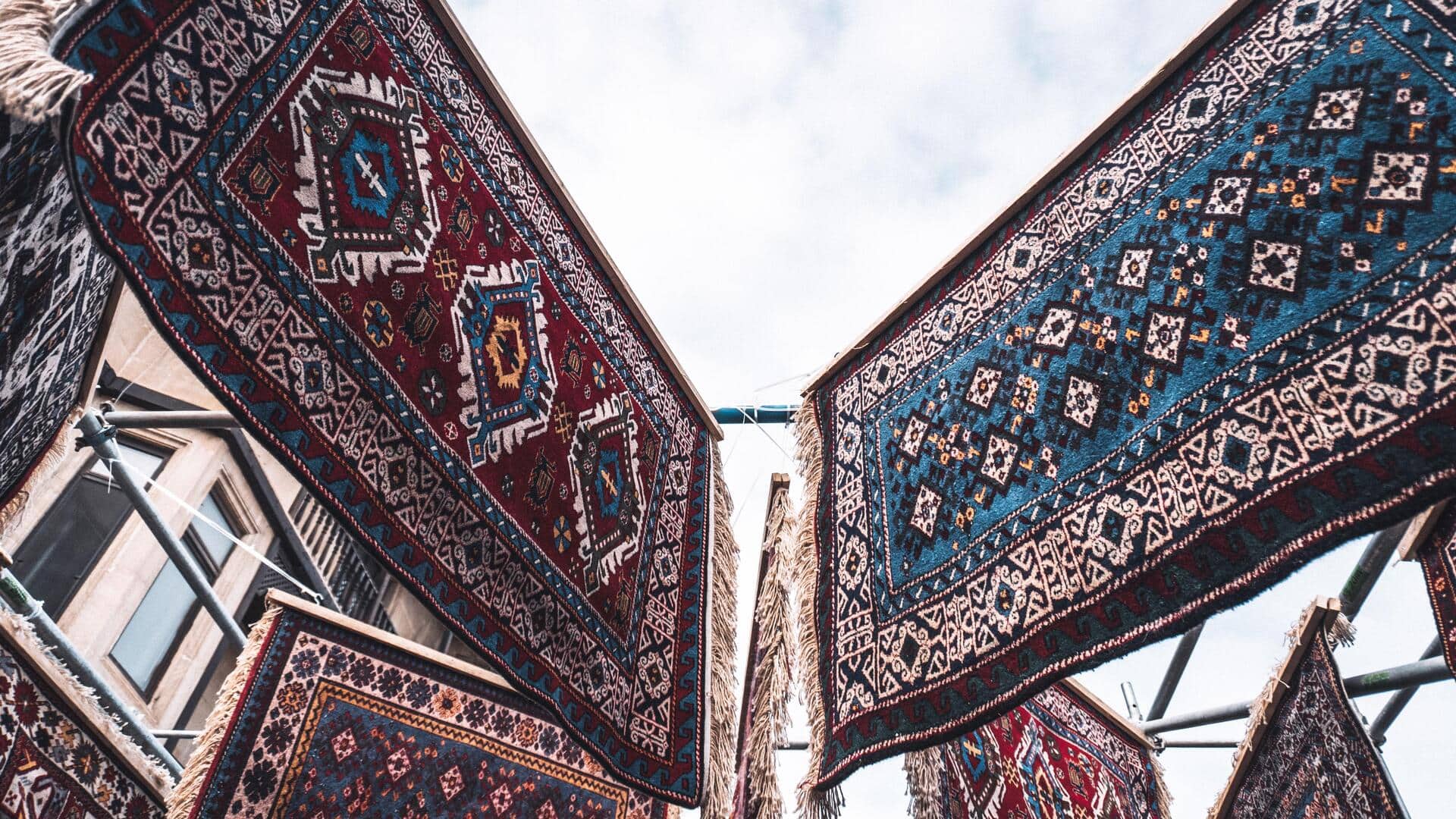
Discover the art of Azerbaijani carpet weaving
What's the story
Azerbaijani carpet weaving is an ancient craft that has been passed down through generations. Famous for its intricate designs and vibrant colors, this art form is deeply rooted in the culture of Azerbaijan. Carpets are not just decorative items but also hold significant cultural and historical value. The techniques used in weaving these carpets have been preserved over centuries, making them unique pieces of art that reflect the rich heritage of the region.
#1
Historical significance of Azerbaijani carpets
Azerbaijani carpets date back to ancient times, with some even dating back to as far as the 15th century.
They were used as functional items in households and also as symbols of status and wealth.
The carpets are often associated with nomadic tribes who used them in tents or as floor coverings.
Their historical significance is reflected in their use during important ceremonies and events.
#2
Unique weaving techniques
The techniques employed in Azerbaijani carpet weaving are unique, with each region having its own style.
The weavers use traditional tools such as looms and needles to create intricate patterns with wool or silk threads.
The double knot technique is commonly used, allowing for detailed designs on both sides of the carpet.
This technique requires immense skill and patience, which is why each carpet is a labor of love.
#3
Symbolism in carpet designs
Azerbaijani carpets are known for their symbolic motifs, each carrying cultural significance.
Common designs include geometric shapes, floral patterns, and representations of nature.
These symbols often tell stories or convey messages related to daily life or spiritual beliefs of the communities that weave them.
Understanding these symbols gives insight into the values and traditions of Azerbaijani society.
#4
Preservation efforts for traditional weaving
In recent years, efforts have been made to preserve traditional Azerbaijani carpet weaving techniques amid modernization.
Workshops have been established where artisans can pass on their skills to younger generations.
These initiatives aim to ensure that this cultural heritage continues to thrive while adapting to contemporary demands without losing its authenticity.