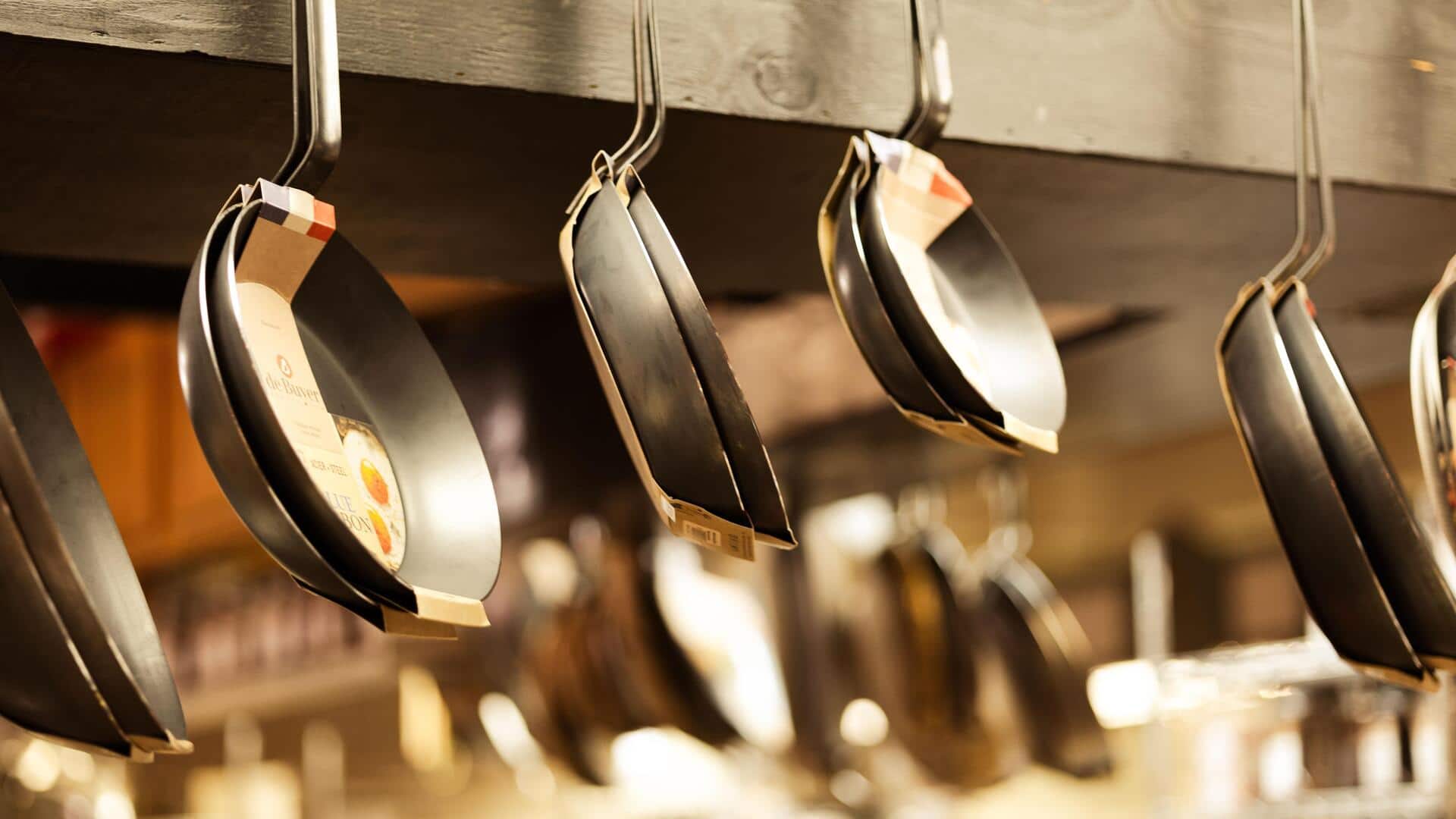
How to care for non-stick cookware
What's the story
Non-stick cookware has become a staple in most kitchens, owing to its convenience and ease of use. However, maintaining the longevity of these pans can be tricky. With the right care, you can keep your non-stick pans in good condition for years. Here are five practical tips to help you maintain your non-stick cookware, ensuring it remains efficient and durable.
Tip 1
Use low to medium heat
Using low to medium heat is key to preserving the non-stick coating of your pans.
High temperatures can damage the surface, causing it to wear out faster.
By cooking on lower heat settings, you ensure that the coating remains intact while still getting the job done.
Tip 2
Avoid metal utensils
Metal utensils can scratch and damage the non-stick surface of your pans.
Instead, opt for silicone, wood, or plastic utensils that are gentle on the coating.
These materials won't compromise the integrity of your cookware, ensuring it remains non-stick for a longer period.
Tip 3
Hand wash with mild soap
While some non-stick pans are labeled dishwasher safe, hand washing is usually the best option for longevity.
Use warm water and mild dish soap to clean your pans after each use.
Avoid abrasive sponges or cleaners that can wear down the coating over time.
Tip 4
Store carefully
Proper storage is essential to avoid scratches on your non-stick cookware.
When stacking pans, place a soft cloth or paper towel between them to prevent direct contact.
This simple step minimizes friction and potential damage, keeping your cookware in great shape.
It's a small effort that pays off in the long run, ensuring your non-stick pans remain functional and looking good.
Tip 5
Regularly check for damage
Regularly inspecting your non-stick cookware is essential to catch any signs of wear or damage early.
Look for scratches, chips, or peeling surfaces that could compromise its performance.
If you notice any issues, address them immediately to prevent further deterioration.
This proactive approach helps maintain the quality and functionality of your pans, ensuring they continue to meet your cooking needs without compromising on safety or efficiency.