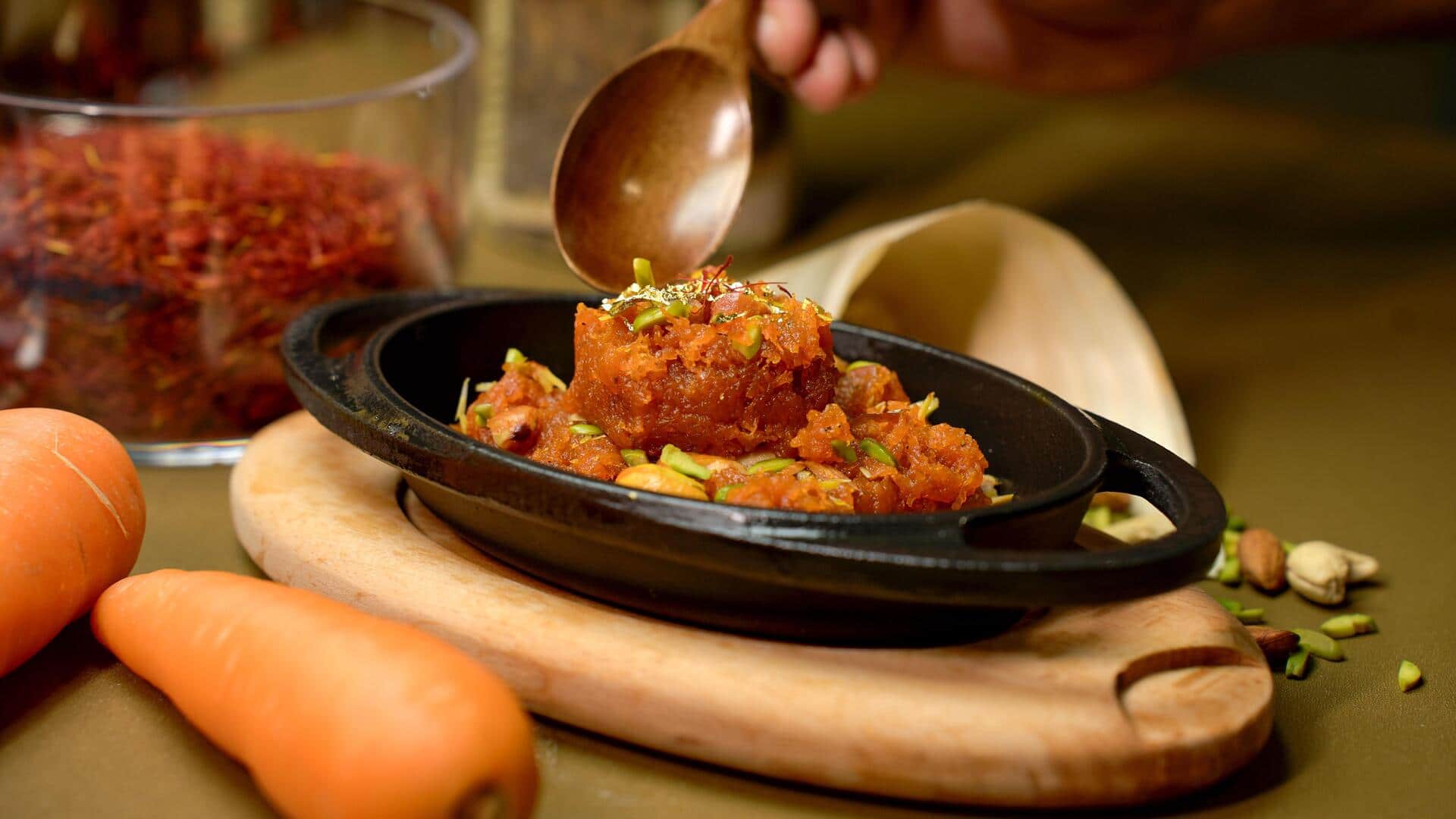
Gajar halwa's journey: From winter delight to festive favorite
What's the story
Gajar halwa, a traditional Indian dessert, has come a long way from being a wintertime favorite to a must-have during celebrations. This rich and creamy sweet dish, made with grated carrots, milk, sugar, and ghee, has been cherished for centuries. Its journey from humble beginnings to festive tables highlights the cultural significance and culinary evolution of this beloved treat.
#1
Origins of Gajar Halwa
Gajar halwa's history dates back to ancient Persia, where it was first prepared with carrots and milk.
The dish made its way to India, where it was modified with local ingredients like khoya and cardamom.
It was mainly prepared during winters when carrots were in season.
The dessert was initially prepared in households, and later gained popularity in restaurants and sweet shops.
#2
Ingredients that define gajar halwa
The main ingredients of gajar halwa are grated carrots, milk, sugar, ghee, and nuts such as almonds or cashews.
The carrots are slow-cooked till they become soft and the milk thickens into a creamy consistency.
Sugar is added to sweeten the dish while ghee gives it richness. Nuts add texture and flavor to this decadent dessert.
#3
Cooking techniques used in preparation
Traditionally, gajar halwa is cooked on low flame for hours so that the flavors meld together beautifully.
The slow cooking process ensures that the carrots absorb all the flavors from spices like cardamom or saffron, if used.
Stirring frequently prevents sticking at the bottom of the pan while allowing even cooking throughout.
#4
Modern variations of gajar halwa
Over time, gajar halwa has evolved with modern twists like adding condensed milk or using different types of nuts for variety.
Some chefs even experiment by adding fruits like raisins or pineapple chunks for an added burst of flavor.
These variations cater to changing palates while retaining the essence of traditional recipes passed down through generations.