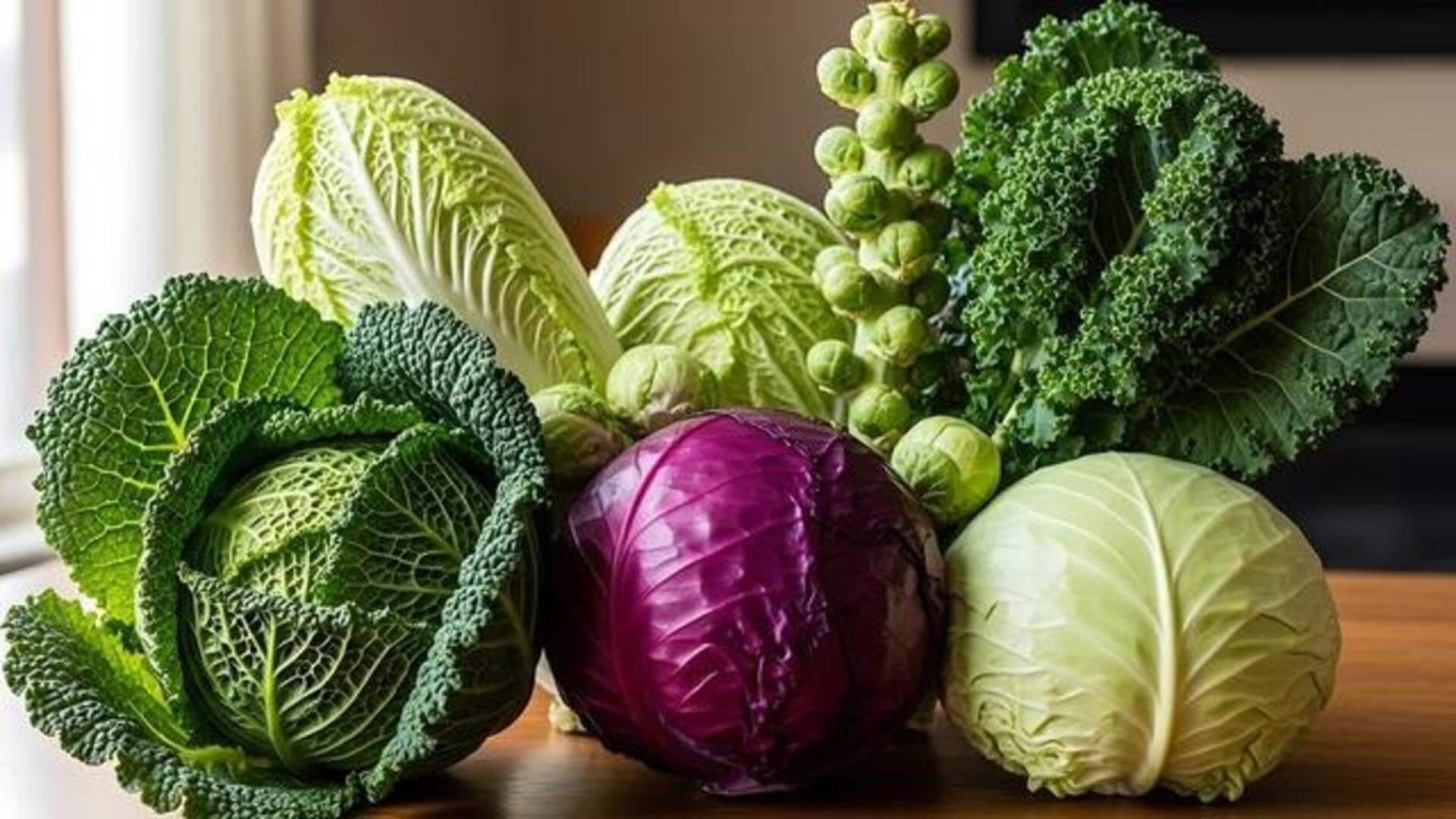
Add these cruciferous vegetables to your daily diet
What's the story
Cruciferous vegetables are a must-have in vegetarian diets, thanks to their nutrient density and health benefits. These vegetables are known for their cancer-fighting properties, thanks to their high content of glucosinolates. Including these veggies in your diet can improve your health in a number of ways. Here are five cruciferous vegetables that can amp up your vegetarian diet.
#1
Broccoli: A nutrient powerhouse
Broccoli is one of the most popular cruciferous vegetables, loaded with vitamins C and K, fiber, and antioxidants.
It is also rich in sulforaphane, a compound that has been studied for its potential cancer-fighting properties.
Eating broccoli regularly may help improve digestion and support immune function.
You can enjoy it steamed, roasted, or even raw in salads to reap its benefits.
#2
Kale: The leafy green wonder
Kale is another nutrient-dense vegetable that is a staple in many vegetarian diets.
It is packed with vitamins A, C, and K, along with calcium and potassium.
Kale is also rich in lutein and zeaxanthin, which are good for eye health.
You can add kale to smoothies or use it as a base for salads to enjoy its health benefits.
#3
Brussels sprouts: Small but mighty
Brussels sprouts are tiny cabbages that pack a punch when it comes to nutrition.
They are high in fiber, vitamins C and K, folate, and manganese.
These little greens are also a good source of antioxidants that may help reduce inflammation in the body.
Roasting or sauteing Brussels sprouts brings out their natural sweetness while keeping them nutritious.
#4
Cauliflower: Versatile vegetable delight
Cauliflower is an extremely versatile vegetable that can be used as a low-carb substitute for grains or legumes.
It is high in vitamins C and K, as well as fiber. Cauliflower also contains choline, which is essential for brain health.
You can eat cauliflower raw with dips, or cook it into soups for added nutrition without the calories.
#5
Cabbage: The digestive aid
Cabbage is a staple vegetable in vegetarian diets, thanks to its digestive benefits.
It is rich in fiber and water content, which promotes regular bowel movements and gut health.
Cabbage also contains vitamin U, which may help heal stomach ulcers.
You can eat cabbage raw in salads or cook it in stir-fries for a nutritious boost to your meals.