5 traditional embroidery styles you should know
What's the story
Embroidery has always been a way to express culture and tradition. Every region has its own unique style, telling stories through threads. From Africa to Asia, every continent has its own embroidery techniques, which are a reflection of its cultural heritage. Here are five unique embroidery styles from different parts of the world, each with its own story and significance.
#1
African kente embroidery
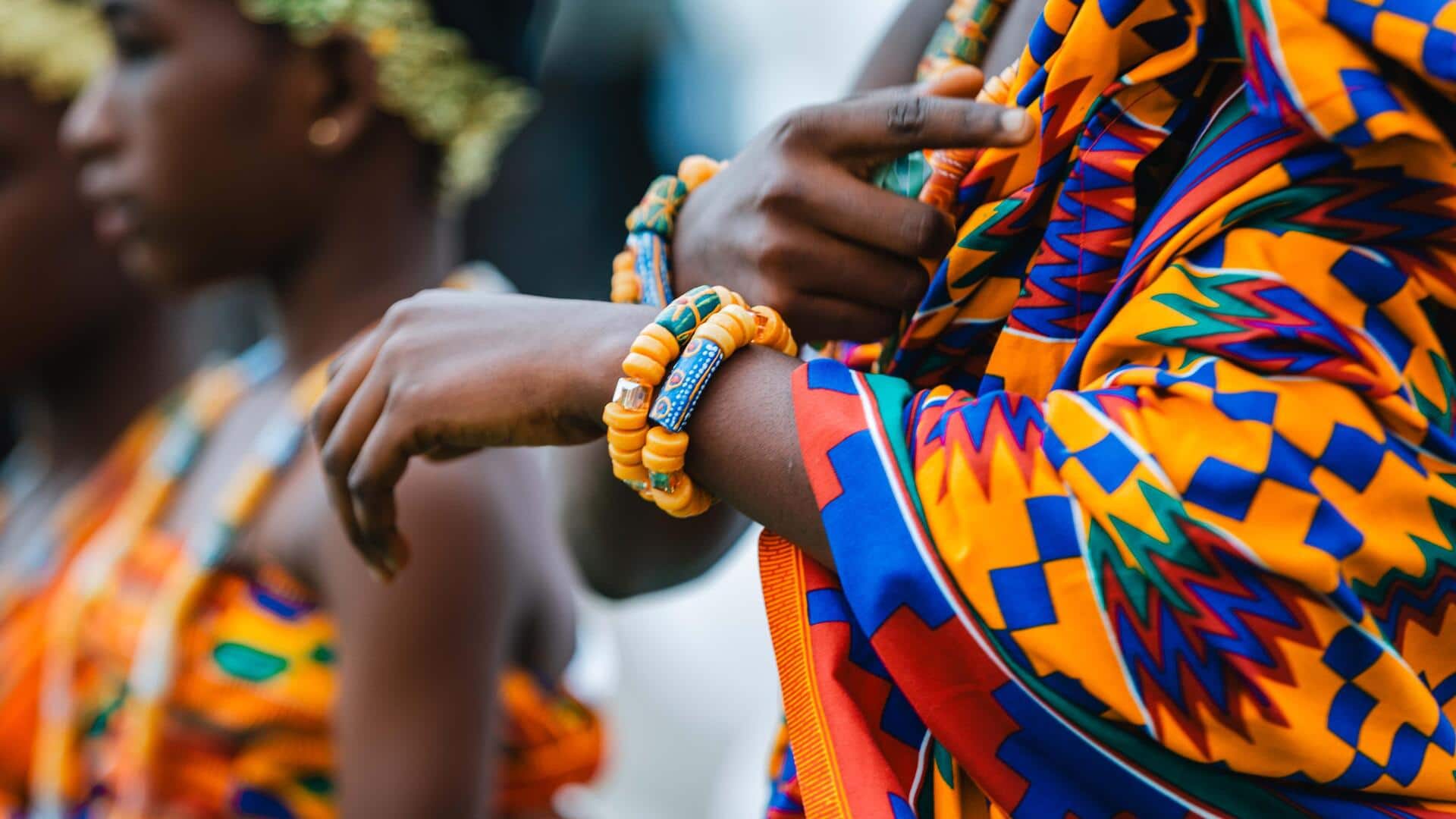
Kente embroidery is a traditional craft from West Africa, particularly Ghana. It is characterized by bright colors and geometric patterns. The designs often symbolize proverbs or historical events.
Kente cloth was originally worn by royalty but has now become a symbol of African pride and identity.
The intricate work requires great skill, making each piece unique and valuable.
#2
Japanese sashiko stitching
Sashiko is a form of Japanese folk embroidery using a simple running stitch to create a patterned background. Traditionally, it was used to reinforce worn-out clothes but has now evolved into an art form.
Sashiko patterns usually feature nature-inspired motifs like waves or mountains and represent simplicity and beauty in imperfection.
#3
Indian Kantha work
Kantha work is an ancient Indian embroidery technique, mostly practiced in Bengal.
It uses simple running stitches to create intricate designs on layers of fabric, usually old saris.
The technique was initially used to repurpose old clothes but has now become a popular decorative art form, known for its vibrant colors and detailed patterns.
#4
Mexican Otomi embroidery
Otomi embroidery comes from the Otomi people of central Mexico, famous for their colorful designs depicting flora and fauna.
The bold, colorful threads are stitched onto white fabric, creating stunning contrast.
This style preserves indigenous traditions while making it accessible worldwide through contemporary fashion.
#5
Chinese Suzhou embroidery
Suzhou embroidery, from China's Jiangsu province, is one of the most exquisite forms of needlework.
It features incredibly detailed scenes of landscapes, flowers, and animals.
The artisans use silk threads to create lifelike images on silk fabrics.
This centuries-old craft is still practiced today, showcasing the rich cultural heritage of the region.