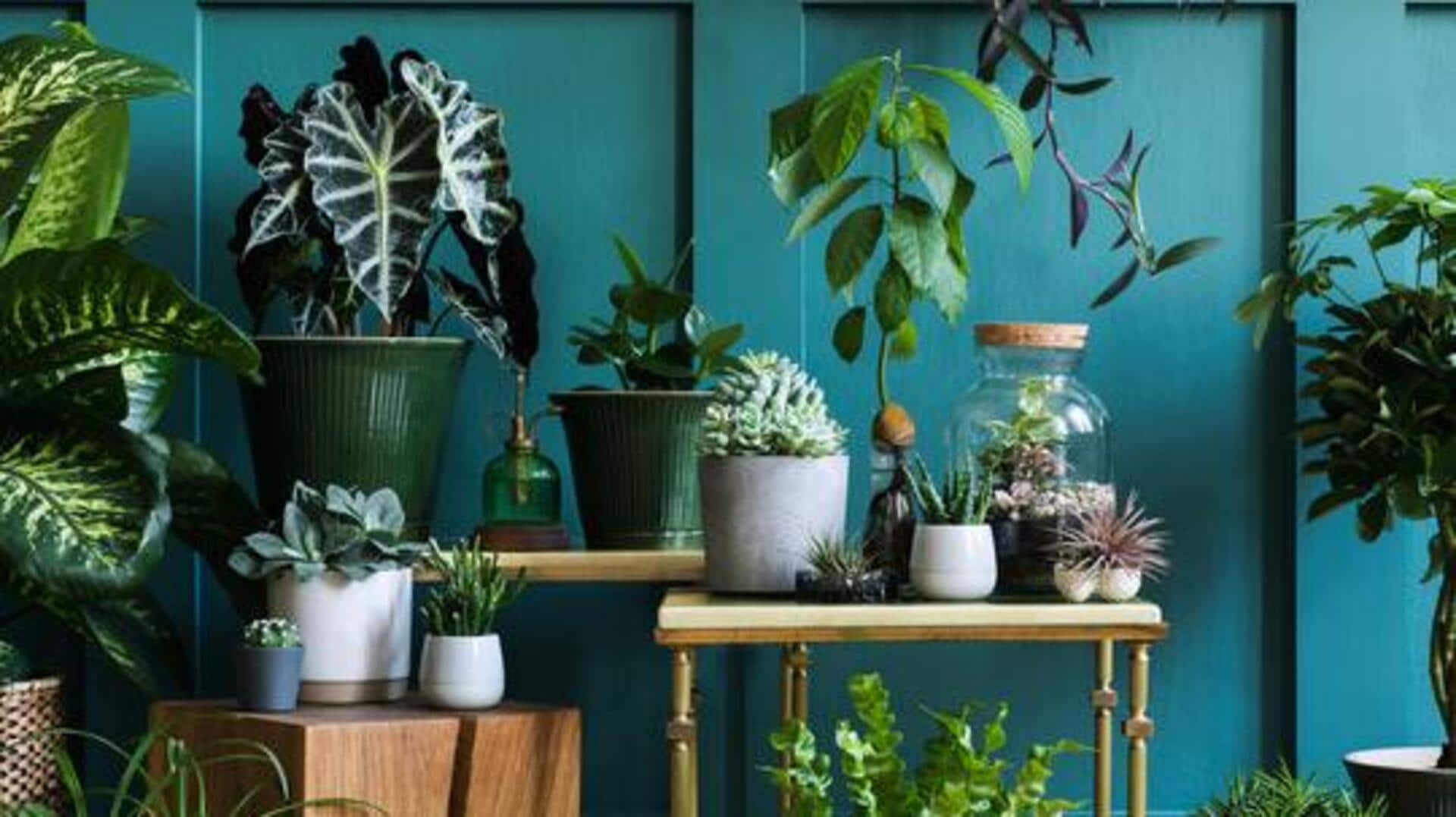
These plants can make your indoor air less humid
What's the story
High humidity levels can make your bedroom uncomfortable, affecting sleep quality and overall well-being. Luckily, certain plants can naturally help reduce humidity by absorbing moisture from the air. Not only do these plants improve air quality, but they also add a touch of greenery to your space. Here are five plants that are particularly effective at lowering bedroom humidity levels.
Peace Lily
Peace lily's moisture absorption
The peace lily is famous for its ability to absorb moisture through its leaves.
It does so through a process called transpiration, where water vapor is released into the air from the plant's surface.
This process can help reduce humidity levels in your bedroom, making it a great choice for those looking for a more comfortable environment.
Spider plant
Spider plant's air-purifying qualities
Spider plants are also known for their air-purifying qualities and ability to absorb excess moisture from the air.
They are easy to care for, and thrive in various conditions, making them perfect for any bedroom setting.
By reducing humidity and purifying the air, spider plants can help create a healthier sleeping environment.
Boston fern
Boston fern's natural cooling effect
Boston ferns are famous for their lush foliage and ability to naturally cool down rooms by releasing moisture into the air.
This process helps balance humidity levels indoors, making them ideal for bedrooms prone to dampness.
Their vibrant green leaves also add an aesthetic appeal while contributing to improved indoor climate control.
Bamboo palm
Bamboo palm's humidity regulation
The bamboo palm is an excellent choice for regulating indoor humidity levels.
It absorbs excess moisture through its leaves, while simultaneously filtering out harmful toxins from the air.
This dual action makes it an effective plant for maintaining optimal bedroom conditions without much effort.
Rubber plant
Rubber plant's moisture control benefits
Rubber plants are known for their robust nature and ability to control indoor moisture levels effectively.
They absorb excess humidity through their broad leaves, helping maintain balanced indoor climates over time.
With minimal maintenance requirements, rubber plants provide both functional benefits and aesthetic value in any bedroom setting.