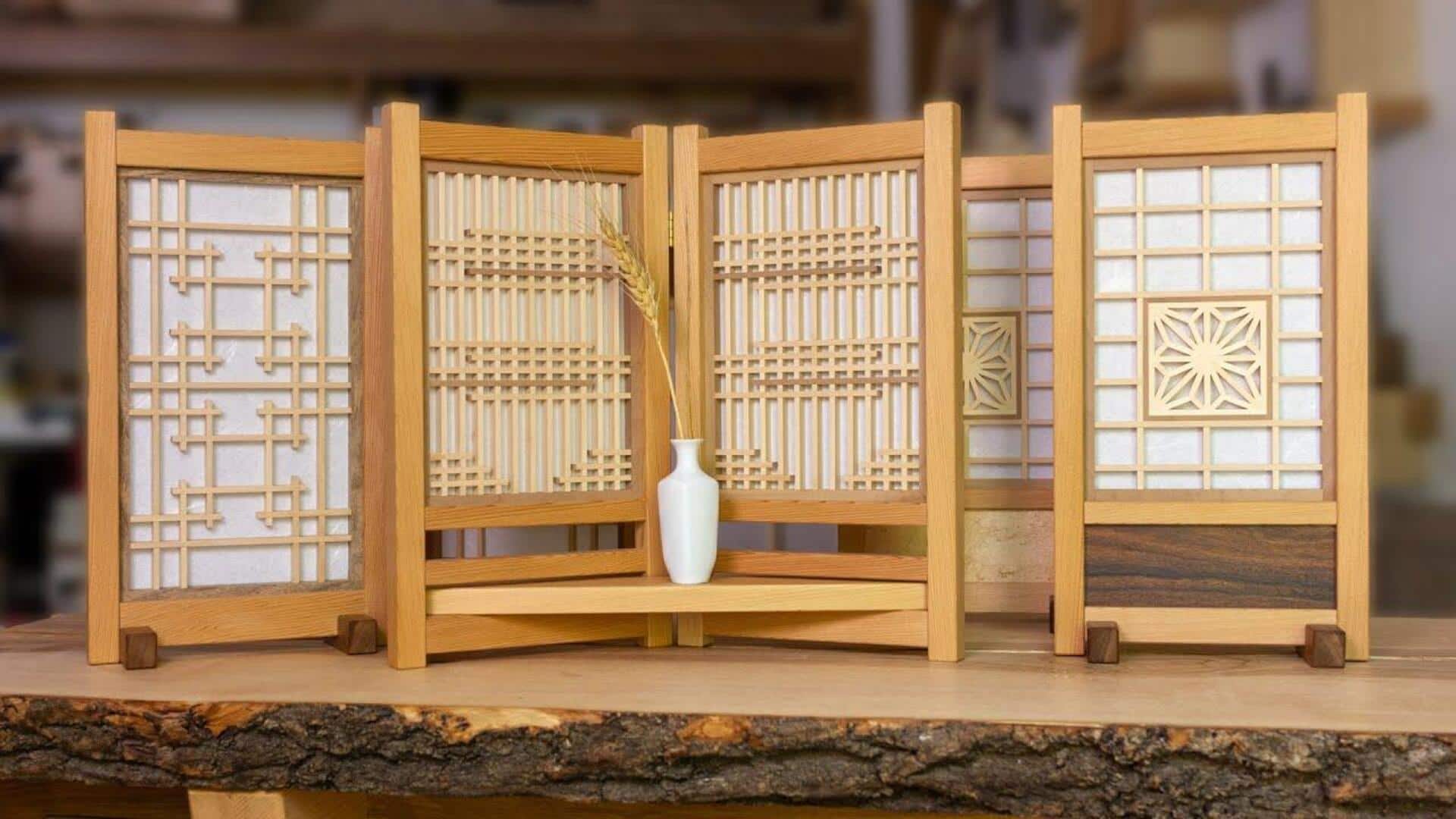
Shoji screens: How to make these Japanese room dividers
What's the story
Shoji screens, traditional Japanese room dividers, are a stylish and functional addition to any home. They provide privacy while letting in natural light, making them an ideal choice for modern interiors. DIY projects can be an affordable way to add these elegant screens to your living space. With some basic materials and creativity, you can craft a unique shoji screen that complements your decor.
Tip 1
Choosing the right materials
Selecting the right materials is key to making a durable and beautiful shoji screen.
Wood is usually chosen for the frame, thanks to its sturdiness and aesthetic appeal. Bamboo can also be an option for a more lightweight structure.
Rice paper or translucent fabric is used for the panels, allowing light to filter through while maintaining privacy.
Make sure the materials match your home's style.
Tip 2
Designing your screen layout
Designing the layout of your shoji screen is essential for both functionality and aesthetics.
Decide how many panels you want based on the space available and how much coverage you need. A three-panel design is common, but feel free to customize it according to your needs.
Symmetrical patterns with horizontal or vertical slats give a classic look, while asymmetrical designs can add a modern touch.
Tip 3
Assembling your shoji screen
Once you have all materials ready, assembling your shoji screen is the next step.
Start by cutting wooden pieces to size for each panel frame. Secure them using nails or screws at the corners for stability.
Next, attach rice paper or fabric securely within each frame using adhesive or double-sided tape.
Ensure all parts are aligned properly before finalizing assembly.
Tip 4
Adding finishing touches
To complete your DIY Shoji screen project, consider adding finishing touches that enhance its appearance without compromising functionality.
Sand down any rough edges on wooden frames to prevent splinters during use; this also gives a polished look overall.
You may also stain or paint wood if desired, but ensure it does not obstruct light passage through panels.