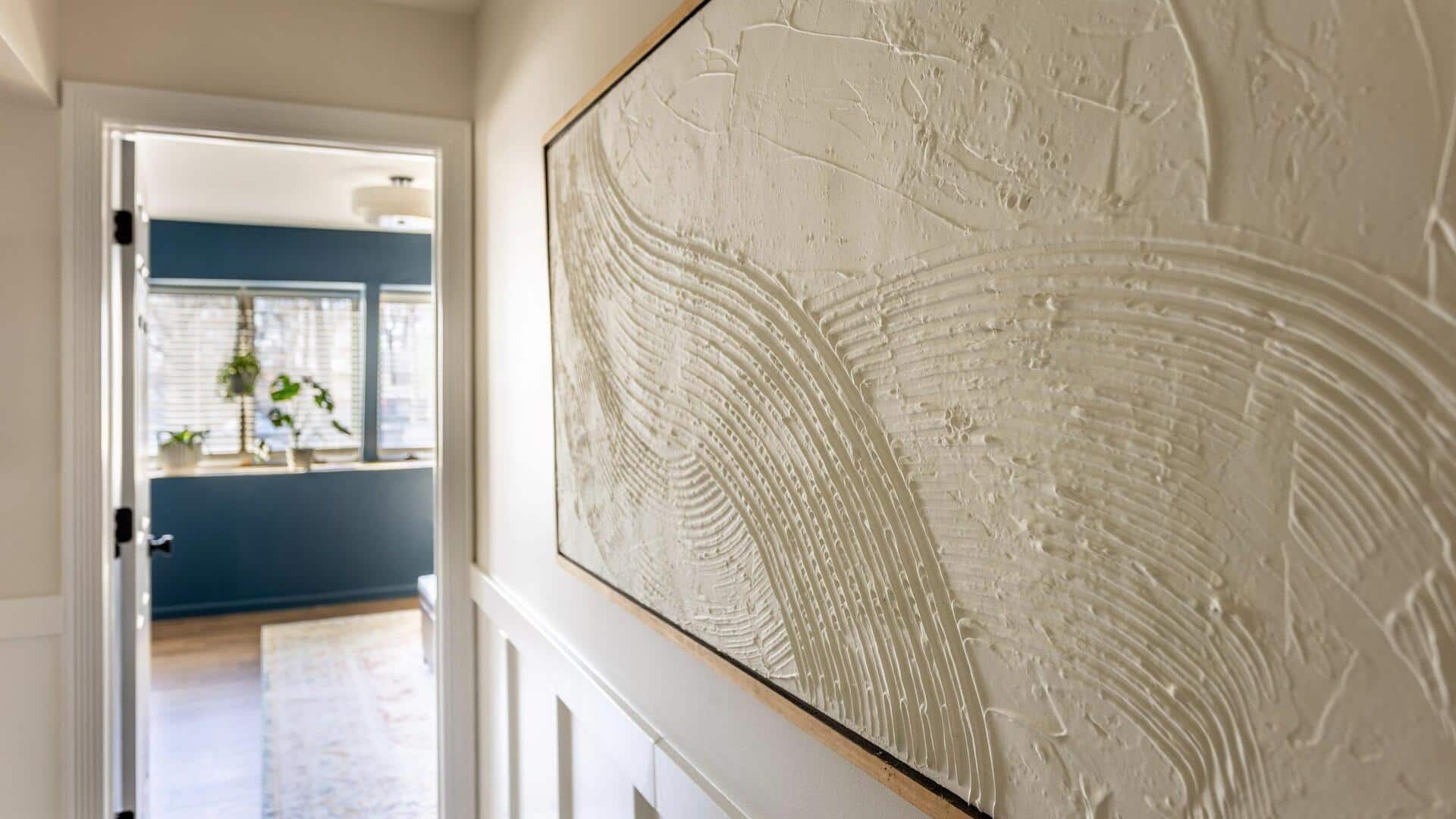
What is textured wall art?
What's the story
Textured wall art can transform any room into a cozy haven. By adding depth and interest to your walls, these pieces create an inviting atmosphere. Whether you prefer natural materials or modern designs, textured art offers versatile options to suit different tastes and styles. Here are some practical insights on how to effectively use textured wall art in home decor.
Tip 1
Incorporating natural materials
Natural materials like wood, stone, and bamboo can add warmth and character to your space.
These elements not only provide texture but also connect you with nature, making your home feel more grounded.
Consider using reclaimed wood panels or stone mosaics for a rustic look, or bamboo weaves for a touch of elegance.
Tip 2
Using fabric for softness
Fabric wall art introduces softness and warmth to any room.
Textiles like linen, cotton, or wool can be used to create tapestries or hangings that soften hard surfaces and make spaces cozier.
Opt for neutral tones or subtle patterns to keep the focus on texture while complementing existing decor.
Tip 3
Experimenting with 3D designs
Three-dimensional wall art takes visual interest to the next level by adding depth and dimension to flat surfaces.
Sculptural pieces made from metal, plaster, or paper can turn any plain wall into a stunning focal point.
These designs are ideal for contemporary spaces where bold statements are welcome.
Tip 4
Mixing textures for depth
Mixing different textures in one room creates a dynamic look that keeps your eyes moving.
Combine smooth surfaces with rough ones, like pairing sleek metal frames with textured fabric panels.
This contrast adds layers of interest without overwhelming the space.
Tip 5
Choosing colors wisely
Color plays an important role in how textured wall art affects the overall vibe of a room.
Neutral shades like beige or gray let the texture take center stage, without clashing with other elements in the room.
For those looking for more drama, deep hues like navy blue or forest green can make textures pop even more.