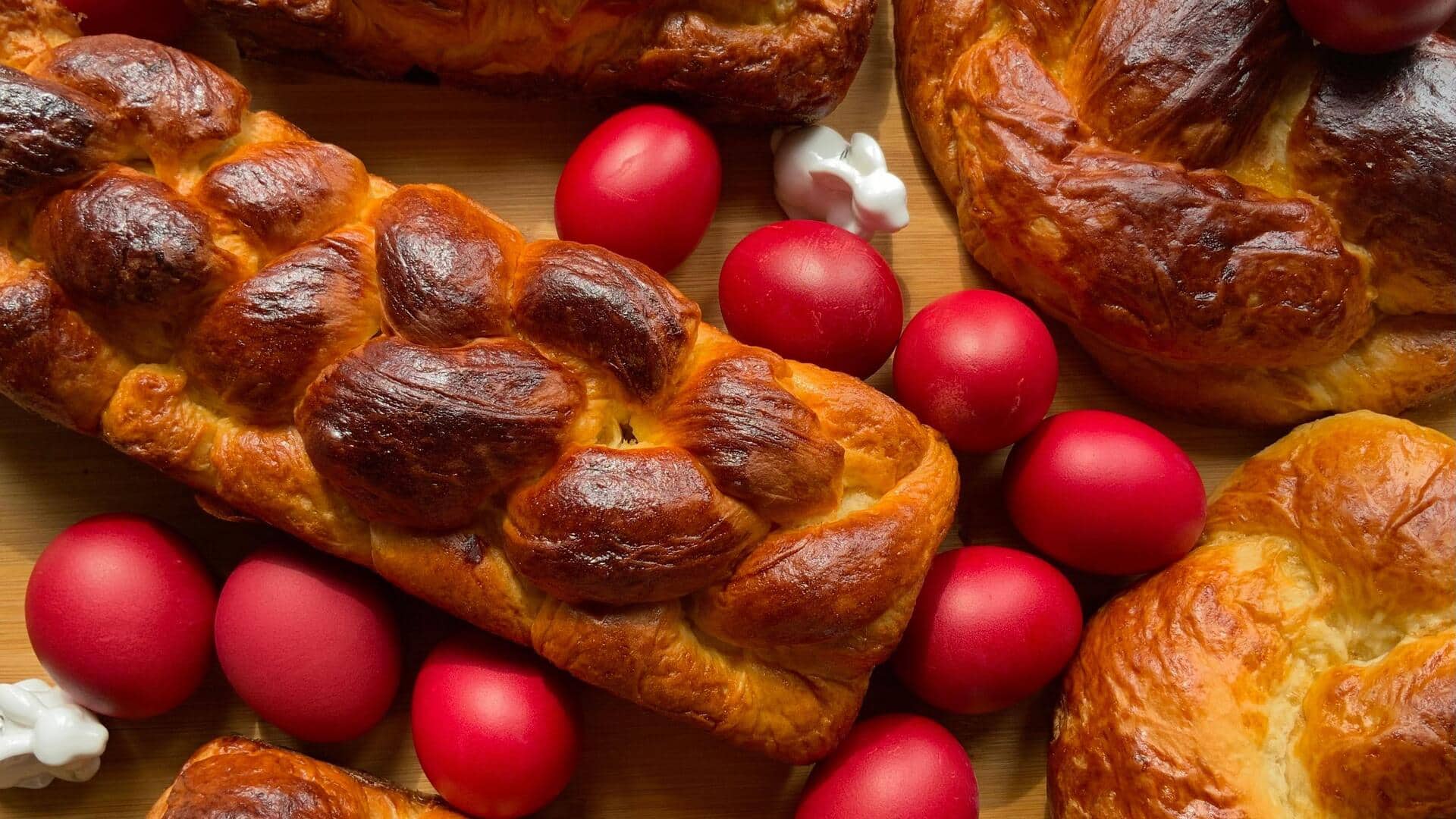
Tsoureki: How Greece celebrates Easter with this special bread
What's the story
Greek Easter bread, or tsoureki, is a traditional sweet bread that is an integral part of the Easter celebrations in Greece. The bread is known for its unique flavor and texture, and is often braided into intricate shapes. The preparation and consumption of tsoureki are steeped in customs that have been passed down through generations. These traditions not only celebrate the holiday but also bring communities together in joyous unity.
#1
The significance of braiding
Braiding tsoureki is a symbolic act representing the intertwining of faith and community.
The three strands often symbolize the Holy Trinity, while the act of braiding itself is a communal activity that brings families together.
This tradition emphasizes unity and cooperation, as each member contributes to creating this beloved bread.
#2
Use of aromatic spices
Another key aspect of making tsoureki is the use of aromatic spices such as mahleb and mastic.
Mahleb, made from ground cherry pits, lends a unique flavor that distinguishes tsoureki from other breads.
Mastic, a resin from the mastic tree, adds an earthy aroma.
These spices are not just for flavor; they also represent the richness of Greek culture and history.
#3
Decorating with colored eggs
Decorating tsoureki with colored decorations is another tradition that adds a festive touch to the bread.
The red-dyed decorations symbolize new life. They are often placed on top or around the braided loaf as decoration.
This practice adds color and meaning to the celebration.
#4
Sharing among neighbors
Sharing tsoureki among neighbors is a long-standing tradition that strengthens community bonds during Easter.
Families often exchange loaves with one another as a gesture of goodwill and friendship.
This practice fosters a sense of belonging within neighborhoods, where everyone participates in celebrating this special occasion together.
#5
Special shapes for different regions
In different regions of Greece, tsoureki is prepared in different shapes and sizes, depending on local customs.
Some areas prefer round loaves, while others opt for braided ones or even shaped like crosses or other symbols relevant to their culture.
These regional variations highlight Greece's rich cultural diversity, while still holding on to the core tradition of making tsoureki during Easter.