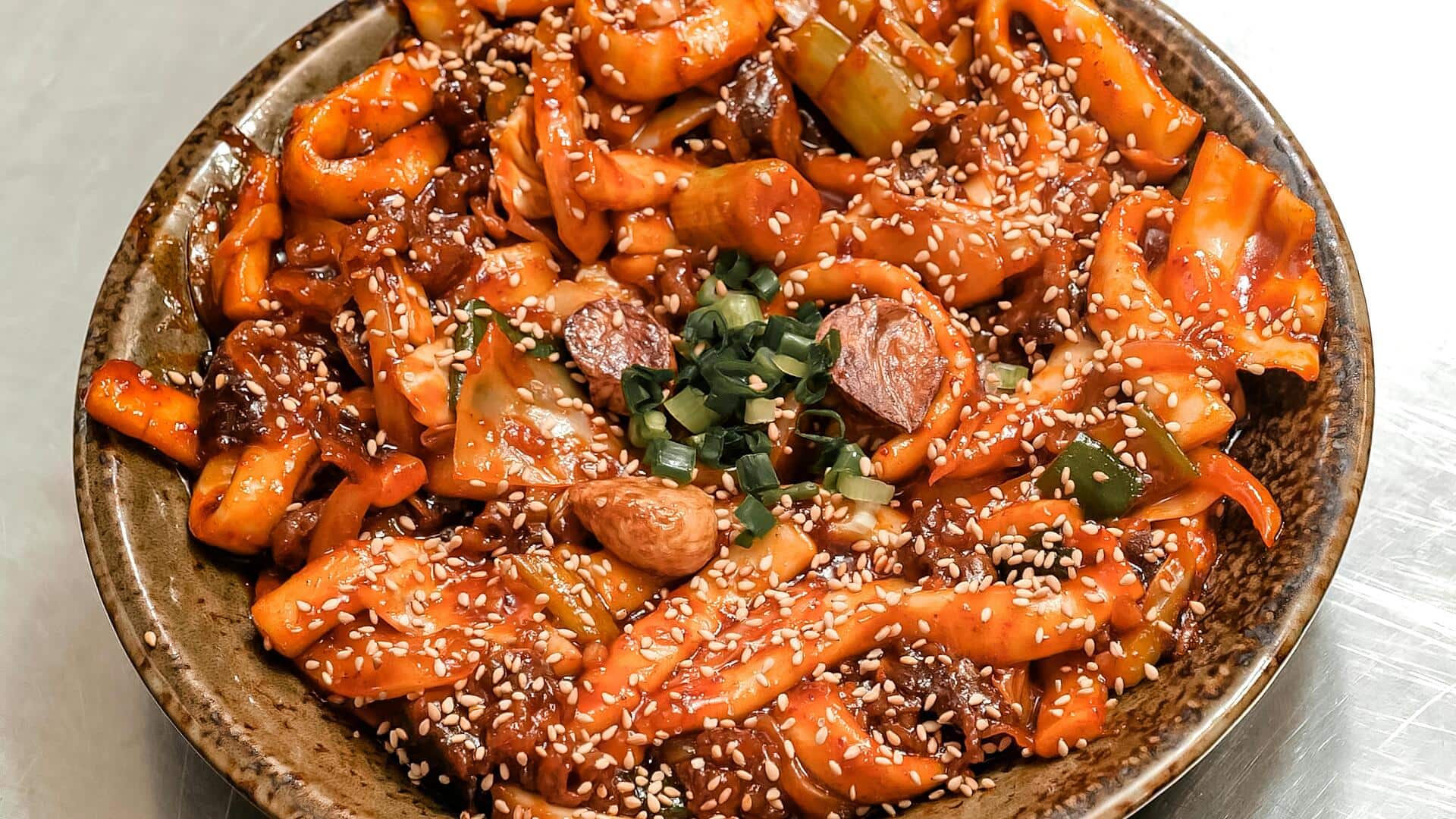
The journey of Tteokbokki through Korean history
What's the story
Tteokbokki, a beloved Korean dish, has a rich history that dates back centuries. Originally, it was a royal court dish, enjoyed by the elite. Over time, it transformed into a street food favorite, accessible to everyone. This evolution reflects cultural shifts and the adaptability of traditional foods. Today, tteokbokki is synonymous with Korean cuisine and continues to be cherished for its unique flavors and textures.
#1
Origins in royal courts
Tteokbokki's journey began in the royal courts of Korea.
It was initially prepared with rice cakes and vegetables, cooked in a soy sauce-based mixture. This version was far less spicy than what we know today.
The dish was reserved for nobility, showcasing the refined tastes of the time.
Its presence in royal kitchens highlights its significance as a symbol of status and sophistication.
#2
Transition to street food
As Korea's social structure changed, so did tteokbokki.
The dish made its way from royal tables to bustling marketplaces. Street vendors started selling it at affordable prices, making it accessible to all classes.
This transition marked a significant shift in how traditional foods were perceived and consumed.
The simpler preparation methods suited street-side cooking, ensuring tteokbokki's popularity soared among common folks.
#3
Modern variations emerge
With time, tteokbokki has evolved into various modern iterations, each reflecting regional preferences and ingredient availability.
Today's versions often include gochujang (Korean chili paste), giving it a spicy kick that contrasts beautifully with the chewy texture of rice cakes.
Vendors experiment with different ingredients like cheese or seafood, catering to diverse palates while keeping the essence of this classic dish intact.
#4
Cultural significance today
Today, tteokbokki holds cultural significance beyond its taste; it represents Korean identity and resilience through historical changes.
Whether enjoyed at home or on bustling streetsides across cities like Seoul or Busan, this beloved dish continues to bridge generations together over shared culinary experiences.