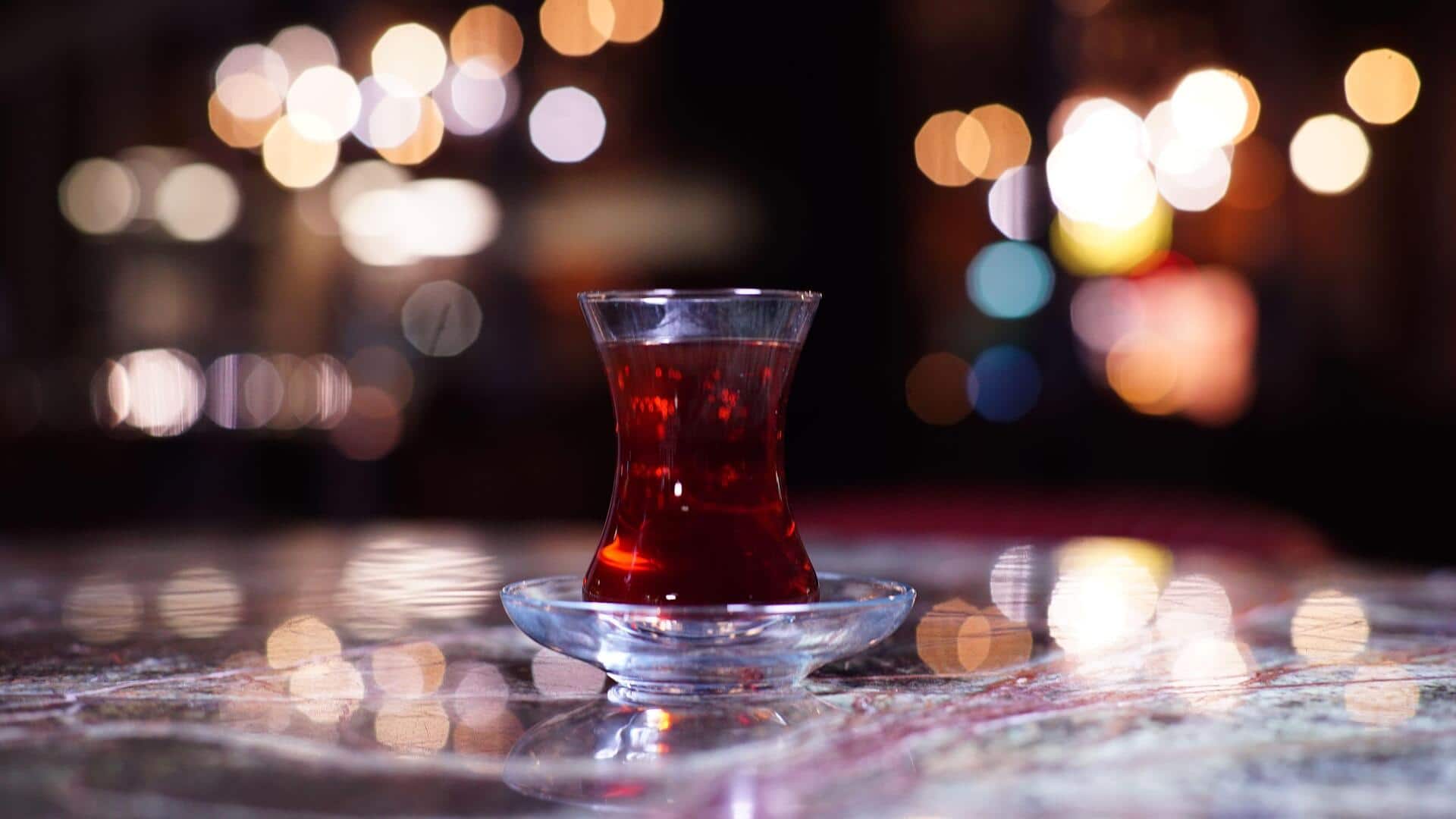
What makes Turkish tea culture so special
What's the story
Turkey's tea culture is a fascinating blend of tradition and social interaction. Unlike coffee, tea is an integral part of daily life in Turkey, enjoyed at all times of the day. The way tea is prepared and consumed reflects the country's rich cultural heritage. From the unique brewing methods to its role in hospitality, Turkish tea culture offers insights into social customs and community bonding.
#1
The art of brewing Turkish tea
Brewing Turkish tea is an art form. The process involves a two-tiered teapot system called a caydanlik.
The larger pot holds boiling water while the smaller pot steeps black tea leaves with hot water.
This method allows for strong tea that can be diluted according to taste. The result is a robust flavor that defines Turkish tea.
#2
Social significance of tea
In Turkey, tea is more than just a drink; it's a social glue.
It is served to guests as a sign of hospitality and friendship.
The act of preparing and serving tea gives people an opportunity to sit together and converse, strengthening their bonds.
This custom makes the Turkish way of life more communal, where sharing a cup of tea can lead to long conversations.
#3
Varieties and flavors in Turkish tea culture
While black tea dominates the scene in Turkey, herbal infusions like linden or sage are also popular among locals.
These provide variety for those looking for something different from traditional black teas.
Each variety has its own unique taste profile that caters to different preferences within the community.
#4
Regional differences in consumption habits
Tea consumption habits vary from region to region in Turkey.
In coastal areas like Istanbul or Izmir, people prefer drinking their teas with sugar cubes on the side instead of adding them directly into their cups.
This allows them to adjust sweetness levels according to personal preference without altering the overall flavor profile too much.