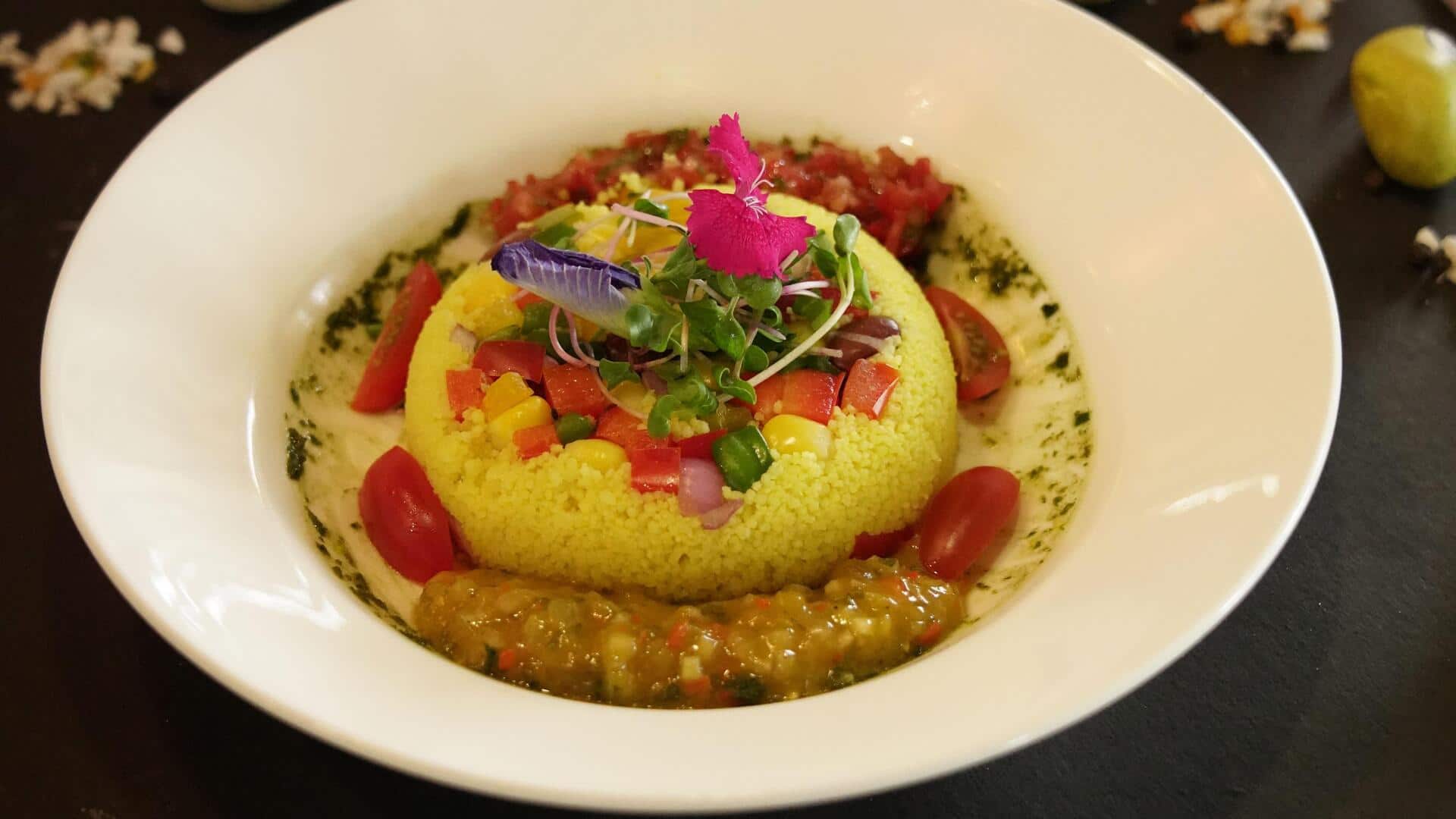
The history behind your bowl of upma
What's the story
A staple breakfast dish in many Indian households, upma has a long history that dates back centuries. Originally from South India, this semolina-based dish has evolved from a simple meal to a beloved culinary delight across the country. Its journey reflects cultural exchanges and regional adaptations that have enriched its flavor and preparation methods. Here's a look at the evolution of upma.
#1
Ancient origins and ingredients
Upma's roots can be traced back to ancient South Indian kitchens where it was prepared with minimal ingredients like semolina, mustard seeds, and curry leaves.
These basic components were easily available and provided a nutritious start to the day.
Over time, local ingredients such as peanuts and vegetables were added to enhance flavor and texture.
#2
Regional variations across India
As upma traveled across India, it welcomed regional variations that reflected local tastes.
In Maharashtra, for example, it is commonly prepared with poha or flattened rice instead of semolina.
In Karnataka, coconut is often added for an extra layer of flavor.
These variations show how the dish adapted to different culinary landscapes while retaining its core identity.
#3
Modern twists on traditional recipes
In recent years, upma has also seen modern twists with chefs experimenting with quinoa or oats as healthier alternatives to semolina.
These innovations cater to evolving dietary preferences without losing the essence of this classic dish.
Additionally, fusion versions incorporating international spices or ingredients have emerged in urban centers.
#4
Nutritional value and health benefits
Upma is not just versatile but also nutritious. It is rich in carbohydrates, which provide energy for the day ahead.
The addition of vegetables boosts fiber content, aiding digestion while keeping you full longer than other breakfast options such as cereals or toast.