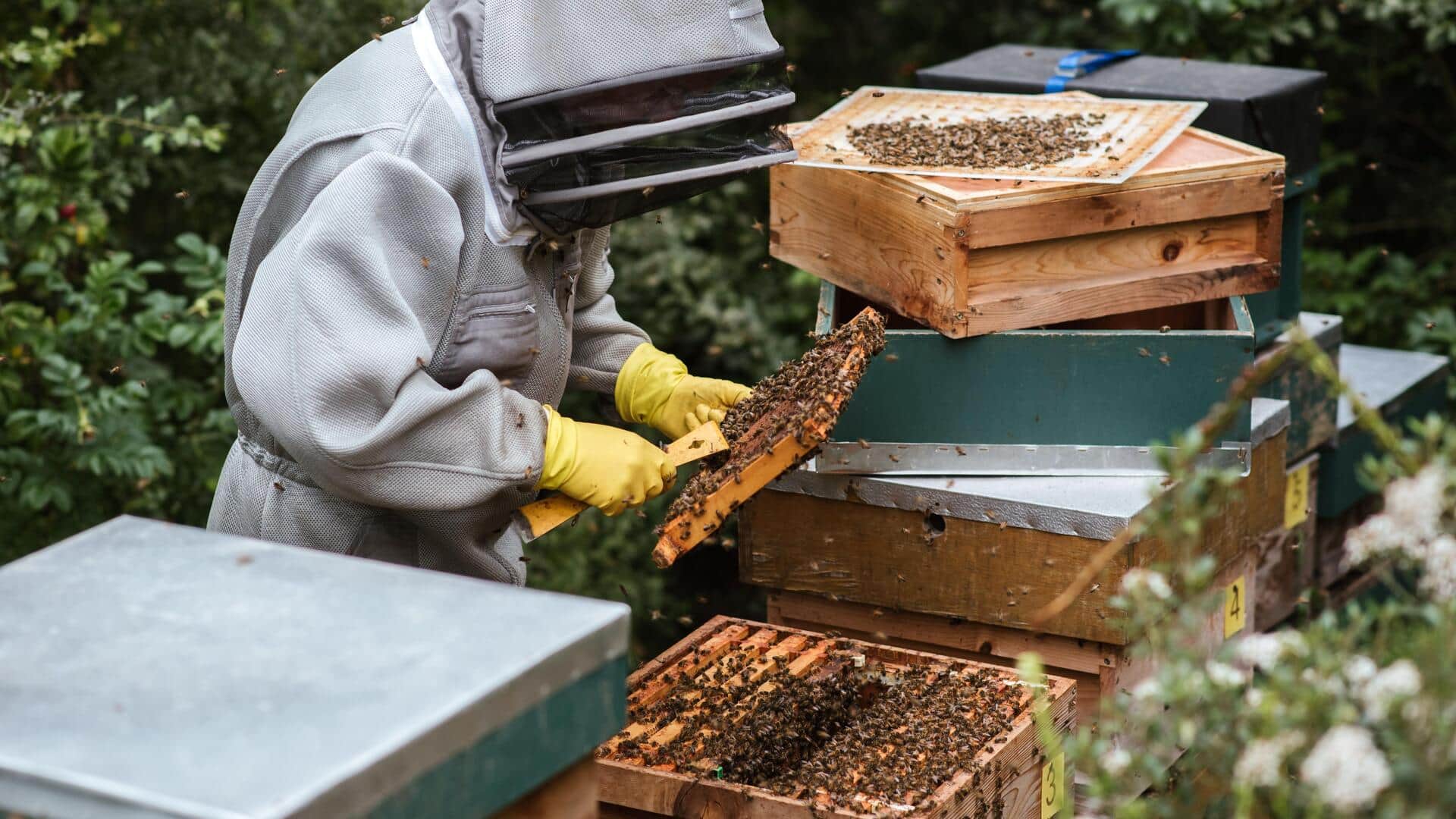
What is urban beekeeping? The rise of city bees explained
What's the story
Urban beekeeping is becoming increasingly popular as a sustainable practice that can greatly benefit city dwellers. Not only does it contribute to the environment, but it also provides several practical benefits to those who engage in it. Here are five surprising ways urban beekeeping can benefit city dwellers, from improving local ecosystems to providing fresh honey and enhancing community connections.
Tip 1
Enhancing local biodiversity
Urban beekeeping plays a crucial role in boosting local biodiversity.
Bees are key pollinators, and their presence can drastically improve the health of local flora.
By setting up hives, city dwellers can help pollinate plants in parks, gardens, and even on their own balconies.
This not only helps the environment but also encourages a wider variety of plants to flourish in urban areas.
Tip 2
Providing fresh honey
One of the sweetest perks of urban beekeeping is the availability of fresh honey.
Beekeepers get to harvest their own honey, which is way healthier than the store-bought stuff, as it is free from additives and preservatives.
Plus, home-harvested honey can be tailored to suit personal taste preferences by mixing different floral sources.
Tip 3
Promoting community engagement
Urban beekeeping also promotes community engagement by bringing people together around a common interest.
Beekeepers often join local groups or associations where they share tips, resources, and experiences with each other.
These interactions foster a sense of community and encourage collaboration on other sustainability initiatives.
Tip 4
Reducing stress levels
Engaging in urban beekeeping can also be a great way to reduce stress levels.
The calming nature of working with bees, coupled with spending time outdoors, can help you relax and improve your mental health.
Plus, the rhythmic tasks involved in beekeeping provide a meditative experience that promotes mindfulness.
Tip 5
Supporting local economies
Urban beekeeping also supports local economies by promoting the sale of locally produced honey and bee-related products, such as beeswax candles or lip balm.
These products are often sold at farmers's markets or local stores, giving small-scale producers an opportunity to earn an income while supporting sustainable practices within their communities.