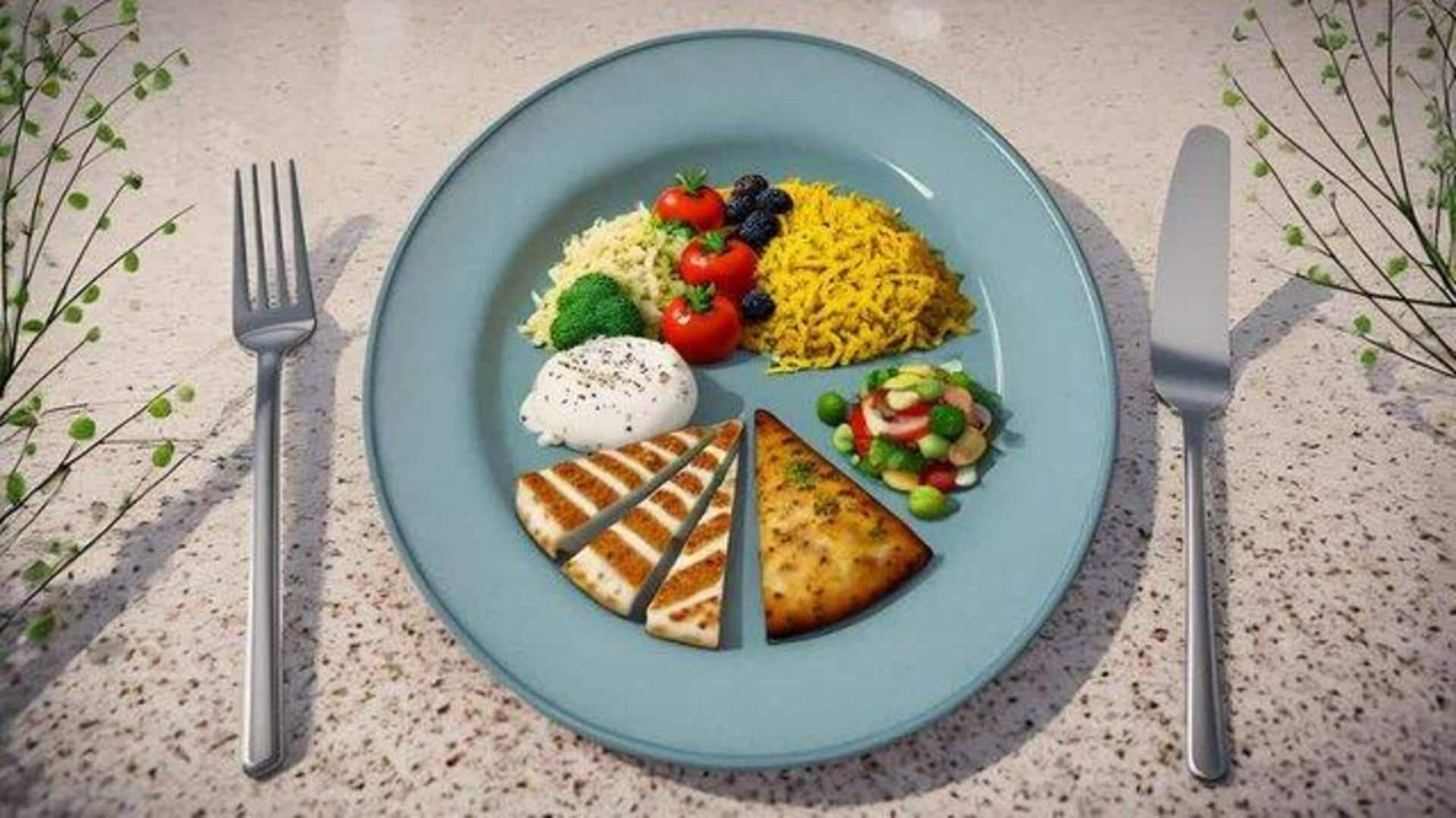
How using smaller plates can improve portion control
What's the story
A simple yet effective way to improve your health is by using smaller dinner plates. This practice can trick the mind into thinking you're eating more than you actually are, helping you control portion sizes and reduce calorie intake. By making this small change, you can develop healthier eating habits over time. Here are five beginner-friendly health benefits of using smaller dinner plates.
Tip 1
Reduces portion sizes naturally
Using smaller dinner plates helps in naturally reducing portion sizes without any conscious effort. When the plate is smaller, it looks fuller with the same amount of food. This visual trick can help in controlling portions and preventing overeating, making it easier to maintain a balanced diet.
Tip 2
Encourages mindful eating
Smaller plates encourage mindful eating by making you focus on each bite. With less food on your plate, you tend to eat slower and savor your meal more. This mindful approach not only enhances your eating experience but also helps you recognize when you're full, reducing the chances of overeating.
Tip 3
Supports weight management
Incorporating smaller dinner plates into your routine can be a practical step towards weight management. By controlling portion sizes effectively, you can keep your calorie intake in check. This method, when combined with other healthy habits, can help you maintain or even achieve your desired weight. It's a simple yet impactful strategy that aligns well with anyone looking to manage their weight through dietary adjustments.
Tip 4
Reduces food waste
Using smaller plates can also help in cutting down food waste. When you serve less food, you are more likely to finish it all and not throw away leftovers. This not only helps you save food but also promotes a more sustainable lifestyle by minimizing waste.
Tip 5
Promotes healthier food choices
Smaller plates promote healthier food choices by emphasizing quality over quantity. With less space on your plate, you're more likely to fill it with nutrient-dense foods such as vegetables and whole grains instead of high-calorie options. This shift in focus can lead to better nutrition and overall health benefits over time.