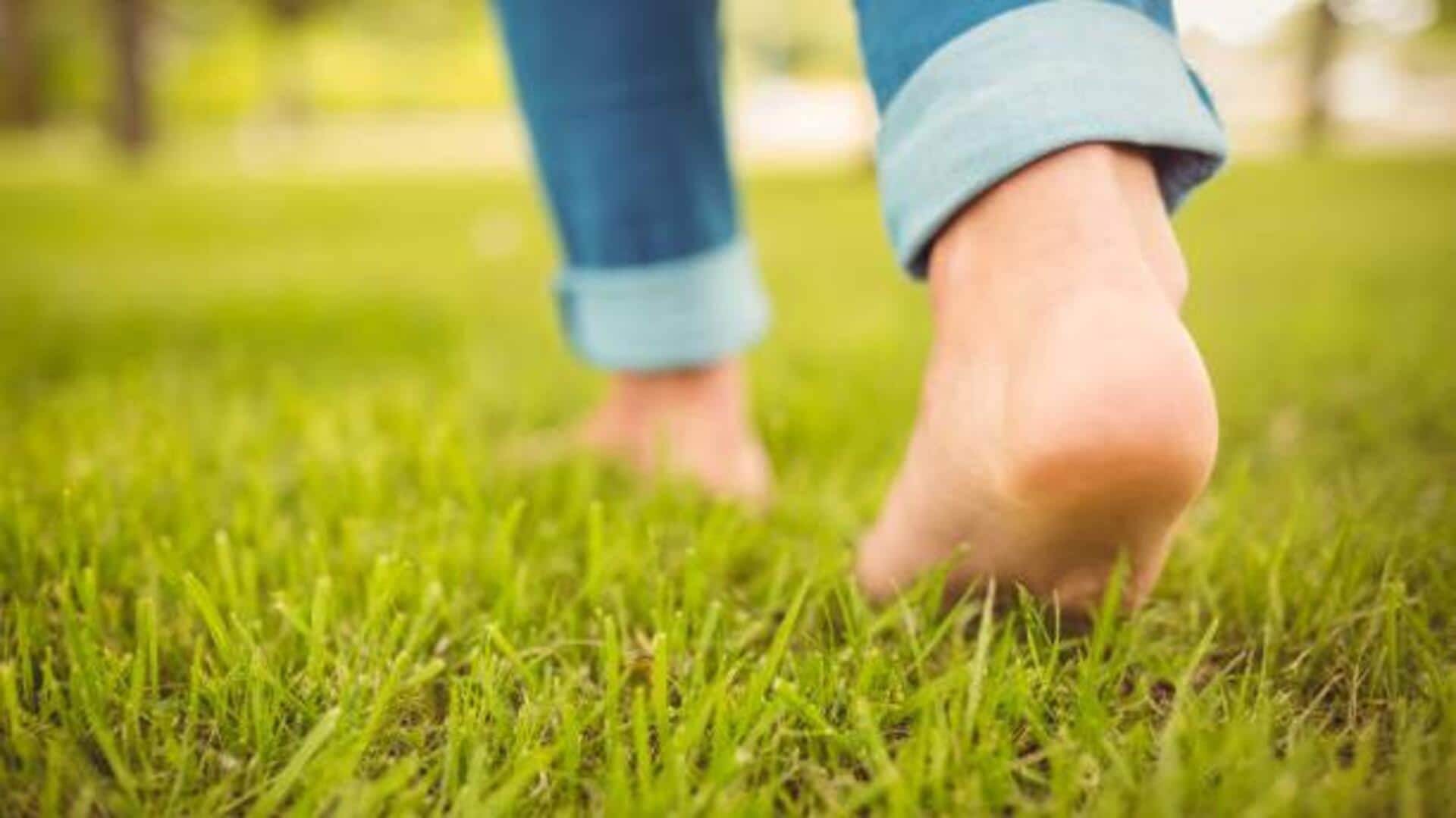
What you should know about barefoot walking
What's the story
Walking barefoot is often associated with various hygiene myths that can deter people from enjoying the natural feel of the ground beneath their feet. Many believe that going shoeless leads to infections or poor foot health, but these concerns are often exaggerated. This article aims to debunk common misconceptions about barefoot walking and shed light on its actual impact on hygiene and health.
Infection misconception
Myth: Barefoot walking causes infections
One of the most common myths is that walking barefoot increases the risk of infections.
While it is true that open wounds can get infected, healthy skin is generally resistant to bacteria and pathogens present on the ground.
Regular exposure can even strengthen the immune system by promoting better circulation and skin health.
Deformity myth
Myth: Barefoot leads to foot deformities
Another myth is that barefoot walking causes deformities, such as flat feet or bunions.
In reality, going barefoot encourages natural foot development by strengthening muscles and ligaments.
It promotes arch support naturally, unlike restrictive footwear, which may contribute to deformities over time.
Safety concern
Myth: Barefoot walking is unsafe outdoors
Many believe that outdoor barefoot walking is unsafe due to sharp objects or rough terrain.
However, most people develop heightened awareness and sensitivity in their feet over time, allowing them to navigate safely without injury.
Gradual exposure helps build confidence and adaptability in various environments.
Athletic assumption
Myth: Barefoot walking is only for athletes
The common assumption is that only athletes or fitness enthusiasts can benefit from barefoot walking. However, the practice is for everyone, regardless of their activity level.
It offers benefits such as improved balance, posture, and reduced stress levels. These benefits are not limited to athletic performance alone.
They contribute to overall well-being and health. This makes it accessible and beneficial for all.
Hygiene belief
Myth: Shoes are essential for hygiene
Many believe shoes are a must for hygiene purposes, keeping feet clean from dirt and germs.
But studies indicate that going barefoot indoors, or on clean surfaces, can be just as hygienic, if not more so, than wearing shoes all the time.
This is because shoes can trap moisture and bacteria, leading to odor or fungal growth over time.