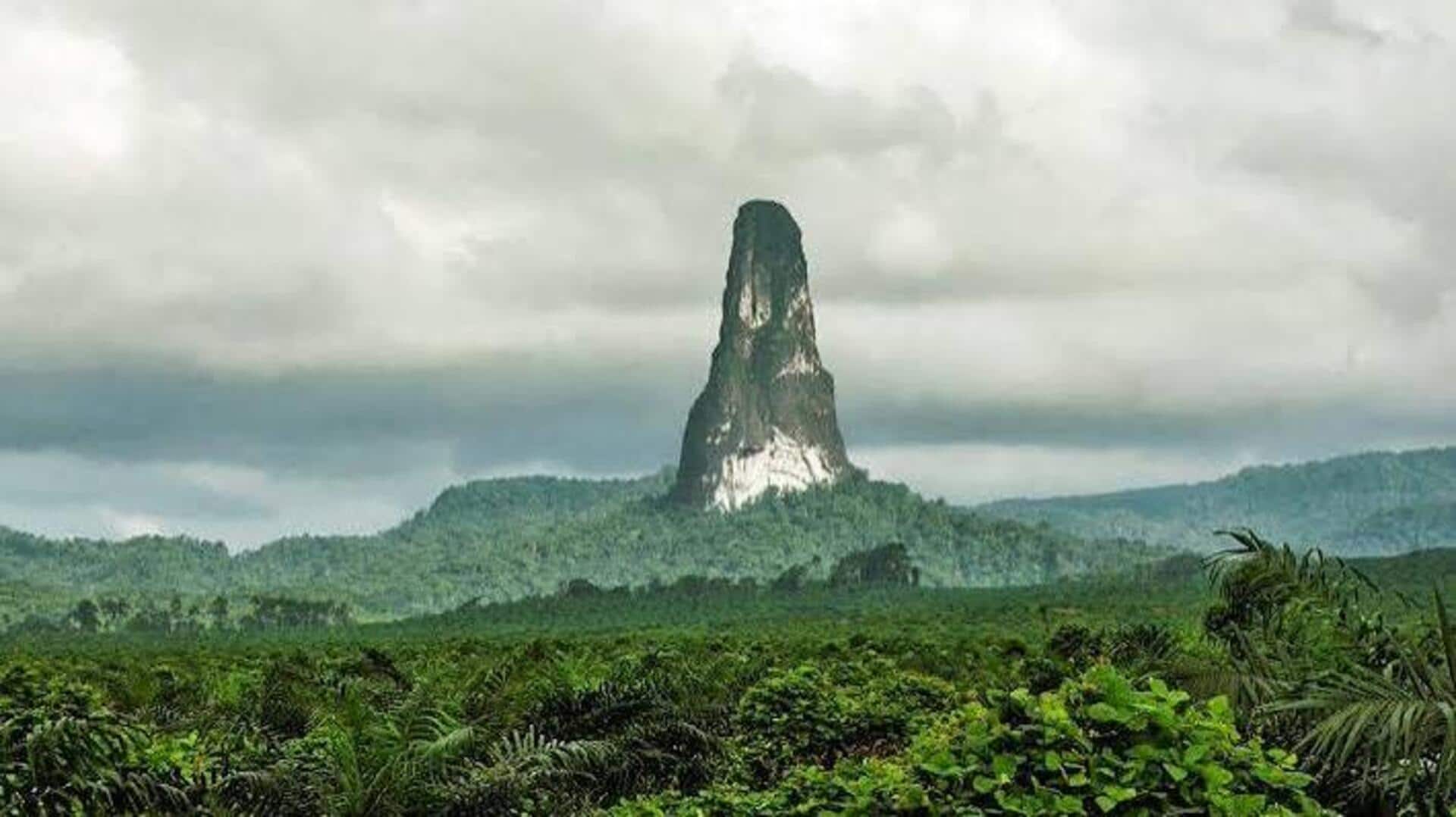
You must visit these botanical wonders in Sao Tome, Africa
What's the story
Sao Tome and Principe, two islands off the west coast of Africa, are home to some of the most stunning and diverse flora on the planet. The islands' unique ecosystems are home to several endemic plant species, many of which cannot be found anywhere else on Earth. Exploring these botanical wonders is a delight for nature lovers and researchers alike. Here are some of the must-visit places to explore the unique flora of Sao Tome.
National park
Obo National Park: A botanical haven
Obo National Park covers a major part of Sao Tome Island and is a treasure trove of biodiversity.
The park is home to several endemic plant species, including rare ferns and orchids.
Visitors can take guided tours through the lush rainforests, witnessing firsthand the unique adaptations of plants in this tropical environment.
The park also offers hiking trails that give an insight into the island's ecological significance.
Príncipe Island
Principe Island: A floral paradise
Principe Island is famous for its pristine nature and rich plant life.
The island's forests are home to several endemic trees and shrubs, which are well adapted to the local climate.
Tourists can explore trails through dense vegetation, discovering unique species such as the Principe ebony tree.
The island's isolation has preserved its natural beauty, making it a perfect destination for botanical enthusiasts.
Bom Successo
Bom Successo: Rare plant species
Bom Successo is famous for its rare plant species, which are endemic to Sao Tome Island. The area has been preserved to protect these unique plants from extinction.
Visitors can see these rare specimens in their natural habitat and learn about conservation efforts being made to protect them.
The region's rich biodiversity makes it an important site for botanical research.
Monte Pico
Monte Pico: Exploring high-altitude flora
Monte Pico, the highest peak in Sao Tome at 2,024 meters, is home to a number of high-altitude plants that have adapted to the cooler temperatures and harsher conditions.
From the summit, you get panoramic views of the island while witnessing how these resilient species survive in such an environment.
Guided tours are available for those interested in learning more about this unique ecosystem.