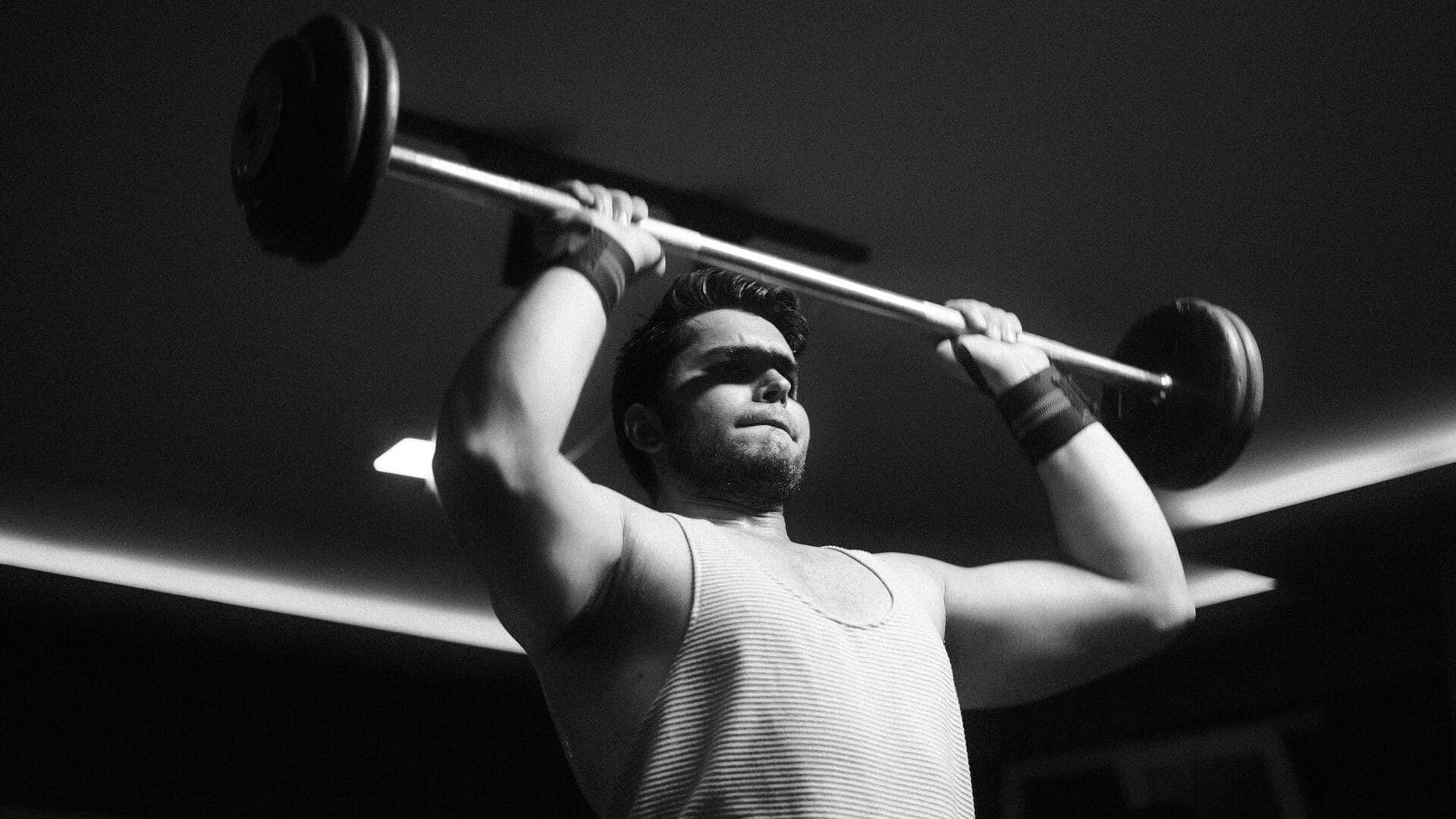
Strength training v/s CrossFit: Which builds muscles faster?
What's the story
Strength training and CrossFit are two popular workout regimes that promise muscle growth. While both have their own benefits, they differ in terms of approach, intensity, and results. Knowing the difference can help you choose the right one for your fitness goals. Here is a look at the key differences between strength training and CrossFit for muscle growth.
#1
Focus on compound movements
Strength training mainly focuses on compound movements, which work multiple muscle groups at once.
Exercises like squats, deadlifts, and bench presses are commonly employed to build strength and mass.
These movements are essential for stimulating muscle fibers efficiently.
CrossFit also uses compound exercises but mixes them with other functional movements to build endurance and agility.
#2
Intensity levels differ
CrossFit is known for its high-intensity workouts that include short rest intervals and varied exercises. This keeps your heart rate up and improves cardiovascular health, along with building muscles.
Strength training usually involves lifting heavier weights with longer rest intervals between sets. This helps in muscle recovery and growth.
#3
Variety in workout routines
CrossFit is characterized by its varied workout routines that change daily or weekly.
This keeps the body from getting used to a certain exercise, promoting overall fitness.
Strength training routines are usually more focused on specific muscle groups or movements, allowing for targeted growth over time.
#4
Community support aspect
CrossFit is famous for its community-driven approach, with people working out together in classes or groups.
This camaraderie can motivate individuals to push themselves harder than they would alone.
Strength training is usually done individually or in small groups, which may not provide the same level of social support, but allows for personalized attention from trainers when needed.