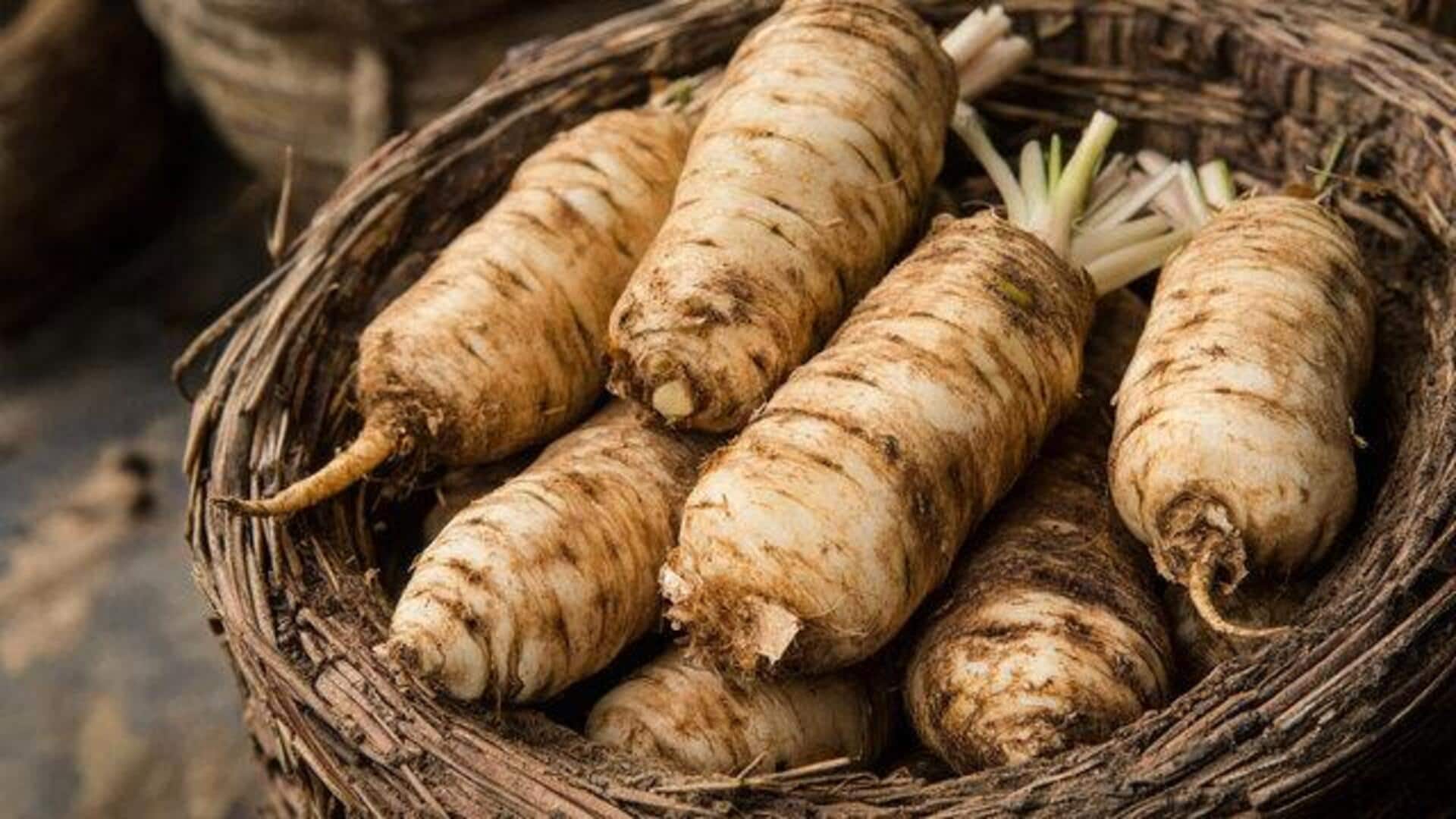
Why you must add arrowroot to your diet
What's the story
African arrowroot, a staple in many African diets, is gaining attention for its health benefits. This versatile tuber is not just a dietary staple but also packed with nutrients that can contribute to overall well-being. Known for its ability to thrive in poor soil conditions, African arrowroot provides essential vitamins and minerals that support various bodily functions. Here are some key insights into the health benefits of this remarkable tuber.
#1
Rich source of carbohydrates
African arrowroot is an excellent source of carbohydrates, which serve as the body's primary energy source.
It is especially beneficial for those who require a quick energy boost without the risk of blood sugar spikes.
The complex carbohydrates in arrowroot digest slowly, providing sustained energy throughout the day.
This makes it an ideal food for athletes and active individuals looking for natural sources of fuel.
#2
Supports digestive health
The high fiber content in African arrowroot promotes healthy digestion by ensuring regular bowel movements and preventing constipation.
Fiber also helps maintain gut health by feeding beneficial bacteria in the intestines.
Including arrowroot in your diet can improve digestive efficiency and reduce the risk of gastrointestinal disorders.
#3
Boosts immune system
African arrowroot is loaded with essential vitamins, such as vitamin C, which is important for boosting the immune system.
Vitamin C helps in the production of white blood cells that fight infections and diseases.
Eating foods rich in vitamin C, such as African arrowroot, can help you stay healthy and ward off common illnesses.
#4
Promotes heart health
The potassium content in African arrowroot plays a crucial role in promoting heart health by regulating blood pressure levels.
Potassium helps balance sodium levels in the body, which is essential for maintaining healthy blood pressure.
Adding arrowroot to your diet may contribute to cardiovascular well-being by supporting heart function and reducing hypertension risk.