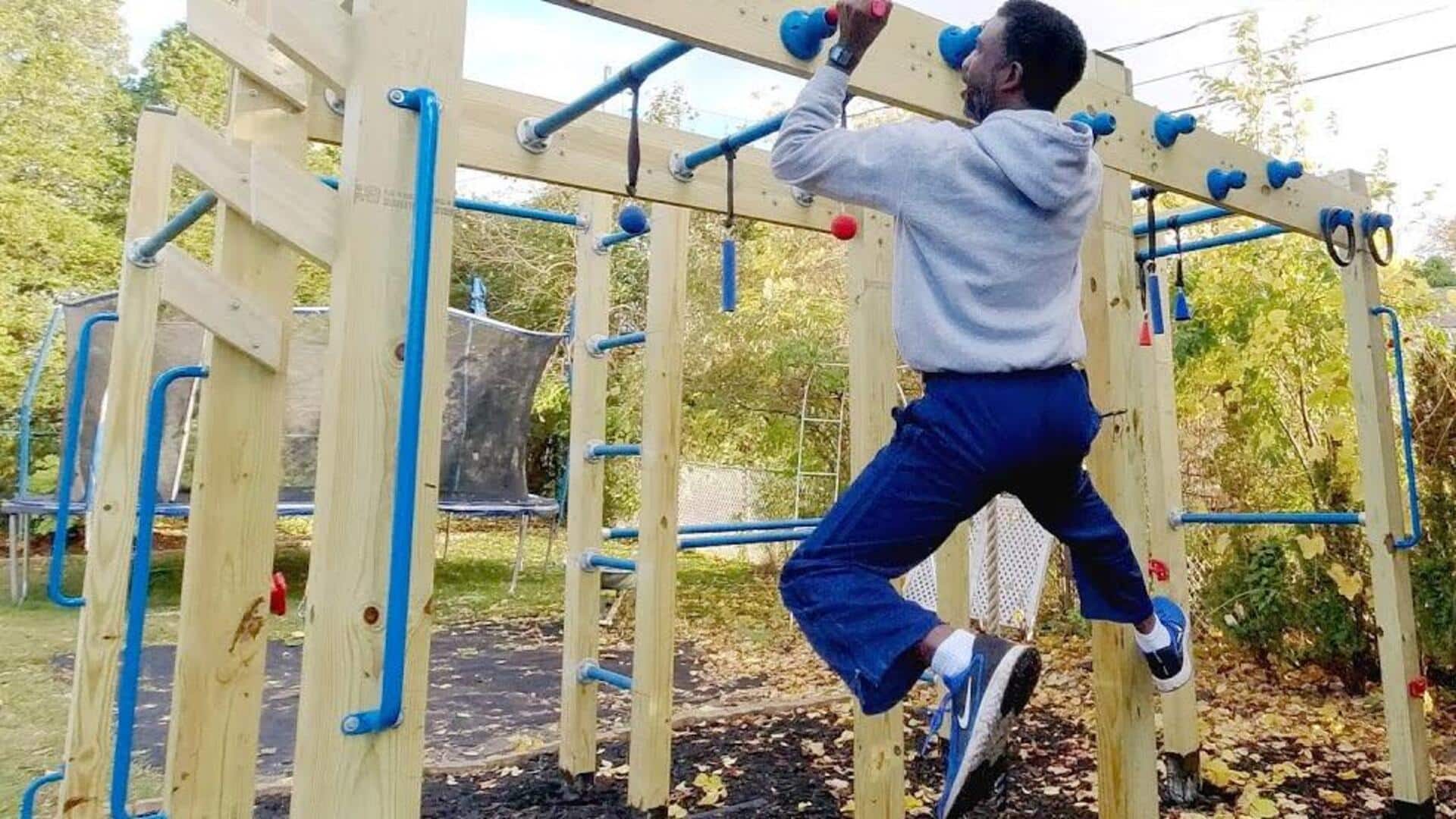
What's a backyard obstacle course?
What's the story
Creating a backyard obstacle course can be a fun and engaging way to boost your family's physical fitness. Not only does it provide an opportunity for exercise, but it also encourages teamwork and problem-solving skills. By setting up various challenges, you can cater to different fitness levels and interests, making it an inclusive activity for everyone. Here are some practical tips on how to design an effective obstacle course that promotes family fitness.
Space evaluation
Assess available space
Before you start building your obstacle course, assess the available space in your backyard.
Make sure there is enough room for various obstacles without overcrowding the area.
Consider factors like ground surface, slope, and existing structures like trees or fences that can be used creatively in your design.
A well-planned layout will ensure safety and maximize the use of available space.
Obstacle selection
Choose suitable obstacles
Selecting appropriate obstacles is key to keeping your course challenging, yet safe.
Think about including elements like balance beams, rope climbs, tire runs, or crawling tunnels.
These can test different physical skills, such as agility, strength, and coordination.
Make sure the obstacles are age-appropriate so that all family members can participate comfortably.
Safety precautions
Incorporate safety measures
Safety should always be a priority when designing any physical activity space.
Use soft materials like mats or grass under high-impact areas to minimize injury risks.
Ensure all structures are stable and securely anchored to prevent accidents during use.
Regularly inspect the course for wear and tear, or potential hazards that could compromise safety.
Rules establishment
Set clear rules and goals
Establishing clear rules helps maintain order and ensures everyone understands how to navigate the course safely.
Decide on specific goals or challenges for each obstacle to keep participants motivated and engaged throughout their workout session.
This structured approach encourages friendly competition while fostering cooperation among family members.
Progress tracking
Monitor progress regularly
Regularly monitor progress by timing participants or setting specific challenges that must be completed within a certain timeframe.
This helps gauge improvement over time, while keeping the activity fresh with new goals or obstacles as needed.
Adjustments based on performance feedback ensure continued interest in participating regularly in this fitness-oriented family bonding activity.