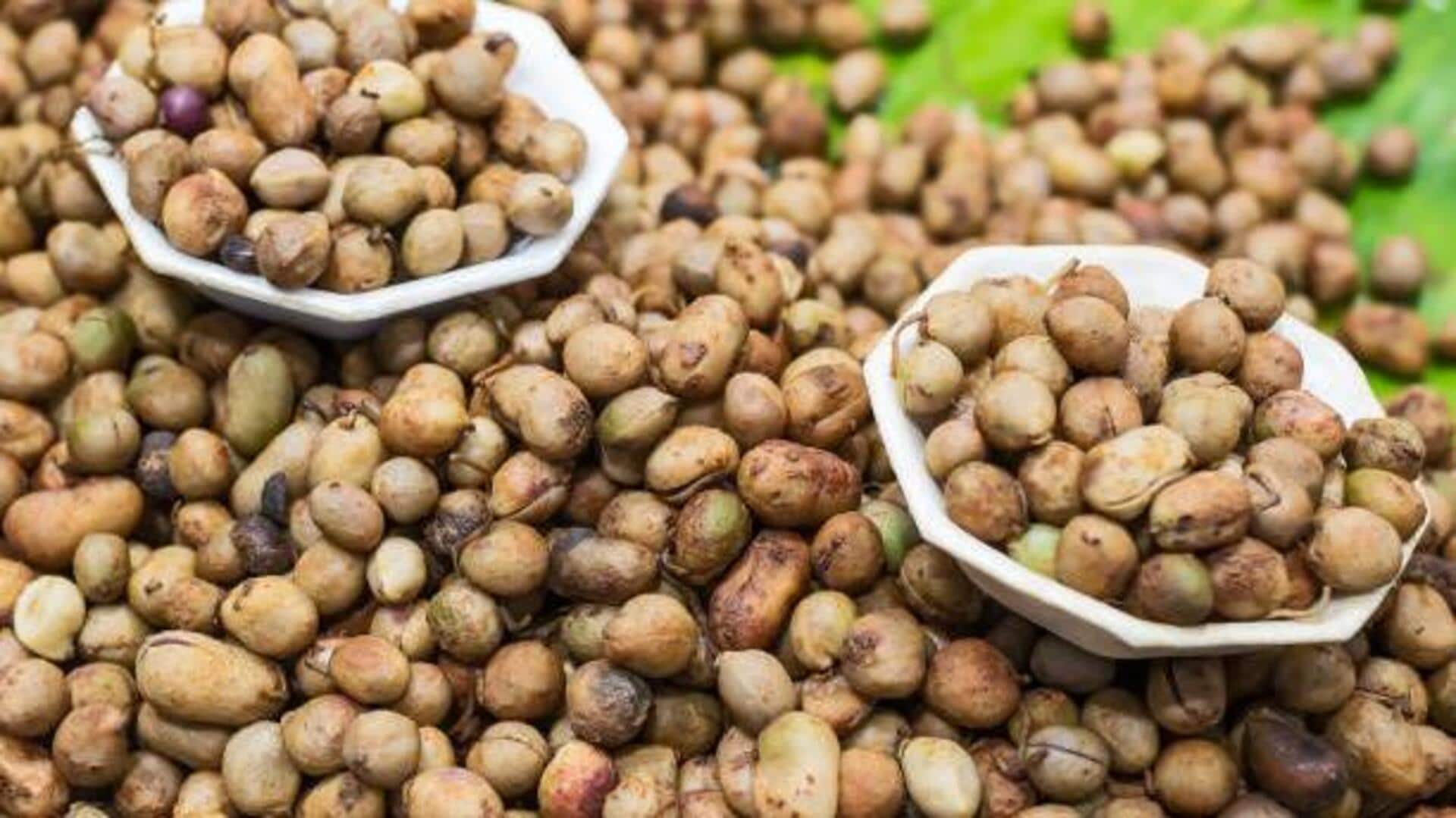
Why everyone is talking about Bambara nuts
What's the story
Bambara nuts, a staple in many African diets, are gaining attention for their nutritional benefits and versatility. These small legumes are packed with essential nutrients, making them a valuable addition to any diet. Rich in protein and fiber, they offer a plant-based alternative to traditional protein sources. As more people seek sustainable food options, Bambara nuts present an attractive solution that supports both health and environmental goals.
#1
Nutritional powerhouse
Bambara nuts are loaded with protein, which is essential for muscle growth and repair.
They also provide a good amount of fiber, which helps with digestion and keeps you full.
The nuts are also rich in vitamins and minerals, such as magnesium, potassium, and iron.
These nutrients support several bodily functions, from bone health to energy production.
#2
Versatile culinary uses
The versatility of Bambara nuts makes them an ideal ingredient in various dishes.
They can be roasted as a snack or ground into flour for baking.
In some cultures, they are used to make porridge or added to soups and stews for added texture and flavor.
Their mild taste allows them to blend seamlessly into both savory and sweet recipes.
#3
Sustainable farming practices
Cultivating Bambara nuts is also an eco-friendly choice since they require little water and thrive in poor soils.
This makes them a perfect crop for farmers in regions where conventional agriculture is not feasible due to climate conditions.
By growing Bambara nuts, farmers can contribute to sustainable agriculture while also ensuring food security in their communities.
#4
Economic opportunities for communities
The cultivation of Bambara nuts also opens up economic avenues for local communities.
Since these legumes are easy to grow and harvest, they make a great source of income for smallholder farmers.
Selling Bambara nuts at local markets, or processing them into value-added products, can help improve livelihoods while promoting economic development within rural areas.