Yoga v/s Pilates: Which one is better for you?
What's the story
Yoga and Pilates are two popular practices that focus on improving core strength and flexibility. While both have their own unique benefits, they differ in their approach and techniques. Knowing the differences between yoga and Pilates can help you choose the right practice for your fitness goals. Here, we look at the key differences between yoga and Pilates, and how each can help you improve your core strength and flexibility.
#1
The focus of each practice
Yoga emphasizes breathing techniques and poses that promote relaxation and mindfulness. It includes a variety of postures that enhance flexibility and balance.
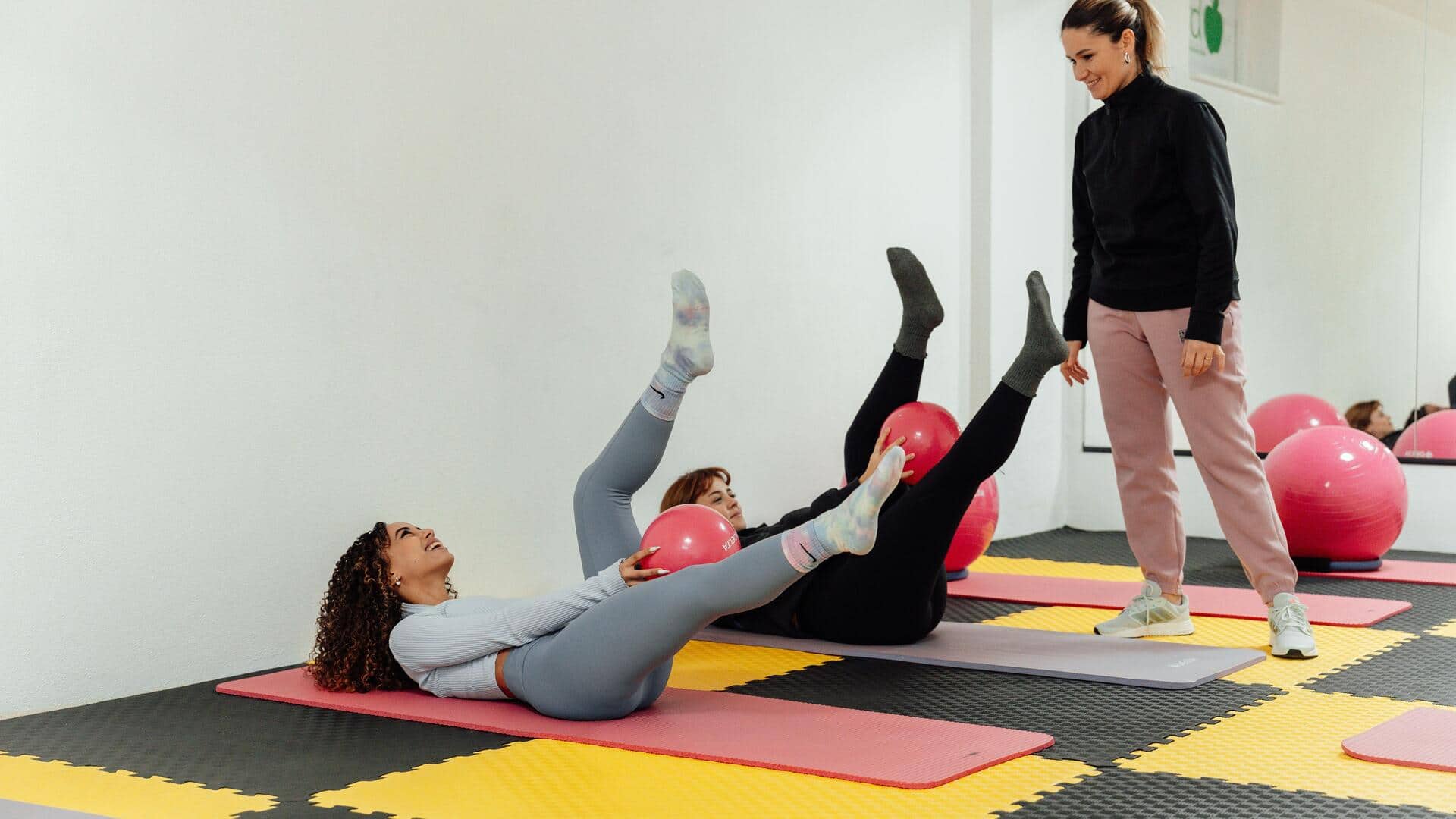
Pilates focuses on controlled movements to strengthen the core muscles. It uses equipment like reformers to add resistance, which helps in building muscle tone.
#2
Breathing techniques used
In yoga, breathing is an integral part of the practice. Practitioners use deep breathing techniques to enhance relaxation and focus.
These techniques also support the body's natural movements during poses.
In Pilates, breathing is synchronized with movements to engage the core muscles effectively, and this method helps maintain a steady rhythm throughout the exercises.
#3
Equipment usage differences
Yoga usually requires little to no equipment other than a mat for support during poses.
Some styles may use props like blocks or straps to help with alignment or modifications.
Pilates often employs specialized equipment like reformers or resistance bands, which add an extra challenge to workouts by providing resistance.
#4
Class structure variations
Yoga classes vary widely in terms of style, intensity, and duration, from gentle Hatha sessions to more vigorous Vinyasa flows, or Ashtanga sequences.
Each style caters to different levels of flexibility and strength requirements.
Pilates classes tend to be more uniform in structure, focusing on specific exercises targeting core stabilization, posture improvement, and overall body conditioning.