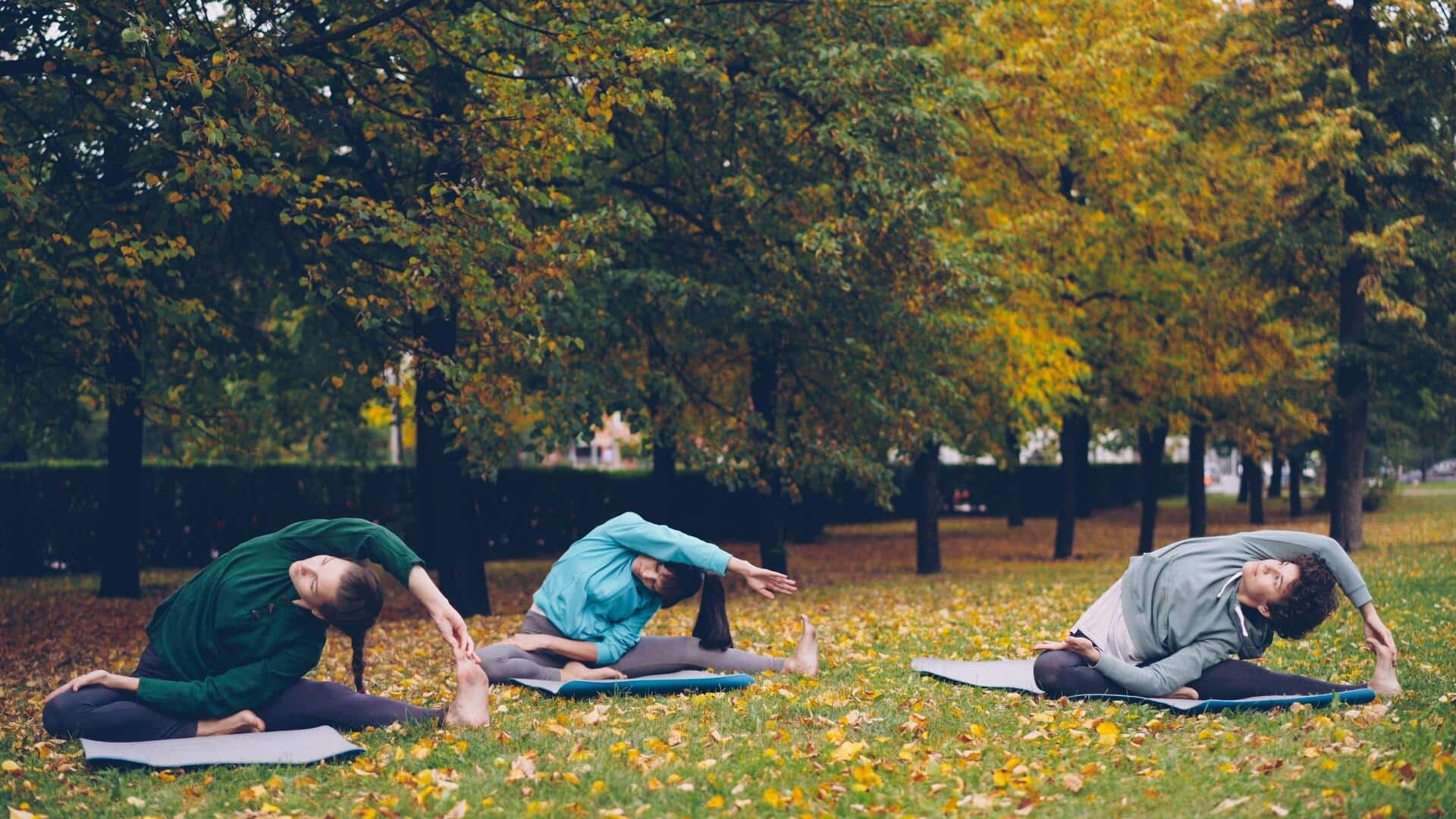
Yoga v/s Tai Chi: Which is better for flexibility?
What's the story
Yoga and Tai Chi are two ancient practices that have gained immense popularity for their ability to improve flexibility and promote relaxation. While both practices involve gentle movements and focus on breathing, they have different approaches and benefits. This article delves into the differences between yoga and Tai Chi, and how each can contribute to improved flexibility and relaxation.
#1
Understanding yoga's approach
Yoga is a practice that combines physical postures, breathing techniques, and meditation.
The postures (asanas) are designed to stretch and strengthen different muscle groups, improving flexibility over time.
Yoga also emphasizes controlled breathing (pranayama), which helps in relaxation by reducing stress levels.
The combination of movement and breath control makes yoga an effective way to enhance physical flexibility while promoting mental calmness.
#2
Tai Chi's gentle movements
Tai Chi is a martial art form that involves slow, flowing movements performed in a continuous sequence.
It focuses on balance, coordination, and mindfulness. The gentle motions help release tension from the body while improving joint mobility.
Tai Chi also emphasizes deep breathing techniques that promote relaxation by activating the body's parasympathetic nervous system.
#3
Flexibility benefits of yoga
Yoga's emphasis on stretching makes it an excellent choice for improving flexibility.
Regular practice can lengthen muscles and increase the range of motion in joints.
Certain poses target specific areas prone to stiffness or tightness, such as hips or shoulders.
Over time, practitioners may experience greater ease of movement in daily activities.
#4
Relaxation through Tai Chi practice
The meditative aspect of Tai Chi contributes significantly to relaxation benefits.
Practitioners focus on each movement with full attention, fostering mindfulness. This reduces stress levels effectively over time.
The rhythmic patterns promote a sense of tranquility, making it easier to deal with daily stressors.
This is achieved without the intensity associated with other forms of exercise, like yoga or aerobics.