What makes a Zen garden so peaceful
What's the story
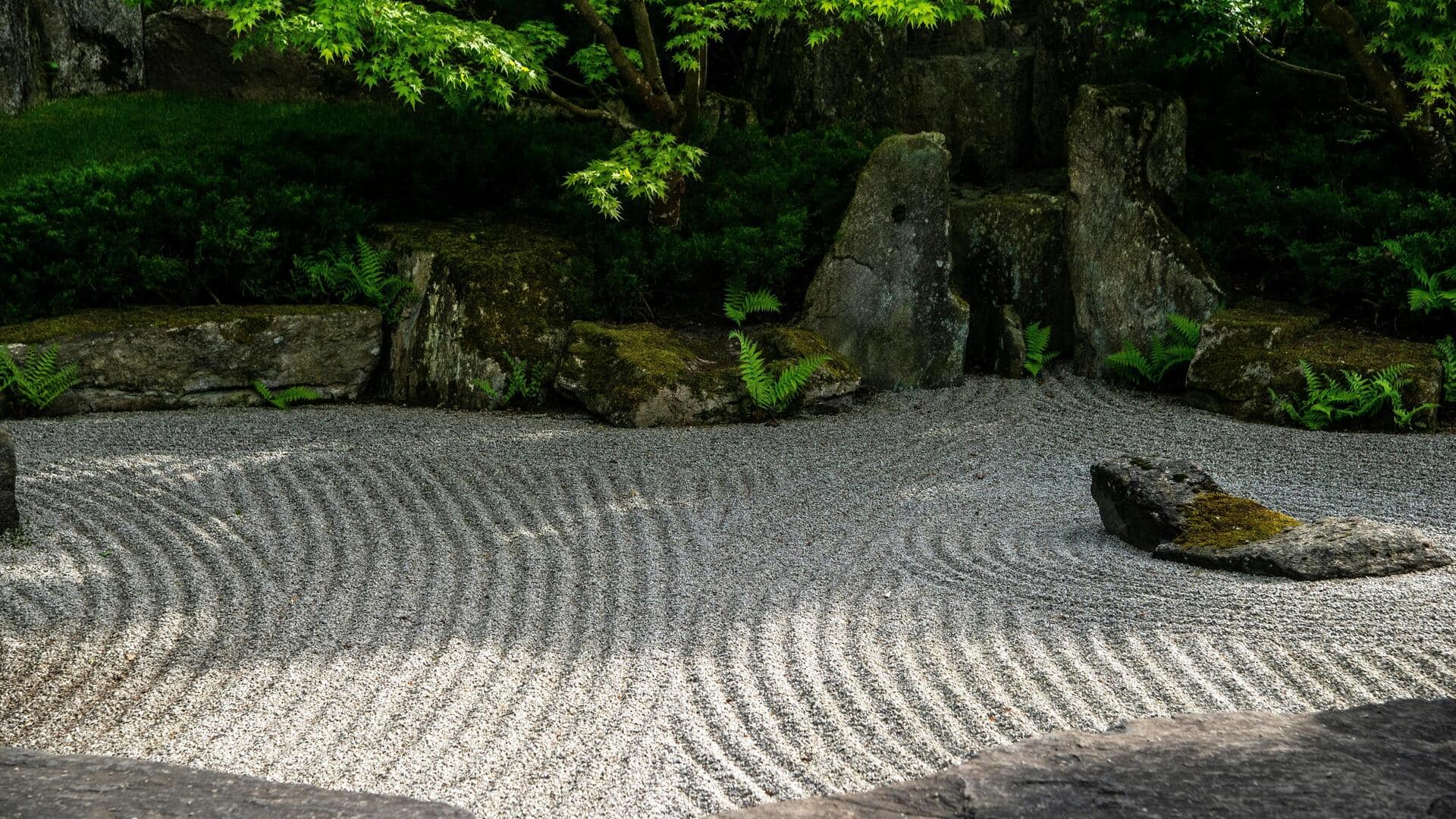
Zen gardens, or Japanese rock gardens, are a serene expression of minimalist beauty. These gardens emphasize simplicity and tranquility, making them a perfect embodiment of Zen philosophy. The careful arrangement of rocks, gravel, and sometimes plants creates a peaceful space for contemplation and reflection. The art of designing these gardens has been perfected over centuries, with each element having its own significance.
#1
The origin of Zen gardens
Zen gardens originated in Japan during the Muromachi period (1336-1573).
They were inspired by Chinese landscape paintings and were used as spaces for meditation by Zen monks.
The simplicity of the design allowed practitioners to focus on the present moment, promoting mindfulness and inner peace.
Over time, these gardens became popular outside monasteries as symbols of tranquility.
#2
Key elements of Zen gardens
The main elements of a Zen garden are rocks, gravel, sand, and sometimes plants like moss or small trees.
Rocks are placed to symbolize mountains or islands in an ocean. Gravel or sand represents water when raked into patterns.
Plants add color and texture, but are used sparingly to maintain minimalism.
#3
Designing a Zen garden
Designing a Zen garden requires careful planning and consideration of space. It's important to maintain balance and harmony in the arrangement of elements.
Start by selecting an appropriate location that receives adequate sunlight but also offers shade for comfort.
Choose materials that complement each other while keeping within budget constraints.
#4
Maintenance tips for Zen gardens
Maintaining a Zen garden is essential to keep its serene beauty intact.
Regular raking keeps the gravel patterns crisp, while removing debris from plants keeps the space clean.
Watering plants, if any, ensures they stay healthy without disturbing the garden's minimalistic design.
This careful maintenance preserves the garden's tranquil atmosphere, making it a perfect place for reflection and peace.