Congress's Meenakshi Natarajan moves SC after Rajya Sabha nomination rejected
What's the story
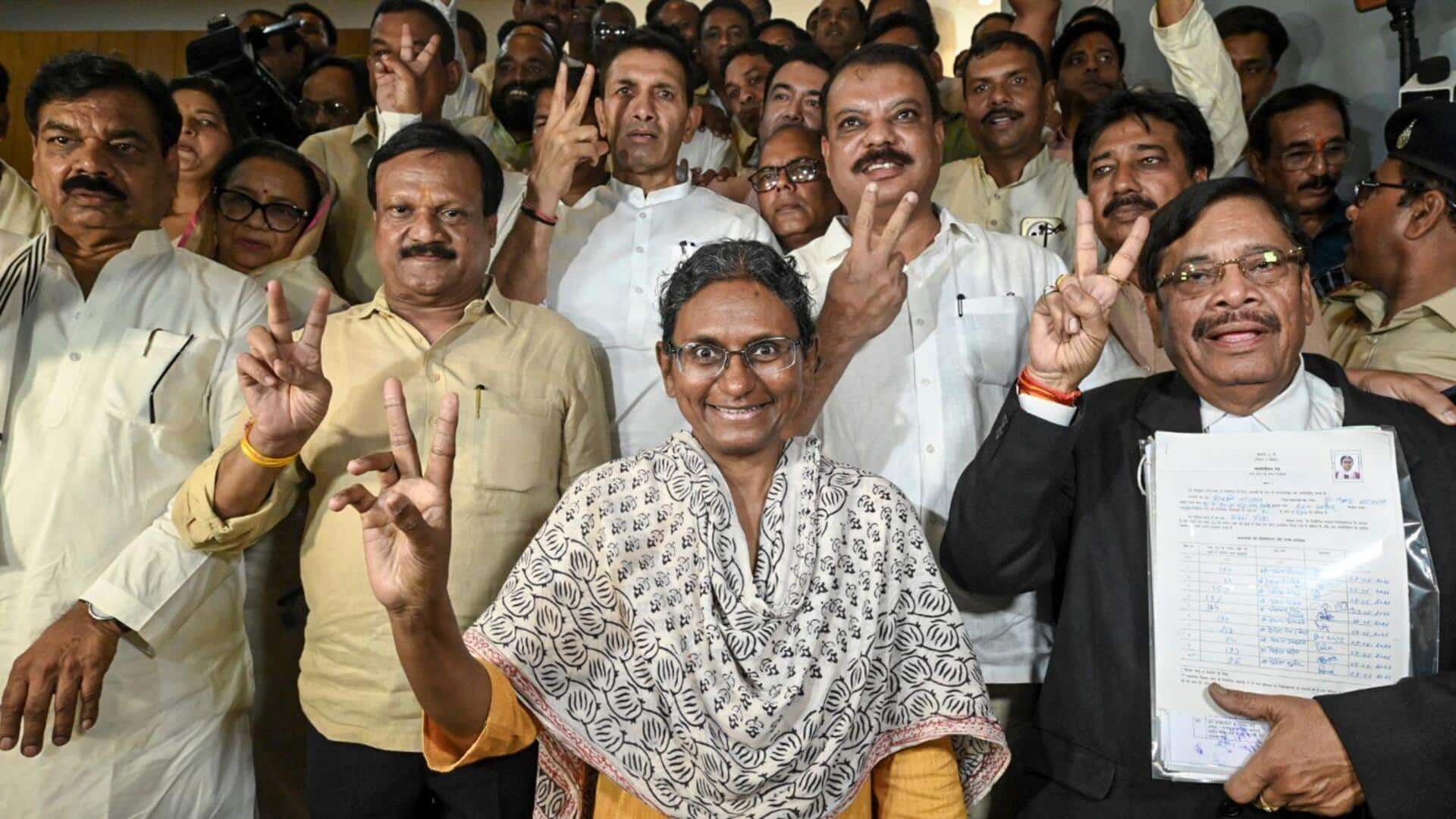
Congress leader Meenakshi Natarajan has moved the Supreme Court, challenging the rejection of her nomination for the Rajya Sabha elections from Madhya Pradesh. The Supreme Court has agreed to list the petition on Friday. The legal move comes after Returning Officer rejected Natarajan's nomination papers on objections raised by the Bharatiya Janata Party (BJP).
Nomination dispute
Natarajan dismisses BJP allegations as 'political conspiracy'
The BJP had objected to Natarajan's nomination, claiming that she had "hidden" details of a criminal case pending against her in Telangana in the nomination papers.
However, Natarajan has dismissed these allegations as a "political conspiracy," insisting there is no case against her and the issue was only related to a private complaint.
She also alleged that Returning Officers were "compromised" and acted on government orders.
ECI appeal
Congress also approaches Election Commission
The Congress has also approached the Election Commission of India (ECI), seeking its intervention in the matter.
A delegation led by senior advocate and MP Abhishek Manu Singhvi submitted a representation to ECI officials in Delhi, arguing that Natarajan's nomination was rejected despite no criminal case requiring disclosure under election law.
The party urged the ECI to set aside what it termed a "completely egregious, blatant, patently unlawful" order.
Legal argument
ECI to take decision after consulting legal experts
Singhvi argued that under Section 33A of the Representation of the People Act, disclosure is only required for cases with a punishment of over two years where charges have been framed by a judge.
He said Natarajan's nomination was rejected on the non-existence of cognizance, meaning there was no criminal case to disclose.
"Had the judge reached the stage of framing charges, she would have been obliged to disclose," he said.