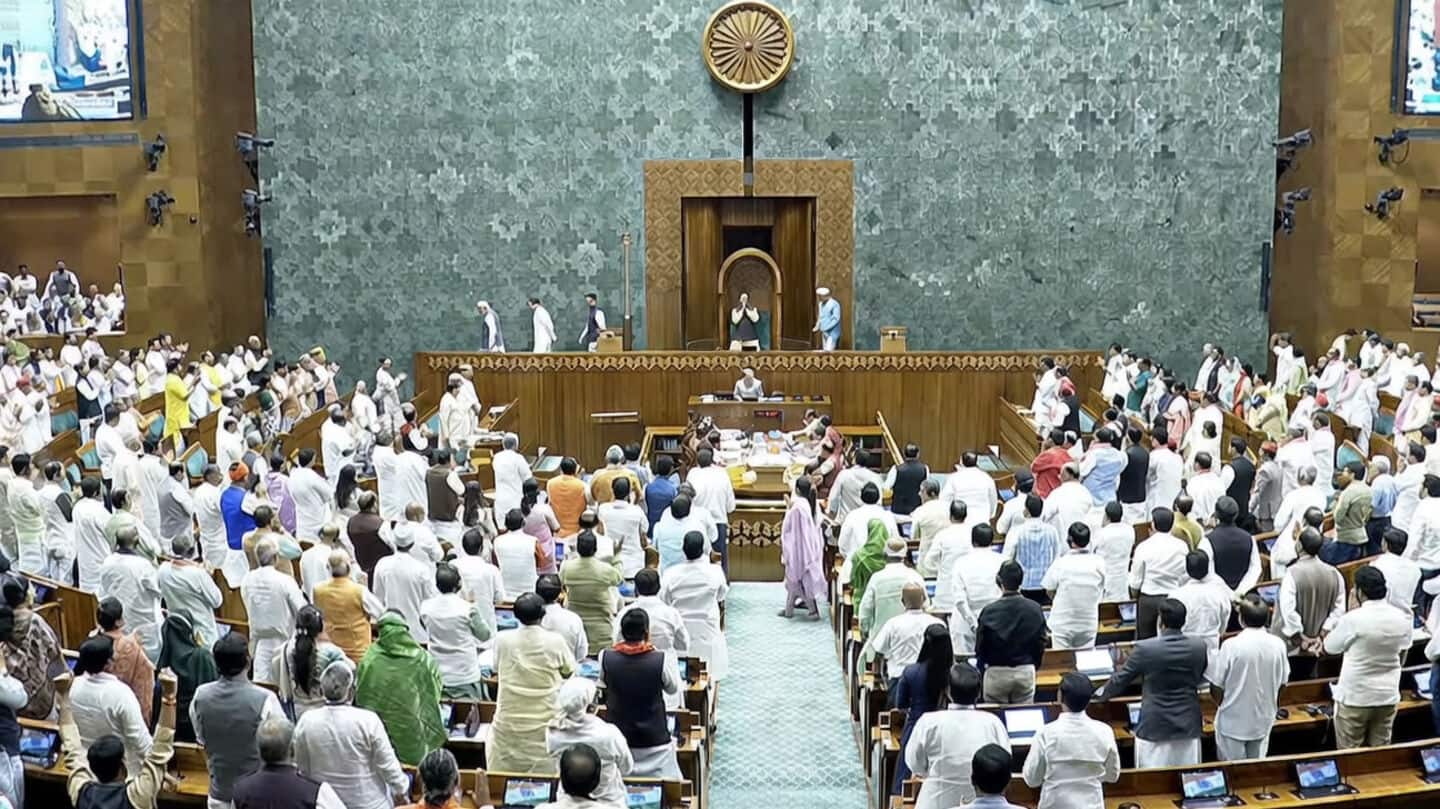
Delimitation, women's quota bills tabled in Parliament
What's the story
Three bills, the Constitution (One Hundred and Thirty-First Amendment) Bill, 2026; the Delimitation Bill, 2026; and the Union Territories Laws (Amendment) Bill, 2026 have been tabled in Parliament. The Constitution (One Hundred and Thirty First Amendment) Bill seeks to increase the strength of the Lok Sabha from the existing 543 members to 850 members. The framework links women's reservation with delimitation and the last Census, with the Centre planning to use 2011 Census data for redrawing constituencies and allocating seats.
Legislative challenge
Two-third majority required in both houses
The delimitation bill will establish a commission for redrawing constituencies, while the other two are Constitution amendment bills requiring a special majority of two-thirds of members present and voting in both Houses.
In the Lok Sabha, with an effective strength of 537, the two-thirds majority mark is 360.
The ruling National Democratic Alliance (NDA) has 293 members, falling short by 67 seats.
Upper House hurdle
Opposition raises concerns over potential political shift
In the Rajya Sabha, the majority mark is 163. The NDA's strength of over 142 members leaves it short by around 21 seats.
While several opposition parties have expressed support for women's reservation in principle, they have raised objections to tying it to delimitation.
They argue that this could alter representation across states and shift political balance.
Confidence expressed
Government optimistic about passing bills
Congress MP K Suresh said, "We are only opposing the delimitation, not women's reservation. Delimitation has not been discussed with the various stakeholders and the state govts are also not taken into confidence."
Despite the numerical challenge, the government is confident that it will get the required support to pass these bills.
Union minister Kiren Rijiju said, "I am not going into politics of which party is saying what. No party is opposing the women's reservation in parliament and assemblies."