'Students deserve justice': Rahul Gandhi shares alleged police brutality video
What's the story
Congress leader Rahul Gandhi has demanded an independent Supreme Court-monitored high-powered committee to investigate alleged police excesses against students protesting the NEET examination. The protests were held on July 20 over repeated paper leaks at Jantar Mantar. "Students deserve justice. An independent SC monitored high powered committee must be constituted to probe brutalities against our students," he wrote on X, sharing a video of the alleged police excesses.
Accusations made
Gandhi's attack on Shah
On Wednesday, Gandhi had accused Union Home Minister Amit Shah of authorizing the use of pellet guns, shock batons, lathicharge, and tear gas against protesters.
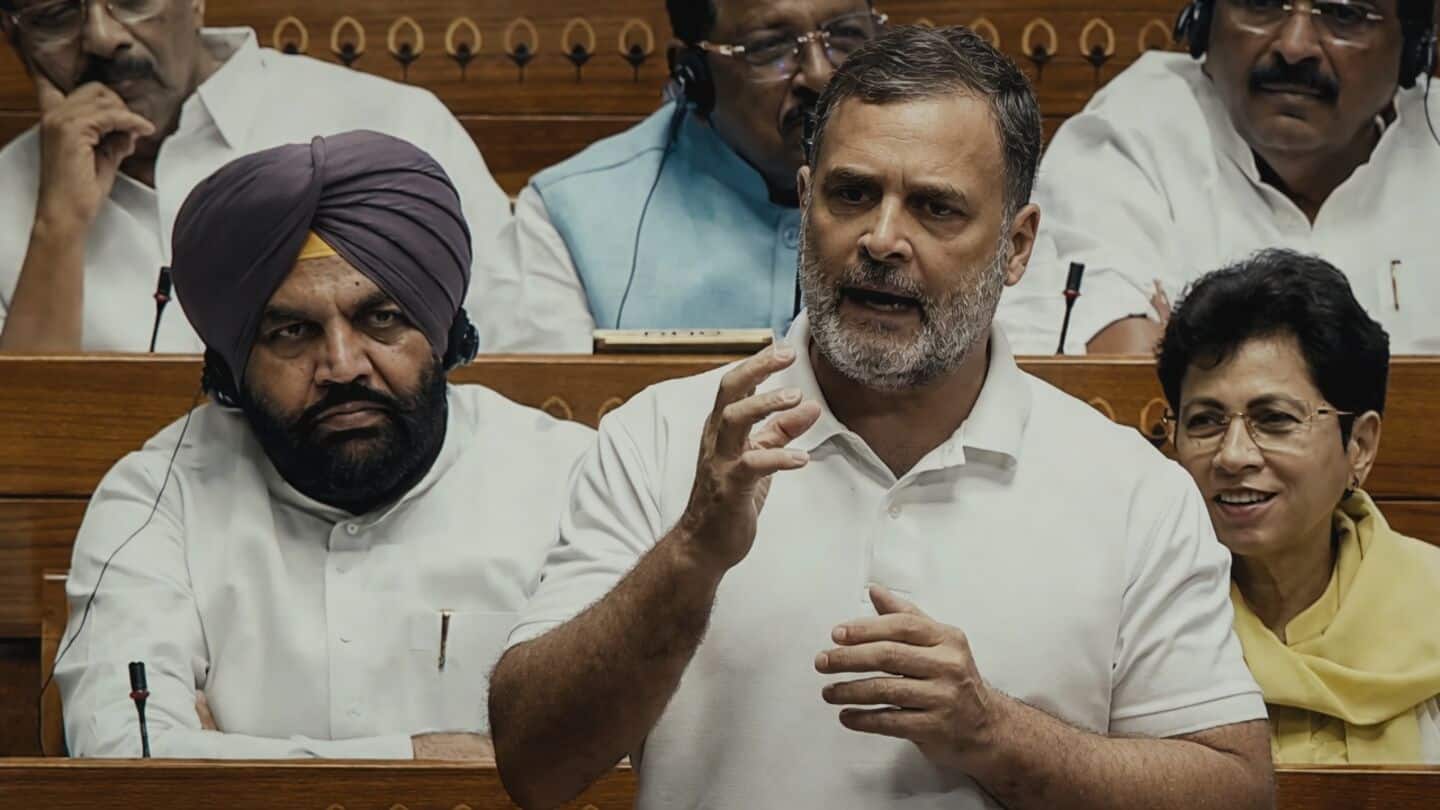
Speaking in the Lok Sabha, he called for Shah's removal from the Cabinet, saying if he was involved in these actions, he was "culpable of brutalization," and if not, he was "incompetent."
"In either case, he has to go," Gandhi said.
Twitter Post
Watch video here
Students deserve justice.
— Rahul Gandhi (@RahulGandhi) July 30, 2026
An independent SC monitored high powered committee must be constituted to probe brutalities against our students. pic.twitter.com/pZATUeAjwC
Counterarguments
BJP reacts to Gandhi's allegations
The government's treasury benches strongly opposed Gandhi's remarks, demanding he either provide proof for his allegations or apologize.
Union Parliamentary Affairs Minister Kiren Rijiju said, "You cannot level a charge to grab a headline and get away with it without providing proof."
Union minister Jitendra Singh defended the Delhi Police's actions on July 20, saying they exercised "utmost restraint" during the protests.
Bill
Anti-paper leak bill passed
After the House uproar, the Public Examination (Prevention of Unfair Means) Amendment Bill, 2026, also known as the anti-paper leak bill, was passed in the Lower House.
The bill seeks to further strengthen the Public Examinations (Prevention of Unfair Means) Act, 2024, by providing for fast-tracked investigation, speedy trial through fast-track courts, appointment of special public prosecutors, time-bound disposal of appeals and more stringent penalties for offenders.