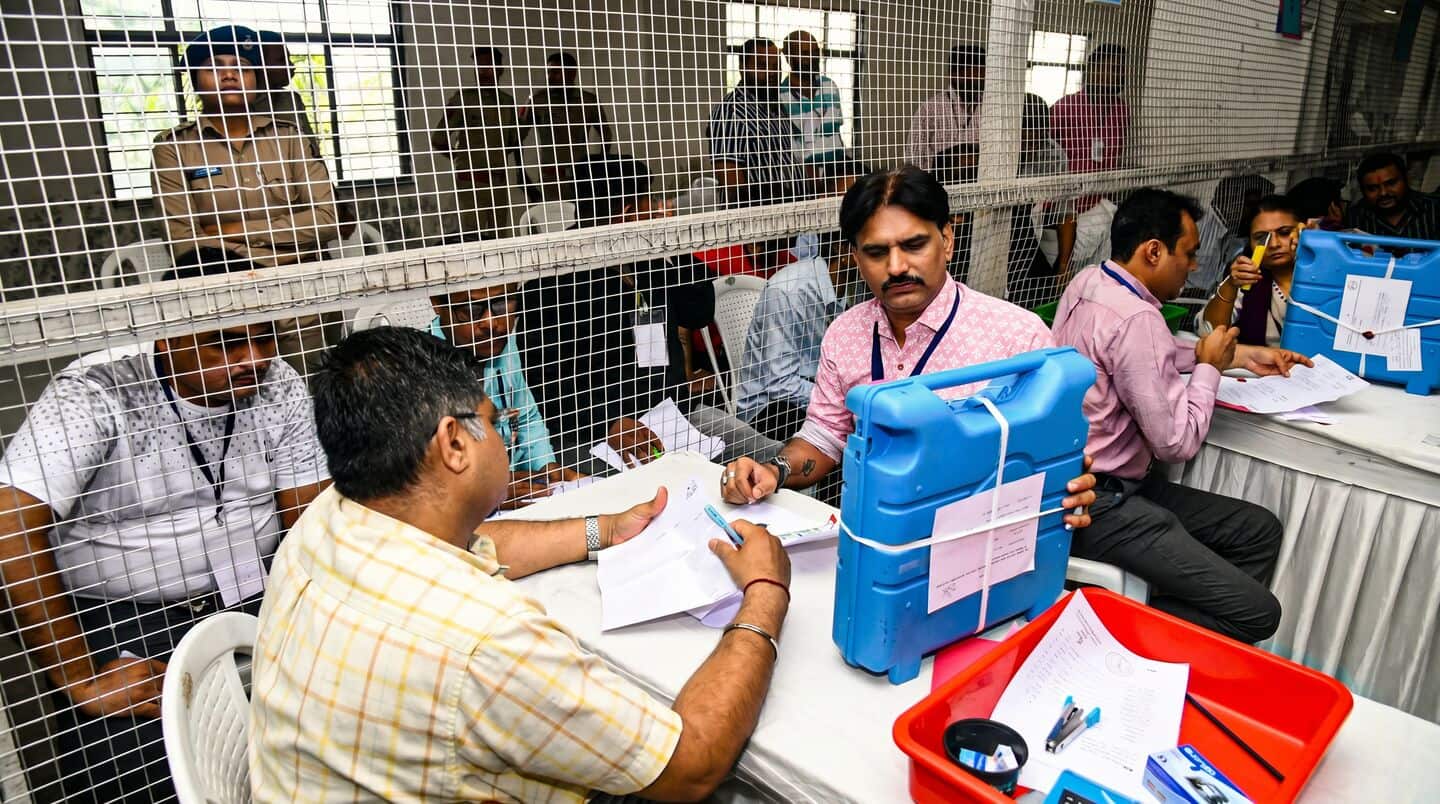
Appointing counting supervisors, assistants is ECI's discretion: SC tells Trinamool
What's the story
The Supreme Court has observed during the hearing that the All India Trinamool Congress's (TMC) plea challenging the appointment of central government and public sector unit (PSU) employees as counting supervisors and assistants in West Bengal's assembly election. The court observed that such appointments are within the exclusive discretion of the Election Commission of India (ECI). The decision comes after a similar ruling by the Calcutta High Court, which also upheld ECI's decision.
Bias allegations
Calcutta HC upheld ECI's decision
The Calcutta High Court had earlier dismissed the AITC's petition, stating that there is no restriction on appointing employees from central or state services. The court emphasized judicial intervention during elections should only be in cases of clear illegality. It rejected the party's concerns over potential bias, citing safeguards like micro-observers and CCTV cameras to ensure transparency in counting.
Legal arguments
TMC's apprehensions addressed by court
Senior lawyer Kapil Sibal had argued for the TMC in the Supreme Court, citing an ECI circular expressing apprehensions of discrepancy with central government nominees. However, Justice Joymalya Bagchi countered that it doesn't matter if a nominee is from the center or not, as counting agents and supervisors will be present from all sides. The court said choosing from one pool isn't incorrect under the regulations.
Dismissed concerns
No material evidence of prejudice, say senior advocates
The TMC had expressed fears of bias, alleging that central government employees may be influenced by the Bharatiya Janata Party (BJP)-led central government. However, senior advocates Dama Seshadri Naidu and Jishnu Chowdhury argued against these fears in court. They said there was no material evidence of prejudice and that the direction was meant to enhance transparency in counting processes.