US-Bangladesh deal threatens India's textile industry competitiveness, warns Congress
What's the story
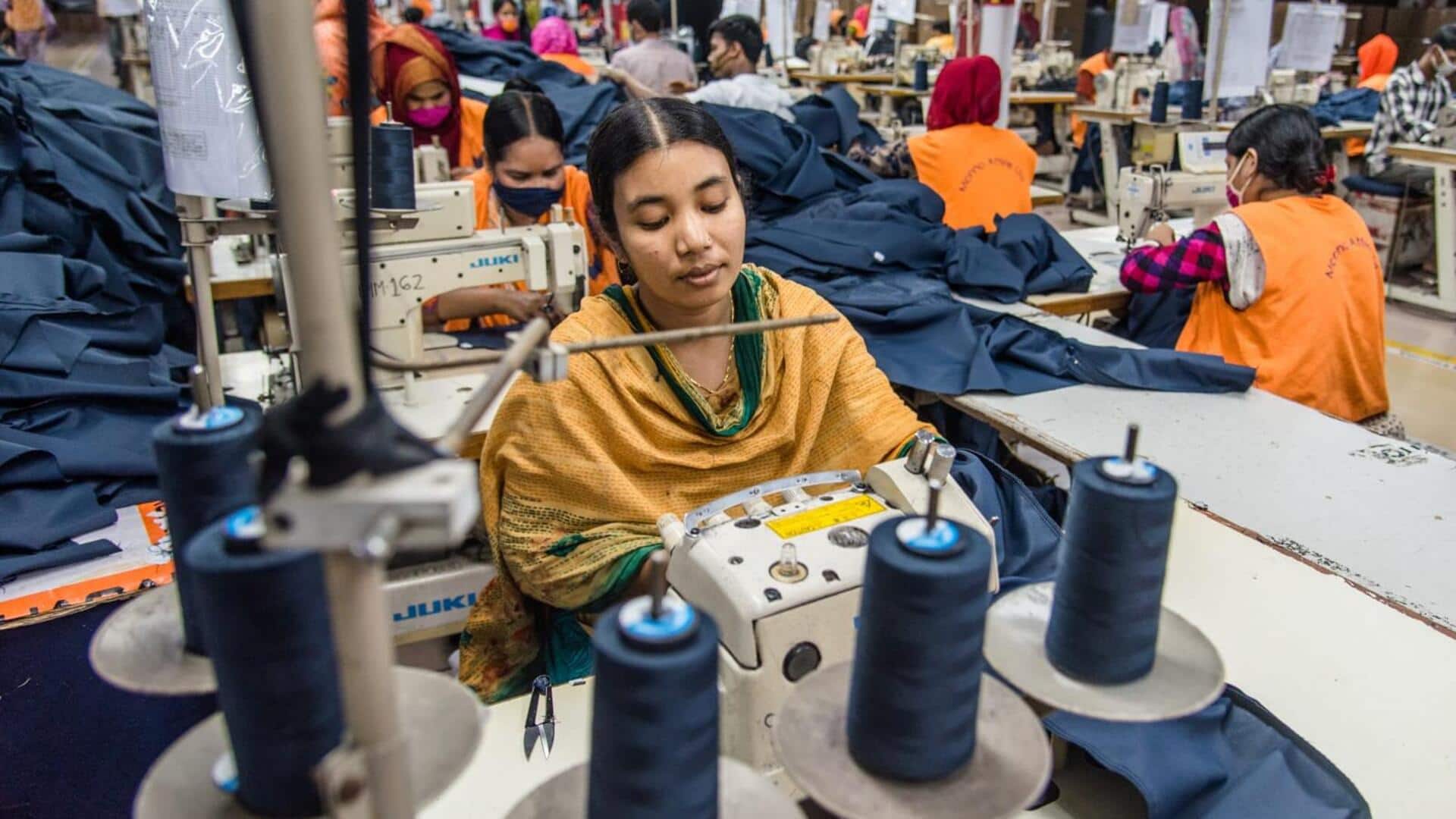
The Indian National Congress has slammed the United States-Bangladesh trade deal, calling it "bad news for India." In a social media post, the party pointed out that while the US imposes an 18% tariff on Indian garments, Bangladeshi garments face a 19% tariff, although they enjoy a zero-duty access clause. This clause allows Bangladeshi garments made from US cotton and man-made fibers (MMF) to enter the US market at no additional cost.
Export concerns
Bangladesh may reduce dependence on Indian cotton
The Congress party has also warned that this trade deal could hurt Indian cotton exports.
The party warned, "Bangladesh is currently a major buyer of Indian cotton, but this deal incentivises Bangladesh to shift to US cotton to avail ZERO-DUTY benefits," and proceeded to state that if Bangladesh reduces its dependence on Indian cotton, it could have adverse effects on Indian farmers and yarn spinners.
Industry impact
India's textile industry at risk
India's chief opposition party has also raised concerns over the possible repercussions of this trade deal on India's textile industry.
They said that major textile hubs like Tirupur, Surat, and Panipat could be adversely affected due to the 18% tariff disadvantage in the US market.
The party warned that this trade deal could weaken India's textile industry and threaten millions of livelihoods.
Twitter Post
Congress's alarm over US-Bangladesh deal
𝐓𝐡𝐞 𝐔𝐒–𝐁𝐚𝐧𝐠𝐥𝐚𝐝𝐞𝐬𝐡 𝐝𝐞𝐚𝐥 𝐢𝐬 𝐛𝐚𝐝 𝐧𝐞𝐰𝐬 𝐟𝐨𝐫 𝐈𝐧𝐝𝐢𝐚. 𝐇𝐞𝐫𝐞’𝐬 𝐰𝐡𝐲 👇
— Congress (@INCIndia) February 10, 2026
🇱🇷🇮🇳 US tariff on Indian garments/apparel: 18%
🇱🇷🇧🇩 US tariff on Bangladeshi garments/apparel: 19%, but with a ZERO-duty (0%) access clause that India does not have.
👉 This…
Exporter worries
Agreement allows Bangladeshi textile goods to enter US tariff-free
Indian textile and apparel exporters also raised alarm by the US-Bangladesh Agreement on Reciprocal Trade.
According to a report by The Hindu, the agreement allows certain Bangladeshi textile and apparel goods to enter the US at a zero reciprocal tariff rate, based on their exports of US-produced cotton and MMF inputs.
In 2024-2025, India exported $1.47 billion worth of cotton yarn, approximately 570 million kg, to Bangladesh, making it India's biggest yarn market, the report stated.
Minimal impact
Some stakeholders believe impact may not be significant
However, some stakeholders believe the impact of this trade deal may not be significant. They point out that Bangladesh faces challenges such as electricity issues and needs to make its mills competitive with US cotton.
Siddhartha Rajagopal of Cotton Textiles Export Promotion Council was reported as saying that realignment in supply chains would take time, and practicality should be considered before jumping to conclusions about the deal's effects.