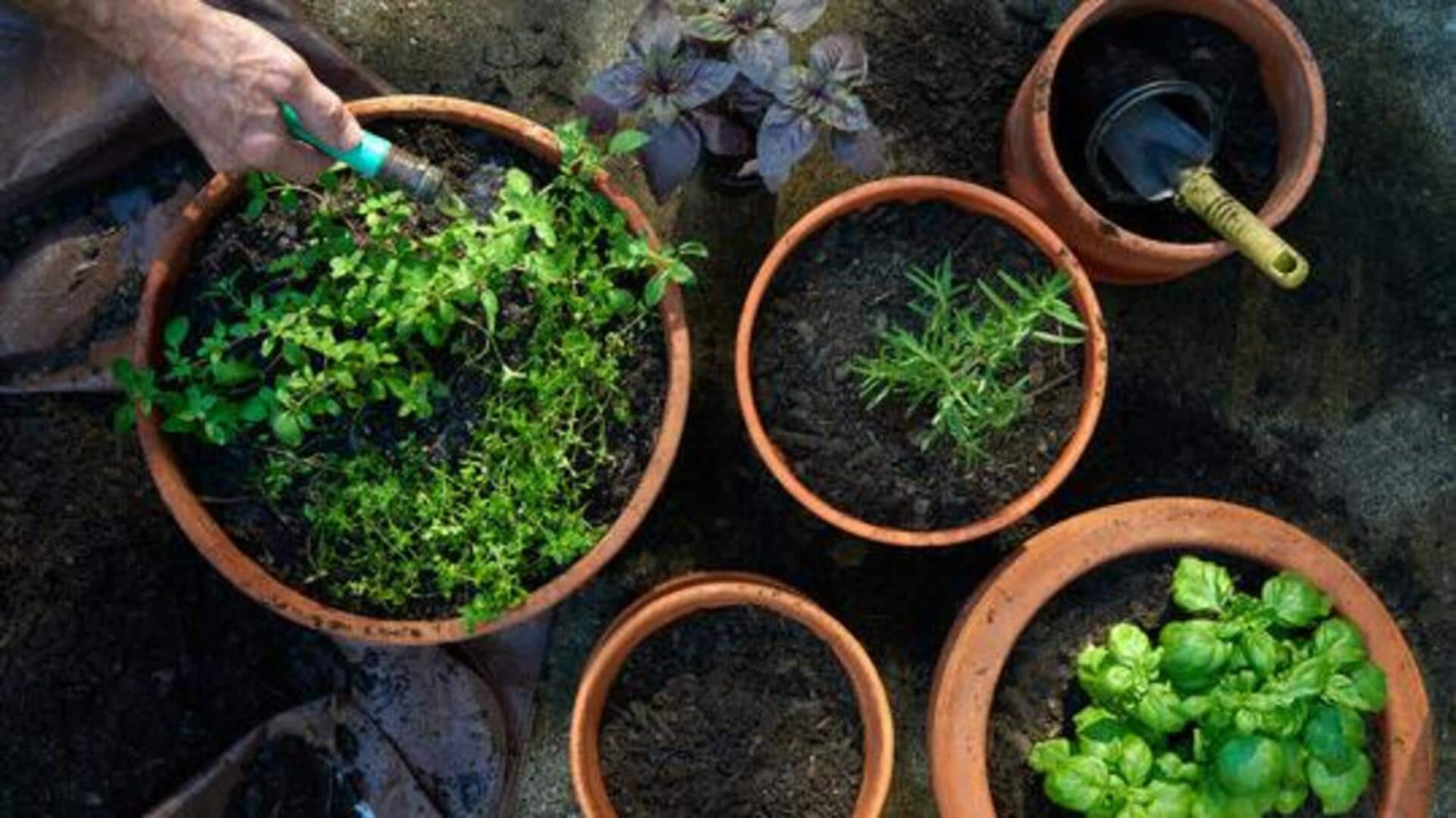
These AI tools can make urban gardening effortless
What's the story
Urban gardening is revolutionizing city life by enabling people to grow their own fresh produce at home, even from small spaces like balconies, rooftops, and vertical walls. With the aid of AI tools, this practice can be made even more efficient and eco-friendly. Featured in the 2026 trends, these five AI-powered solutions optimize water consumption, monitor plant health, and cut down waste for truly sustainable practices.
#1
AI-powered smart irrigation systems
AI-powered smart irrigation systems use real-time data from soil moisture sensors, weather forecasts, and plant needs to automatically adjust watering schedules. This prevents overwatering and conserves up to 50% of water in urban plots. Ideal for hydroponic setups or container gardens, these systems integrate with IoT hubs for hands-free operation and promote regenerative practices like no-dig beds.
#2
Plant health monitoring apps with AI image recognition
Plant health monitoring apps, powered by AI image recognition, scan your photos to detect pests, diseases, or nutrient deficiencies in your plants early on. They suggest natural remedies without chemicals and track humidity, light levels, and growth in real-time through connected sensors. These apps are ideal for vertical farms or small edible gardens in apartments.
#3
AI-optimized greenhouse controllers
AI-optimized greenhouse controllers cater to compact urban greenhouses. They control temperature, humidity, lighting, and CO2 levels with predictive analytics to maximize yields and minimize energy consumption. These tools predict problems such as pest pressure and automatically adjust ventilation to facilitate year-round salad production in confined spaces.
#4
Soil quality analysis tools like SQAT
Soil quality analysis tools like SQAT combine satellite data with robotics and AI technology to deliver high-resolution soil maps for urban raised beds. This allows for precise nutrient dosing, coupled with liming and seeding processes that minimize fertilizer runoff while aiding carbon sequestration—integral parts of sustainable soil health in city settings.
Tip 5
AI design and predictive planning software
AI design and predictive planning software consider local climate and soil characteristics, as well as space constraints, when recommending drought-resistant native plants for low-maintenance urban landscapes. They simulate growth patterns while optimizing layouts to promote biodiversity through automation features such as pest control measures via voice commands.