Astronomical events to watch this September
What's the story
September is a month of celestial wonders, offering stargazers a chance to explore lesser-known astronomical events. The month begins with Venus and Spica's conjunction on September 1-2. The two of the brightest celestial objects are visible to the naked eye, separated by about 1.5 degrees in the night sky. This will be followed by the Moon's close encounter with the Pleiades star cluster on September 3.
Celestial rendezvous
Diamond Moon
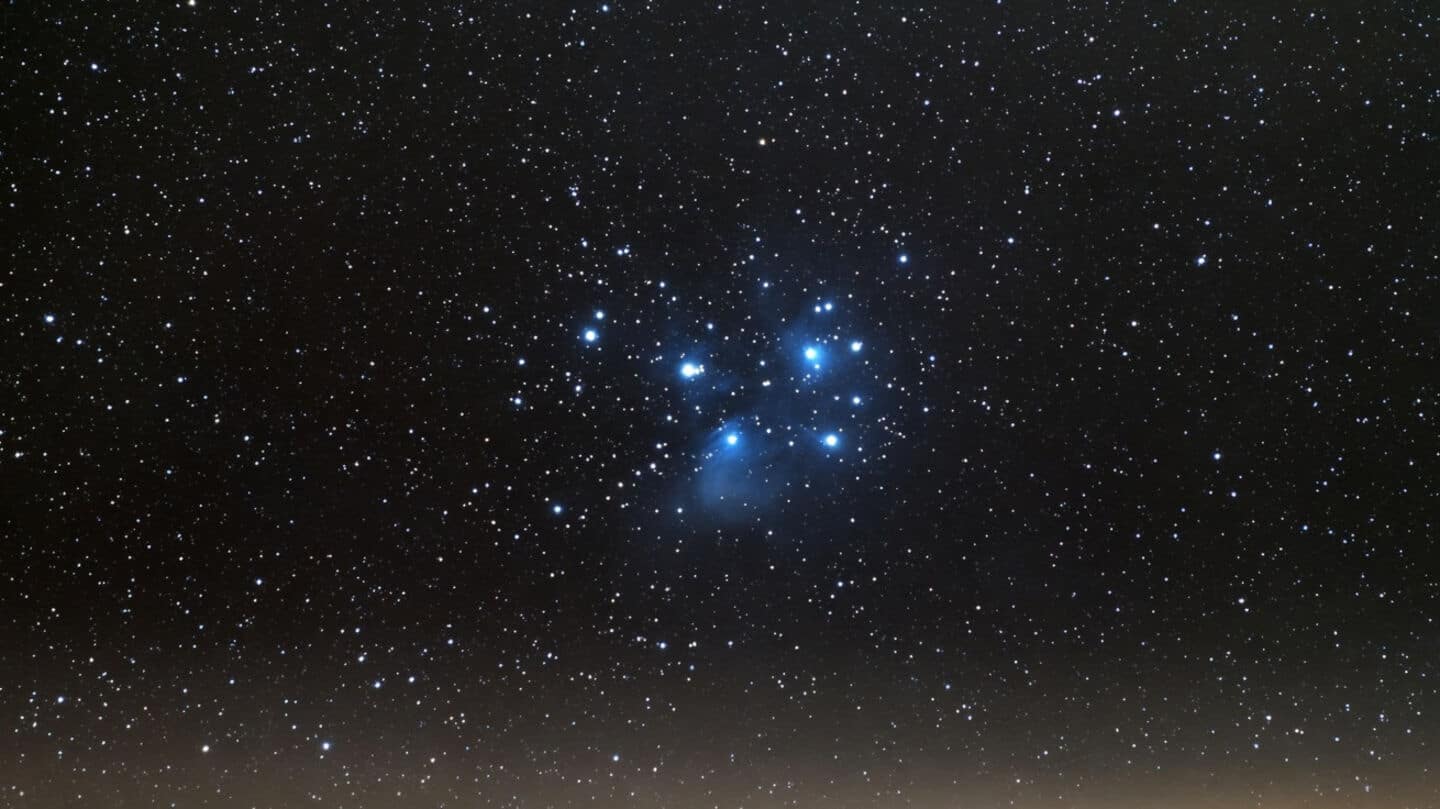
On September 3, the Moon and the Pleiades star cluster (also known as "the Seven Sisters" or M45) will make a close approach in the night sky.
The two will be separated by about 1.1 degrees, making it possible to see both celestial objects in one field of view.
This will be a great opportunity for stargazers as they could see the bright points of stars next to the Moon, resembling diamonds.
Meteor shower
Epsilon Perseids meteor shower
The Epsilon Perseids meteor shower will peak on September 9 and 10, with up to eight meteors per hour.
Although not as prolific as the August Perseids, this shower has the advantage of peaking just two days before the new moon, ensuring a dark sky for optimal viewing conditions.
Stargazers are advised to head to dark areas away from light pollution for the best experience.
Planetary brilliance
Venus at its brightest
On September 22, Venus will shine at its brightest, reaching an apparent magnitude of about -4.8. This makes it one of the easiest objects to spot in the night sky.
The planet will be best viewed after sunset near the western horizon, with viewing conditions being optimal from the southern hemisphere.
Astronomical event
September equinox
The September equinox, an astronomical event marking a point in Earth's orbit and the change of season, will occur on September 23.
It is the astronomical start of autumn in the northern hemisphere and spring in the southern hemisphere.
On September 26, Neptune will reach opposition, making it one of the best times to spot this distant planet.
However, since it's too faint to be seen with the naked eye, you'll need a telescope.