If you're a physiotherapist, continue reading
What's the story
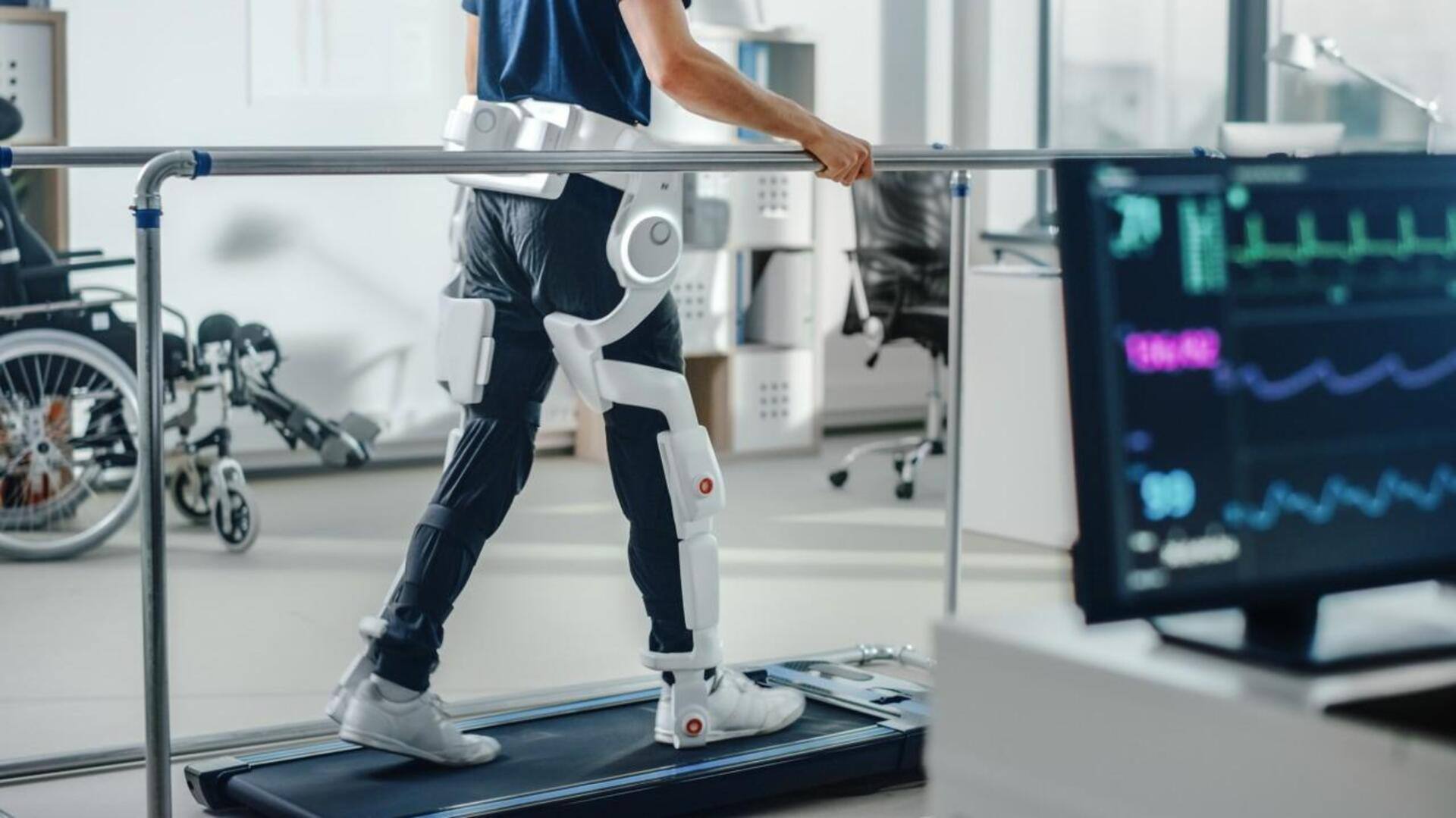
In 2026, physiotherapy is witnessing a major revolution - courtesy of artificial intelligence. AI is making rehabilitation more precise, personalized, and outcome-driven. These tools seamlessly integrate into clinical workflows, assessing movements and creating personalized exercise plans. They monitor progress to shorten recovery times by 20% to 30% when used with traditional methods. Here, we explore the top advancements in AI-based physiotherapy techniques changing the game.
#1
Real-time movement analysis
AI-powered movement analysis employs computer vision and sensors to track points on the body in real-time. It identifies compensation patterns 85% faster than manual assessments.
Systems such as those available in some apps assess range of motion, posture, and gait with phone cameras or wearables. This offers objective data for better decision-making and remote monitoring.
By contrasting patient data against huge normal pattern databases, therapists can catch subtle issues early.
#2
Personalized exercise recommendations
AI analyzes patient history, goals, and progress to recommend personalized exercise programs with progressions and reminders.
This accelerates home program creation and increases adherence with app-based tracking.
Visual instructions enable clearer communication between therapists and patients.
Progress tracking tools detect plateaus, create reports, and enable hybrid care models combining in-clinic sessions with tele-rehab.
#3
Virtual reality rehabilitation
VR rehab augmented with AI boosts patient engagement by 40% compared to traditional exercises. It places users into interactive scenarios for balance training, neurological rehab, and pain management.
Wearable sensors with edge AI continuously monitor over 15 biomechanical variables during home exercises. This allows for real-time feedback for safer progressions.
Tip 1
Enhanced clinical efficiency
AI-driven tools like medical scribes for documentation simplify administrative processes like scheduling systems to reduce admin time considerably.
This gives physiotherapists more time and attention to patient interaction.
They provide data-driven care in a seamless manner, without taking away expert judgment completely.
These tools enhance accessibility outcomes overall, serving as a clinical assistant.