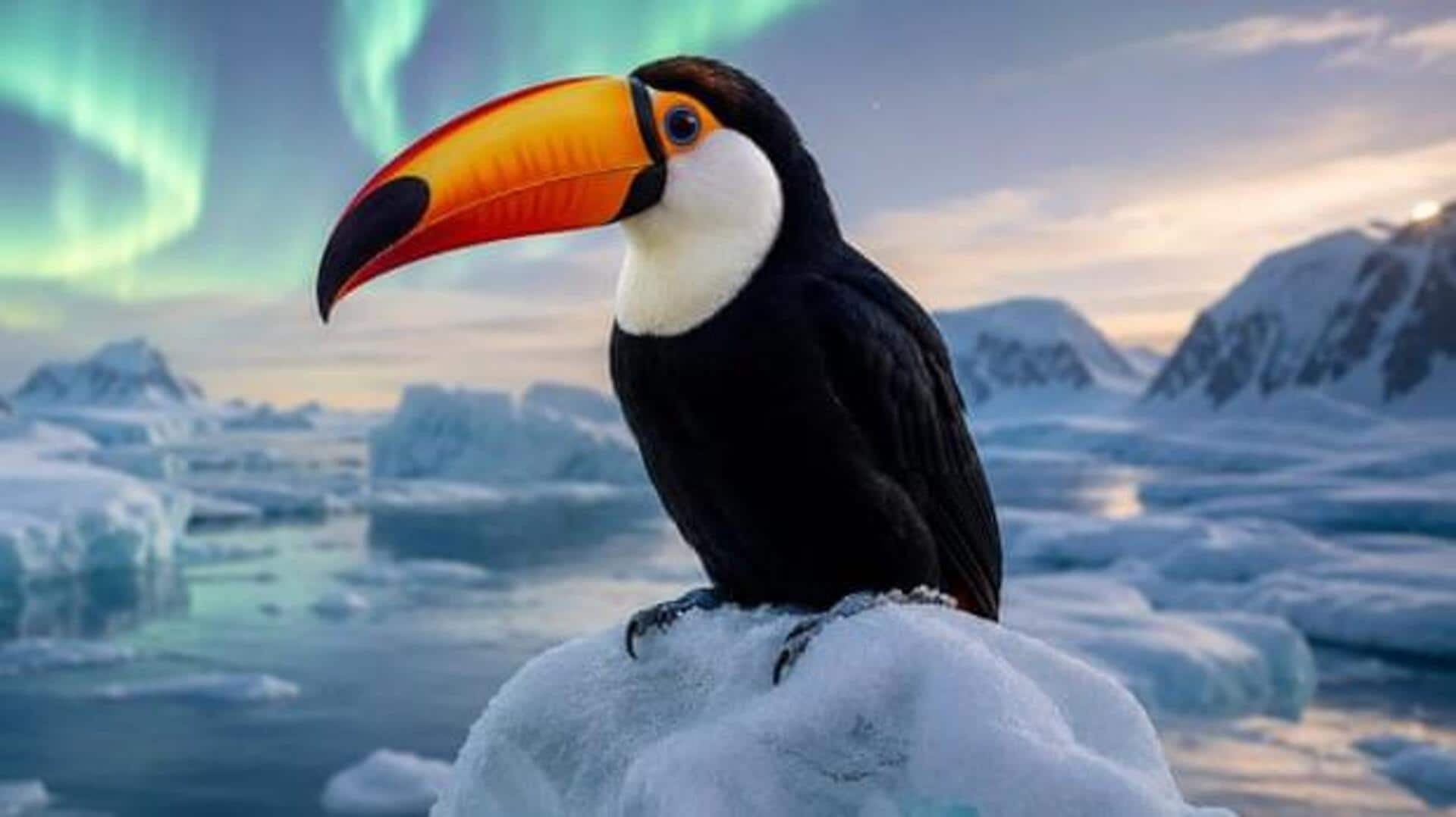
How AI-altered images are putting birdwatching at risk
What's the story
The rise of generative artificial intelligence (AI) tools like ChatGPT and Google Gemini has led to a surge in doctored images of rare birds on wildlife photography forums. The issue, dubbed "AI slop," is causing concern among scientists who fear it could compromise the reliability of citizen science platforms such as iNaturalist and Macaulay Library. These platforms are often used for scientific research to track species' habitats.
Impact of AI
Altered photos making it difficult to track species' habitats
The ability of generative AI tools to create high-quality fake images in seconds or enhance existing ones by removing obstructions has led to an increase in altered photos on birdwatching forums.
This can unintentionally introduce significant changes, making it difficult for researchers and conservationists to accurately monitor species' habitats.
Dr. Alexander Lees, an ecologist at Manchester Metropolitan University, highlighted this issue in a recent commentary published in the science journal Nature.
Tracking challenges
AI editing can lead to inaccurate tracking efforts
Dr. Lees said, "The idea that we could maybe use those photos to help us understand where species are in space and time is very difficult."
He pointed out that while outright hoaxes are rare and easily identifiable (like a toucan sighting in Siberia), birders often use AI to edit/improve an image.
This can lead the algorithm to add features from different bird species into the new image, complicating tracking efforts further.
Misidentification case
Case of false sighting in Brazil
Dr. Lees cited case of a false sighting of a red-winged blackbird in central Brazil, where it had never been seen before.
The bird was actually an epaulet oriole but the photographer had asked an AI platform to make the picture "look better."
This led to parts of the red-winged blackbird being added, resulting in the false sighting.
He warned that while wildlife photographers may want beautiful photos, these images could cause problems down the line when edited with AI.
Ongoing assessment
Citizen science organizations still assessing issue
Citizen science organizations are still trying to assess how widespread this issue is.
On iNaturalist, a social network where nature enthusiasts can log sightings of plants and animals, only 1,400 out of over 610 million images have been flagged for AI use.
Tony Iwane, iNaturalist's director of community support and co-author on the Nature paper, said most cases were probably not malicious but urged users to be cautious.