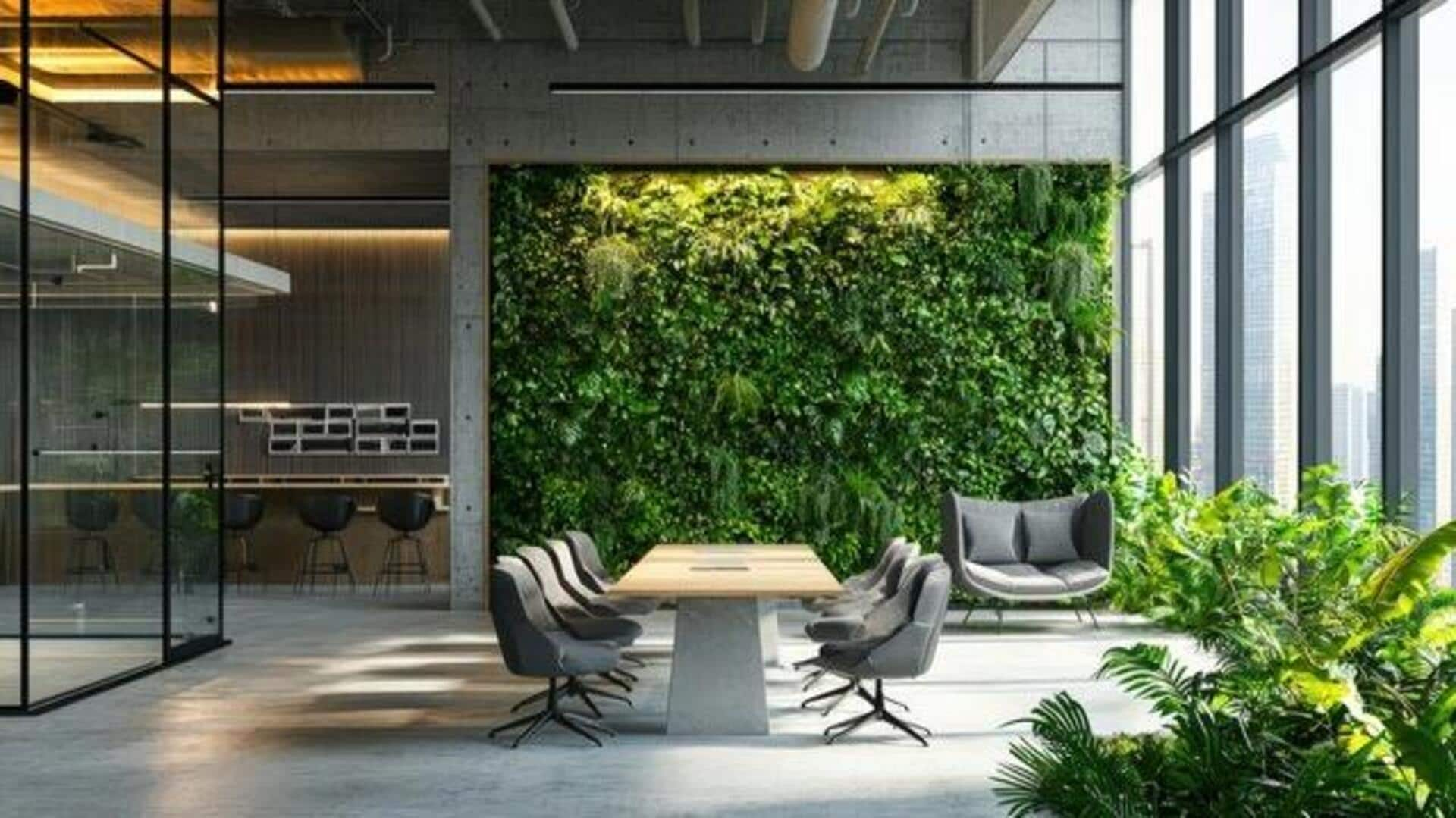
Want a greener office? AI can help
What's the story
Artificial intelligence is transforming offices into smart spaces by optimizing energy consumption, minimizing waste, and improving resource efficiency. By 2026, companies can use AI tools to establish greener workspaces that minimize carbon footprints while increasing productivity. The major use cases include AI-based energy management systems that track occupancy and set heating, ventilation, air conditioning (HVAC), and lighting accordingly. Generative AI tools also help with sustainable design by assessing material impacts and recommending eco-friendly alternatives.
Tip 1
Optimizing energy use with AI
AI-driven energy management systems are key to creating sustainable office spaces.
They employ algorithms to track parameters such as occupancy and weather patterns.
By automatically adjusting HVAC and lighting only in occupied zones, they attain up to 25% reductions in energy consumption.
This not only reduces costs but also greatly reduces emissions without compromising on comfort.
Tip 2
Sustainable design through generative AI
Generative AI tools are central to sustainable office design, assessing material impacts and providing eco-friendly alternatives, such as recycled flooring or low-VOC paints.
These tools also model energy consumption for lighting and cooling systems, allowing architects to predict environmental effects accurately.
This approach also reduces waste during fit-outs by calculating exact material needs.
Tip 3
Enhancing space utilization with analytics
Workplace analytics platforms that track space utilization with IoT sensors effectively forecast demand for desks and meeting rooms.
By removing underused areas, these platforms also support ESG goals through reduced operational waste and enable carbon tracking.
Real-time occupancy insights ensure you optimize hybrid work environments efficiently.
Tip 4
Improving acoustics with AI solutions
AI tools dramatically improve office acoustics by detecting echo-prone areas and recommending non-structural fixes, like acoustic panels or partitions.
These solutions establish focused zones that improve employee wellbeing without consuming too much energy. This makes the workplace pleasant while still being within sustainability goals.
By resolving acoustical challenges, AI makes sure office spaces stay efficient and conducive to productivity, in line with larger environmental goals.
Tip 5
Predictive maintenance for resource efficiency
Predictive maintenance powered by AI catches equipment issues early on, extending hardware lifecycles and preventing breakdowns that result in wasting resources.
Carbon-tracking platforms automate ESG reporting processes, giving clear views of carbon footprints from daily operations—ensuring offices stay efficient while remaining in line with corporate responsibility initiatives.