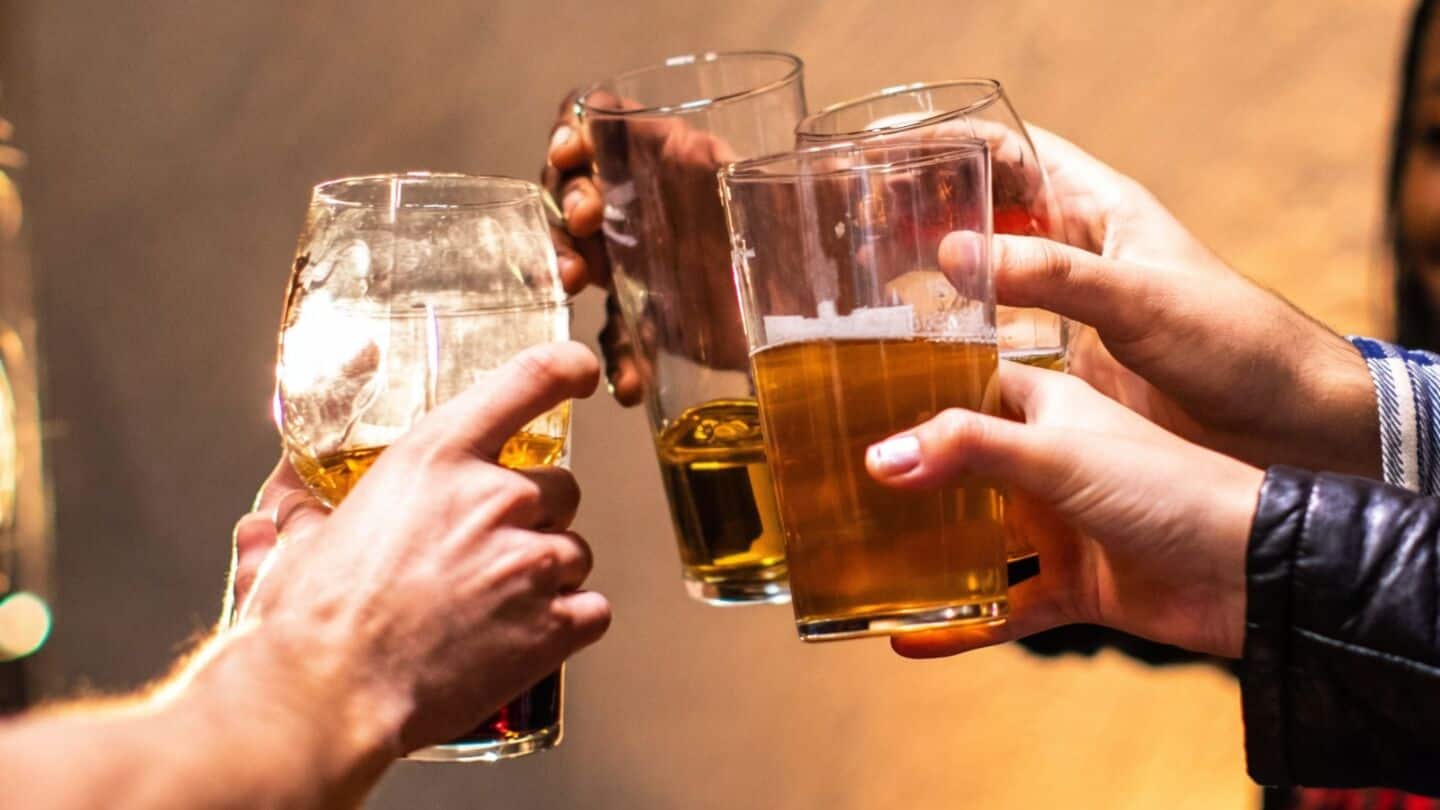
US adults are drinking less alcohol than before
What's the story
For the first time since the COVID-19 pandemic, alcohol consumption among US adults has declined, a new study has found. The research was led by Dr. Brian P. Lee, a hepatologist and liver transplant specialist at Keck Medicine of USC in Los Angeles. The study was published in the Annals of Internal Medicine.
Hope
'Decline gives you something to hope for as a doctor'
The COVID-19 pandemic triggered a major spike in alcohol consumption in 2020, a trend that continued for two years.
During this period, Dr. Lee witnessed an alarming rise in patients suffering from liver-related diseases, including young adults in their 20s requiring liver transplants due to alcohol use.
"Seeing this first decline gives you something to hope for as a doctor," he said while emphasizing caution about interpreting one change as a sustained trend.
Research findings
Study analyzed data from over 114,000 respondents
The study analyzed data from over 114,000 respondents of the National Health Interview Survey, which is administered by the US Census Bureau.
It found that any alcohol use, including heavy drinking, among US adults declined from 2022 to 2024. However, these rates are still higher than they were in 2018.
The share of adults who drank any alcohol in the past year fell by nearly 2%, while heavy drinking dropped by over 8% during this period.
Gender disparity
Gender difference in decline of alcohol consumption
The study noted a gender difference in the decline of alcohol consumption.
Men showed a larger decline in any alcohol use, while women saw a greater drop in heavy drinking.
Heavy drinking is defined as four or more drinks per day, or eight or more per week for women, and five or more drinks per day or 15 or more drinks per week for men, according to the National Institute on Alcohol Abuse and Alcoholism.
Generational shift
Generational divide in drinking habits
The study also highlighted a generational divide in drinking habits.
Gen Z adults (ages 18-29) saw the largest decline in any alcohol use with an over 5% drop, while heavy drinking among millennials (ages 30-49) dropped by 17% between 2022 and 2024.
Dr. Lee speculated that social dynamics such as the rise of the sober-curious movement and increased awareness of health-related harms of alcohol could be contributing factors to these trends.
Health risks
Concern remains for older adults
Despite the overall decline in alcohol consumption, Dr. Lee is concerned about people aged 50-64 (Gen X and youngest Baby Boomers).
This group continues to drink at rates higher than before the pandemic, putting them at high risk for alcohol-related conditions like liver disease, cancer, and cardiovascular disease.
Heavy drinking for this group increased by over 36% from 2018 to 2024.