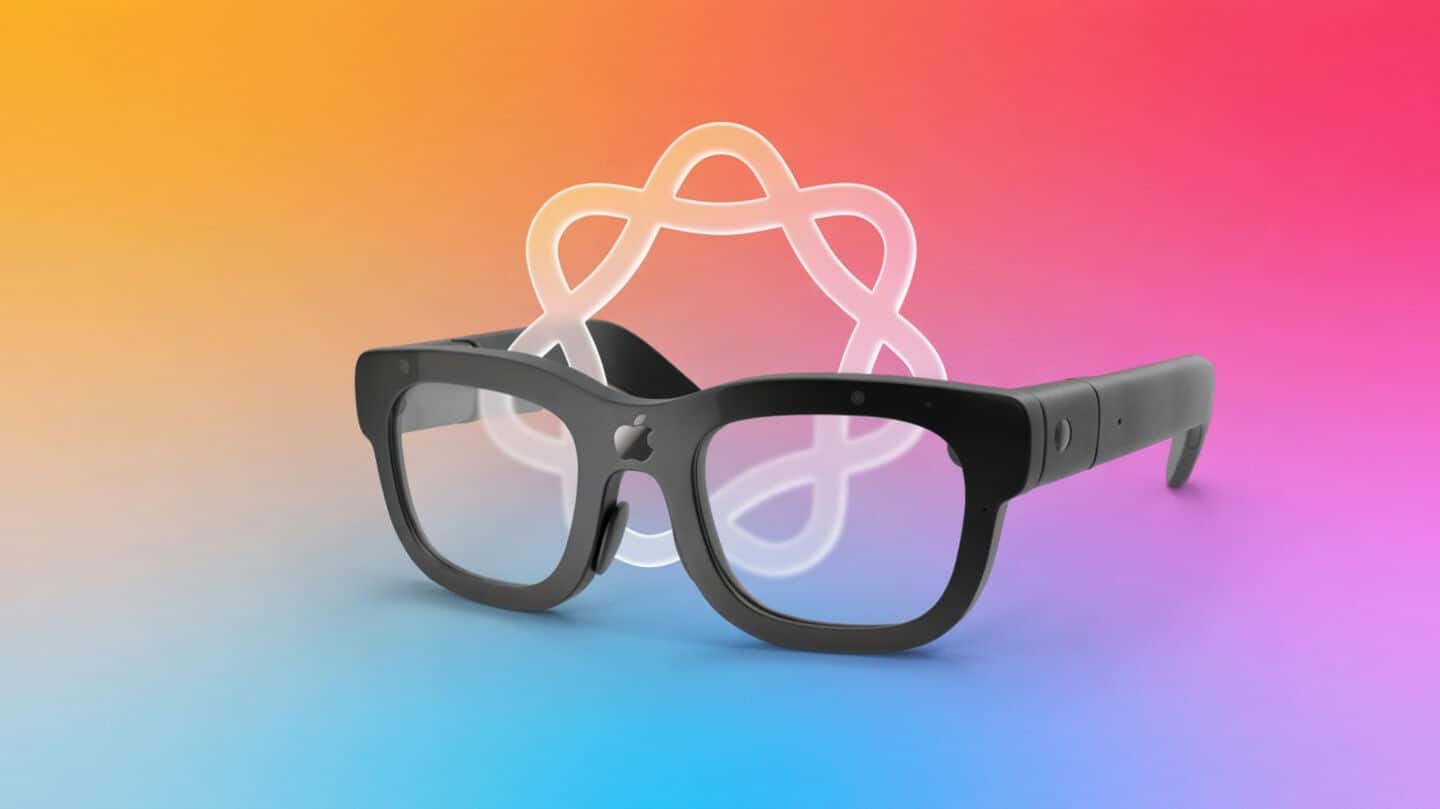
Apple's AI-powered smart glasses coming next year: What to expect
What's the story
Apple is gearing up to launch its first-ever pair of artificial intelligence (AI)-powered smart glasses next year. The innovative device will integrate Visual Intelligence technology and bring Siri into the real world. Unlike other tech giants, Apple will not be collaborating with an existing eyewear manufacturer for this project. Instead, it is designing the glasses in-house with several styles planned.
Tech features
AI, not AR
The upcoming smart glasses will be AI-based, not augmented reality (AR)-based. They will mainly rely on voice and camera inputs as they won't come with any displays.
The cameras will let Siri interact with your real-world environment, answer questions, provide context, and even translate signs.
You could also ask Siri to save an image of something for later reference.
Audio capabilities
Privacy concerns may limit video capture
The smart glasses will also come with speakers for music and audio playback, acting as open-ear headphones.
However, they may not support regular photo and video capture due to privacy concerns.
This decision comes after the recent privacy issues surrounding Meta's Ray-Ban glasses.
Design options
Multiple styles for users to choose from
Apple is said to be working on a range of styles for its smart glasses.
These include a large rectangular frame like Ray-Ban Wayfarers, a slimmer rectangular design similar to the ones worn by Apple CEO Tim Cook, larger oval or circular frames, and a smaller, refined oval or circular option.
The glasses will be made from acetate, a more durable and premium alternative to plastic.
Health features
Health features in future versions
In future versions, Apple is said to be considering positioning the product as a health device.
This could involve integrating heart-rate monitors or additional software features to make it more useful.
However, these capabilities are not expected in the first iteration of the product.
Reports suggest that Apple will unveil these glasses at WWDC 2027, giving developers time to prepare for them before their official launch later that year.