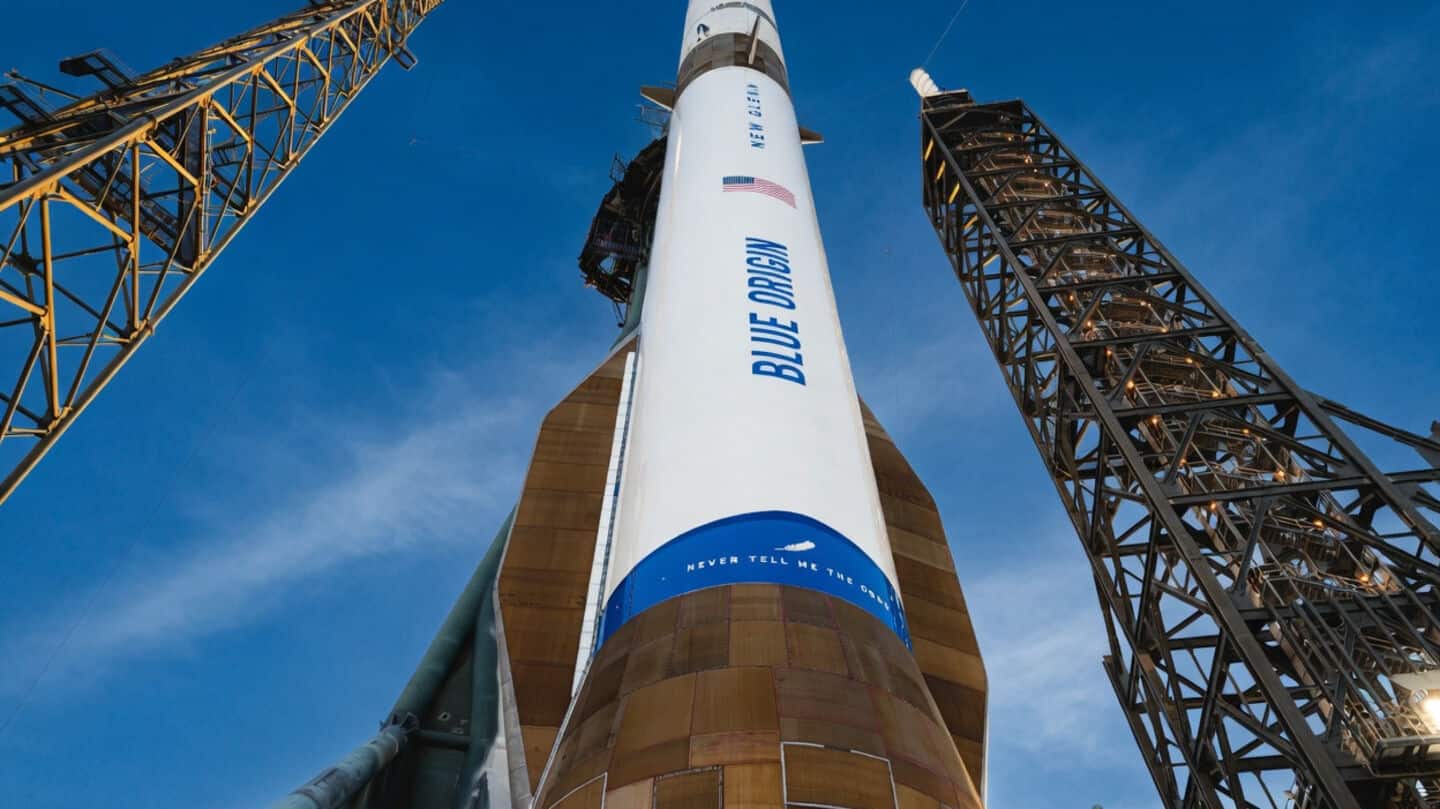
Blue Origin can fly its New Glenn rocket again
What's the story
Blue Origin's latest mega-rocket, the New Glenn, has been given the green light by the Federal Aviation Administration (FAA) to resume its flight operations. The approval comes after an upper stage failure during an April launch attempt, which resulted in the loss of a commercial payload. The company announced this development via a post on X.
Technical glitch
What caused the launch failure?
The company revealed that the upper stage of New Glenn "experienced an off-nominal thermal condition," leading to one of its three engines producing lower-than-expected thrust. This technical glitch resulted in the AST SpaceMobile satellite, which Blue Origin was supposed to launch into orbit, burning up in Earth's atmosphere instead. However, AST SpaceMobile confirmed it had insurance coverage for the lost satellite.
Corrective measures
Corrective measures were taken after the incident
Following the incident, Jeff Bezos's spaceflight company submitted a report to the FAA and took "corrective measures." However, details of these measures were not disclosed. The mishap occurred during New Glenn's third-ever flight, which otherwise went off without a hitch. The company successfully reused the New Glenn booster stage for the first time and landed it on a drone ship in the ocean for a second time.
Future plans
Resuming flight operations
With the FAA's approval, Blue Origin can now resume its aggressive launch schedule for the New Glenn rocket this year. The company had previously announced its plans to launch the rocket as many as 12 times by the end of 2026. However, it remains unclear how much impact a month-long grounding has had on these ambitious plans.