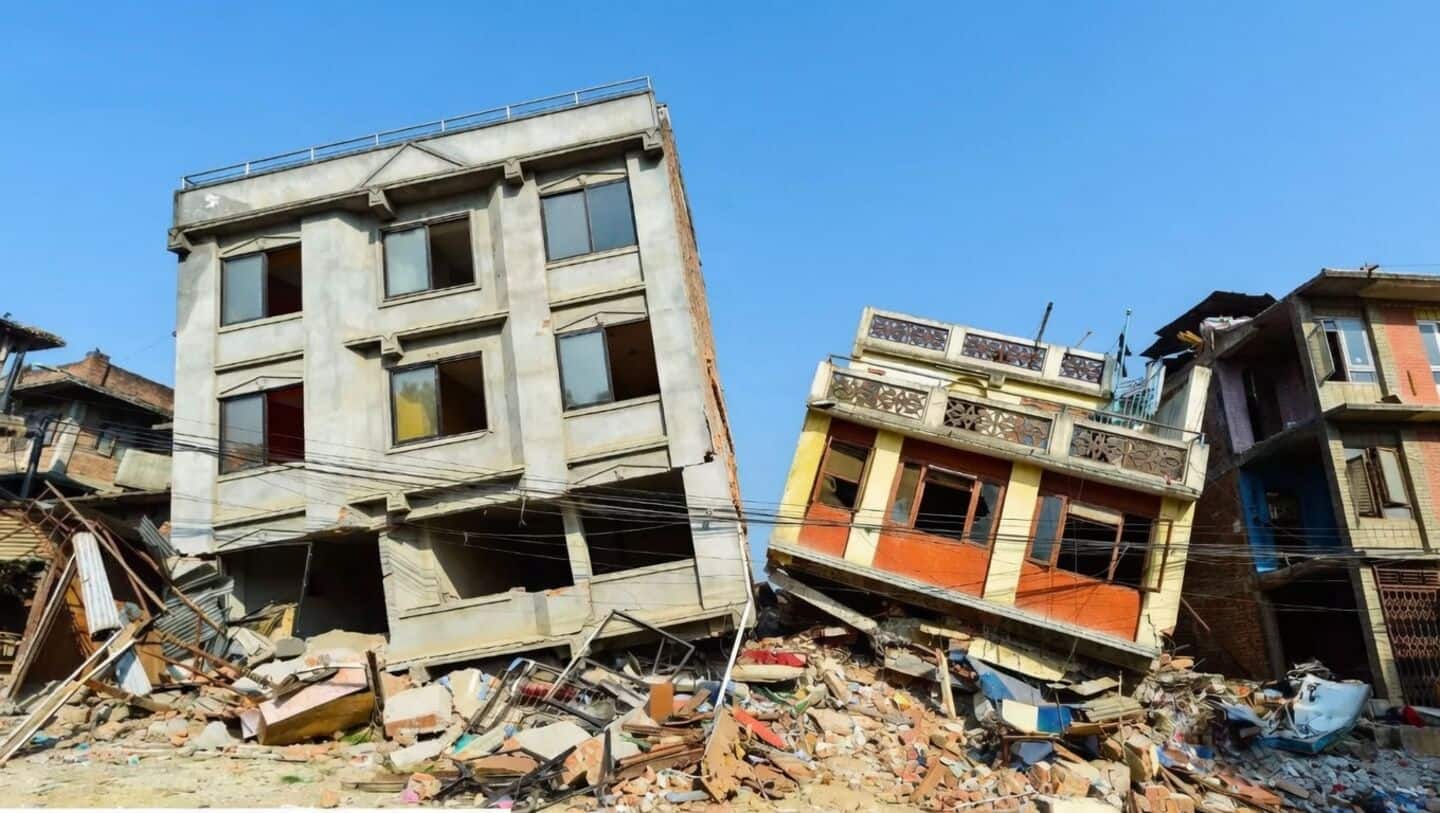
This earthquake type can strike the same area twice
What's the story
A new study from the Massachusetts Institute of Technology (MIT) has identified a unique type of earthquake, dubbed as "boomerang earthquakes." Unlike conventional quakes that rupture outward from their starting point, these seismic events can briefly reverse along the same path. The research, published in AGU Advances, shows that even simple straight faults could experience this reversal under certain conditions.
Uncommon occurrence
Rare phenomenon observed in major past earthquakes
Boomerang earthquakes are extremely rare, with only a handful of instances recorded.
One such case was in 2016 when an Atlantic Ocean quake moved east before reversing back west.
The same pattern was also seen in Japan's 2011 Tohoku earthquake and the recent Turkey-Syria quake.
These events were previously attributed to complex networks of intersecting faults but this new study challenges that assumption by suggesting even straight faults could produce this kind of rupture.
Simulation findings
How did the researchers conduct the study?
The researchers used computer models to simulate a simple elastic crust with one straight fault.
They tested how the ruptures behaved under different lengths, starting points, and travel directions.
Their results showed that only earthquakes moving in one direction exhibited the reversal pattern.
This was due to friction along the fault not simply dropping and staying low but falling, rising, then falling again.
Mechanism explained
Distance plays a crucial role in this phenomenon
The reversal pattern is explained by stress.
When part of the fault stops sliding, stress can build again behind the moving rupture.
This stored energy may then trigger a second slip in the opposite direction.
The simulations suggest that distance plays a crucial role in this phenomenon, with larger earthquakes likely exhibiting behavior not seen in smaller events.
Impact on assessments
Implications for earthquake detection and hazard assessment
The researchers think that current detection methods may miss these back-propagating fronts, which could impact how hazards are assessed.
Although the idea is still under study, it adds another layer to our understanding of earthquake physics, especially on faults once thought to behave in simpler ways.
The study highlights the need for further research into this unique seismic event and its potential implications for future earthquakes.